Machine Learning Interview Questions and Answers 2026
Mon, 09 December 2024

Follow the stories of academics and their research expeditions
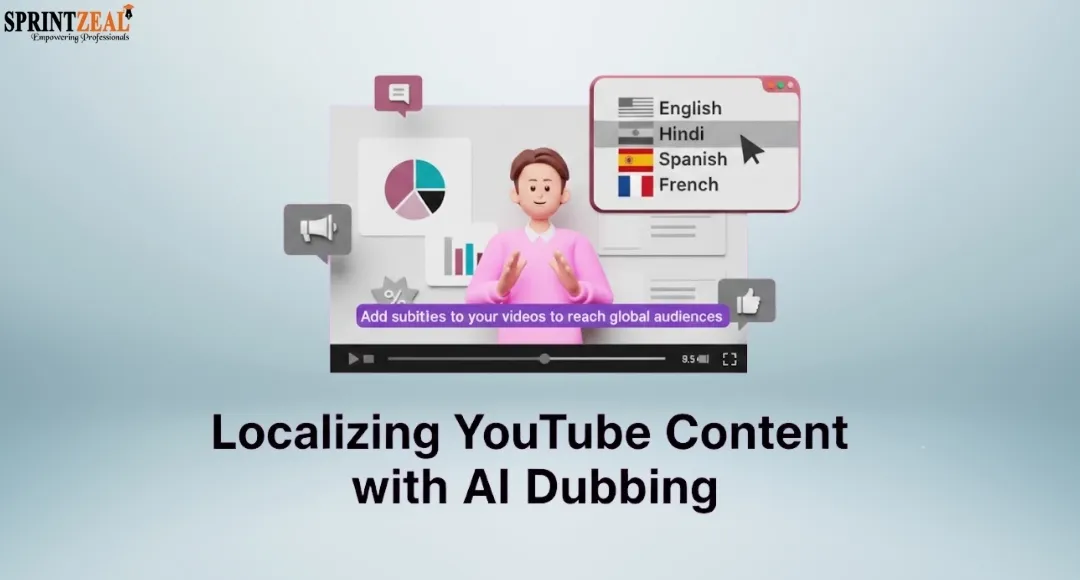
In the world of digital content, we’ve officially moved past the "subtitle era."
For years, if you wanted to reach a global audience on YouTube, you’d slap on some closed captions and hope for the best. But today’s viewers are different. They are watching on their phones during a commute, listening while they cook, or multitasking at work. They aren't just looking at your videos; they are listening to them.
YouTube’s rollout of multi-language audio tracks has changed the game, but there is a massive gap between "offering a translation" and "truly localizing" your brand. If your dubbed voice sounds like a monotone robot, you aren't building a connection—you’re just translating text.
This guide will walk you through how to use professional tools to make your content feel native in any language, ensuring your global expansion feels as authentic as your original channel.
YouTube has introduced its own internal tools for automatic dubbing, and for a basic hobbyist, it’s a fantastic start. However, if you’re a professional creator, an educator, or a marketing team, you’ll quickly notice three major "immersion killers":
The "Robotic" Tone: Most basic tools strip away the emotion. If you’re excited about a product or a concept, but the dubbed voice sounds like a GPS navigation system, your audience will tune out.
The Lip-Sync Gap: Nothing breaks a viewer's focus faster than seeing a speaker’s mouth move while the audio is clearly out of sync. It feels "cheap" and reduces the perceived authority of your content.
Loss of Identity: Your voice is your brand. Standard ai video dubbing often replaces your unique personality with a generic, stock AI voice.
To move beyond these hurdles, you need a strategy that treats localization as a creative process, not just a technical one.
When you decide to go global, you shouldn't just be looking for a translator for youtube videos. You need a workflow.
Professional localization starts with a high-quality transcript. Before the audio is even touched, the text needs to be checked for cultural nuances. Slang, metaphors, and industry-specific jargon often don't translate literally. A "piece of cake" in English isn't a "piece of cake" in Japanese—it’s something else entirely.
Using professional ai dubbing software like VMEG allows you to manage this process in one place, ensuring that the translation respects the sound and soul of the target language.
The biggest breakthrough in recent years is ai voice dubbing that includes voice cloning.
Instead of picking a random "Spanish Male" voice from a list, you can now clone your own voice. The AI analyzes your tone, pitch, and cadence in English and replicates it in Spanish, French, or Hindi. This is a massive win for brand consistency. Your audience in Mexico hears the same "you" that your audience in New York hears.
This level of ai voice dubbing builds trust because it preserves the human connection that made your channel successful in the first place.
If you want your localized videos to look professional, you have to address the visual disconnect. Modern dubbing ai now includes phoneme-level mapping. This technology subtly adjusts the video's mouth movements to match the new audio track.
When you use high-end ai video dubbing, the result isn't just a translated video; it’s a localized experience. It looks like you actually sat down and recorded the video in that language. For high-ticket educational content or corporate training, this level of polish is non-negotiable.
A common mistake is localizing the video audio but forgetting the "packaging." To actually get discovered in new markets, your youtube translation services must extend to your:
Titles and Descriptions: These are what the algorithm reads to index your video.
Thumbnails: Visual cues that work in the US might not resonate in India or Brazil.
Community Posts: Engaging with your new audience in their native tongue.
While YouTube’s native tools are a great entry point, they are often a "closed loop" with limited control. Creators who are serious about their international ROI are moving toward platforms like VMEG for a few key reasons:
Batch Localization: If you have a library of 100 videos, you can't afford to do them one by one. VMEG supports batch translation and dubbing, scaling your reach in hours rather than weeks.
Precision Control: You can jump into the script and tweak specific words or timing. If the youtube audio translator gets a technical term wrong, you can fix it instantly.
Lip-Sync Accuracy: VMEG’s alignment tech is specifically designed for creators who need "studio-quality" results without the studio-quality price tag.
The "language barrier" is effectively gone. But as more creators flood into international markets, the competition will shift from "who is translated" to "who is translated well."
Using a generic ai voice dubbing tool might get you some views, but using a professional localization strategy—one that preserves your voice, matches your lips, and respects the culture—is how you build a global community.
Don't just let the world watch your videos. Use tools like VMEG , the AI video translator, to make sure they can actually hear you.
Don't Settle for Robots: Look for tools that offer voice cloning to keep your brand's personality intact.
Sync is King: Visual lip-syncing is the difference between a "fan edit" and a professional production.
Think Metadata: Translate your titles and descriptions to ensure the youtube video translator efforts actually result in clicks.
Stay Human: Always do a final "vibe check" on your translations to ensure they sound natural and conversational.
In the world of digital content, we’ve officially moved past the "subtitle era."
For years, if you wanted to reach a global audience on YouTube, you’d slap on some closed captions and hope for the best. But today’s viewers are different. They are watching on their phones during a commute, listening while they cook, or multitasking at work. They aren't just looking at your videos; they are listening to them.
YouTube’s rollout of multi-language audio tracks has changed the game, but there is a massive gap between "offering a translation" and "truly localizing" your brand. If your dubbed voice sounds like a monotone robot, you aren't building a connection—you’re just translating text.
This guide will walk you through how to use professional tools to make your content feel native in any language, ensuring your global expansion feels as authentic as your original channel.
YouTube has introduced its own internal tools for automatic dubbing, and for a basic hobbyist, it’s a fantastic start. However, if you’re a professional creator, an educator, or a marketing team, you’ll quickly notice three major "immersion killers":
To move beyond these hurdles, you need a strategy that treats localization as a creative process, not just a technical one.
When you decide to go global, you shouldn't just be looking for a translator for youtube videos. You need a workflow.
Professional localization starts with a high-quality transcript. Before the audio is even touched, the text needs to be checked for cultural nuances. Slang, metaphors, and industry-specific jargon often don't translate literally. A "piece of cake" in English isn't a "piece of cake" in Japanese—it’s something else entirely.
Using professional ai dubbing software like VMEG allows you to manage this process in one place, ensuring that the translation respects the sound and soul of the target language.
The biggest breakthrough in recent years is ai voice dubbing that includes voice cloning.
Instead of picking a random "Spanish Male" voice from a list, you can now clone your own voice. The AI analyzes your tone, pitch, and cadence in English and replicates it in Spanish, French, or Hindi. This is a massive win for brand consistency. Your audience in Mexico hears the same "you" that your audience in New York hears.
This level of ai voice dubbing builds trust because it preserves the human connection that made your channel successful in the first place.
If you want your localized videos to look professional, you have to address the visual disconnect. Modern dubbing ai now includes phoneme-level mapping. This technology subtly adjusts the video's mouth movements to match the new audio track.
When you use high-end ai video dubbing, the result isn't just a translated video; it’s a localized experience. It looks like you actually sat down and recorded the video in that language. For high-ticket educational content or corporate training, this level of polish is non-negotiable.
A common mistake is localizing the video audio but forgetting the "packaging." To actually get discovered in new markets, your youtube translation services must extend to your:
While YouTube’s native tools are a great entry point, they are often a "closed loop" with limited control. Creators who are serious about their international ROI are moving toward platforms like VMEG for a few key reasons:
The "language barrier" is effectively gone. But as more creators flood into international markets, the competition will shift from "who is translated" to "who is translated well."
Using a generic ai voice dubbing tool might get you some views, but using a professional localization strategy—one that preserves your voice, matches your lips, and respects the culture—is how you build a global community.
Don't just let the world watch your videos. Use tools like VMEG , the AI video translator, to make sure they can actually hear you.

Sprintzeal
Mon, 09 December 2024
Tue, 11 March 2025

Tue, 11 March 2025

© 2024 Sprintzeal Americas Inc. - All Rights Reserved.

 USA : +1315-322-7821
 UK : +44 7700 174870
 IND : +919008230179
 AUS : +61 480 005 455
Leave a comment