Customer Experience (CX): Definition, Importance, and Strategies for Success
Tue, 25 February 2025

Follow the stories of academics and their research expeditions
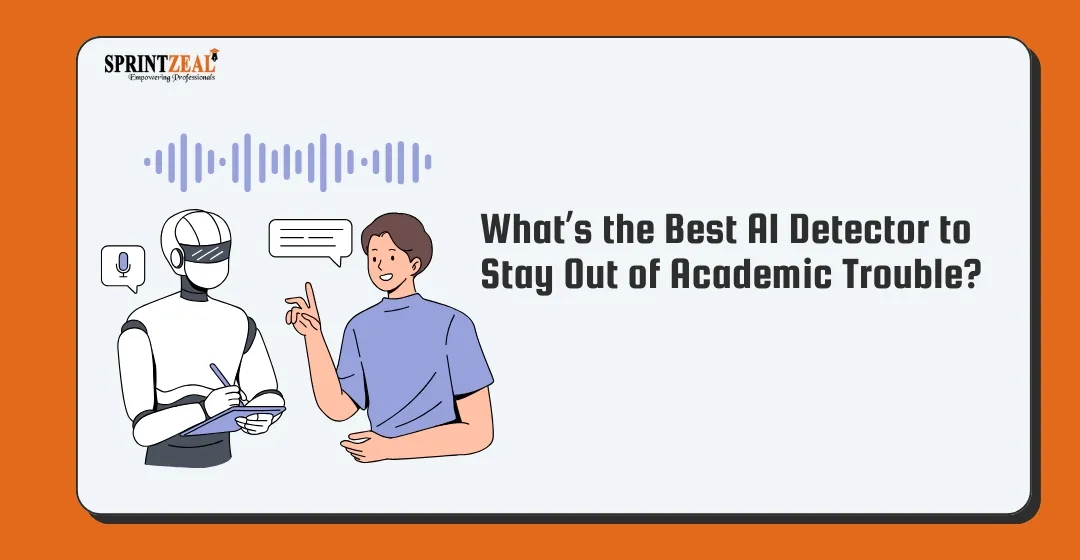
You know that moment. You're halfway through turning in your paper when your professor casually drops: “This will be scanned with AI detection software.” Suddenly, you start second-guessing that one paragraph ChatGPT helped you brainstorm – or even your own sentences.
And, as someone who maybe used a few too many smart-sounding phrases, you probably start whispering to yourself, “What is the best AI detector I can use to double-check the text?”. You’re going in the right direction because a good detector can save you from raised eyebrows – and maybe summer classes.
Let’s cut through the noise and figure out which AI detecting tools are worth your time.
Writer.com’s Detector – Built for Business, Still Useful for Students
How to Choose the Best AI Detector Tool (Without Going Nuts)
AI writing tools exploded overnight. What started as “just helping with structure” somehow turned into “let’s have it write the whole conclusion.” But colleges are not clueless. They’re using AI detectors, and not all of them are great. Some are accurate. Some think Shakespeare was a robot.
So, the smartest thing you can do is run your paper through a solid AI detector tool before your professor does. Here’s what separates the good ones from the trash:
- Clear, human-readable results;
- High accuracy (so your legit work doesn’t get flagged);
- Support for actual academic formats, like essays and research papers.
Let’s break down the best AI content detectors out there.
Looking for the best free AI detection tool that won’t make you register, pay, or interpret a heatmap? Meet NoCramming.
This one’s already popular among students for reviewing the best essay writing service options, but it also comes with a free, no-nonsense AI detector. Just paste in your writing, and it tells you what’s human, what’s AI, and what’s a mix without sounding like it was designed for data scientists.
Why it works:
- Totally free;
- No login required;
- Results make sense even if you haven’t slept in 2 days;
- Doesn’t store or sell your work.
Bonus: you can find a plagiarism checker on the same platform.
When people look for the best AI detector, GPTZero is still in the conversation. It was one of the first major tools built to flag AI-generated content, and it’s held up pretty well.
You get breakdowns by sentence, scores for how “robotic” your writing sounds, and options to paste or upload whole files. It’s not flawless (sometimes it flags human writing just for sounding polished), but it’s dependable.
Why you might like it:
- Strong analysis tools;
- Measures “perplexity” and “burstiness”;
- Lets you upload documents.
GPTZero is not perfect, but it’s still one of the best AI detectors out there for students who want receipts.
GPTinf is designed for users who, besides an AI detector, want a way to fix what gets flagged. Instead of stopping at a probability score, it helps you actively reduce AI-like patterns in your writing, which makes it popular with students, freelancers, and content creators working under strict originality checks.
Its AI detector scans text for common machine-generated signals and gives quick feedback without forcing you to create an account. Where GPTinf stands out is the built-in humanizer, which rewrites flagged sections to sound more natural without drastically changing meaning or structure.
Highlights:
Combines AI detector and humanizer in one platform;
No sign-up required for basic detection;
Designed to reduce patterns flagged by major detectors.
It’s not a grading tool for professors or a deep linguistic analyzer, but if your goal is to check content and make it safer before submission, GPTinf covers both steps in one workflow. Think of it as prevention and cleanup rolled into a single tool.
If you want to see exactly which parts of your writing might raise flags, isFake.ai keeps things simple and transparent. Instead of just giving a percentage score, it highlights suspicious fragments directly in your text.
It works well for essays, reports, and academic documents, supporting multiple languages and identifying similarities with models like ChatGPT, GPT-4o, Gemini, and Claude. The feedback is visual, easy to understand, and useful for reviewing drafts before submission.
Why you might like it:
Highlights AI-like fragments instead of vague scores;
Supports essays, articles, and reports;
Identifies which AI model your text most resembles;
Clean interface without unnecessary complexity.
It is a solid option for students who want clarity, not guesswork, when checking academic writing for AI patterns.
Winston AI was originally made for educators and content creators, which is already a green flag. If you want the best AI text detector that understands essays aren't robot manuals, this is a great option.
It’s especially good if you’re writing in a second language or worried about tone. It won’t overreact to a metaphor or a fancy transition.
Highlights:
- Lets you upload PDFs or DOCX;
- Recognizes multiple languages;
- Provides scores that actually mean something.
And while it’s marketed more to teachers, students can use it just as easily. Call it academic self-defense.
This one isn’t exactly aimed at students, but don’t count it out. Writer’s AI detector is a business tool meant for spotting ChatGPT content in things like marketing copy or emails. But hey – if it works, it works.
Pros:
- Super clean layout;
- Can scan whole URLs;
- Integrates well with other tools.
It may not be your go-to for lit analysis papers, but it can be a handy backup when you’re testing multiple drafts. Especially if you’re a business major pretending a memo is an essay. No judgment.
Crossplag is one of the newer names, but it’s already getting buzz for supporting over 100 languages and giving side-by-side originality vs AI content comparisons.
If you’re an international student writing in English, you’ll admit it’s one of the best AI detector tools for catching real problems without overreacting to your phrasing.
Why it’s cool:
- Supports many languages;
- Has a clean, professional interface;
- The free tier is actually usable.
Sometimes, being the new kid means trying harder, and Crossplag is doing just that.
Paranoid? Burned by a false positive before? Want receipts? AI Detector Pro is for you.
This tool is aggressive, detailed, and a little intense, but sometimes, that’s exactly what you need. If you want to print out your results and staple them to your essay, this is the one.
Best for:
- Running in-depth analysis on syntax, sentence structure, etc.;
- Exporting detailed PDF reports;
- Double-checking everything just in case.
It’s not the easiest to use, but it earns its spot as one of the best AI content detectors for anyone who’s been wrongly flagged in the past.
Feeling overwhelmed? Breathe. Here’s how to narrow it down:
- Is it free (or cheap)?
- Does it detect both AI and plagiarism?
- Can you run multiple drafts without hitting a paywall?
- Is it updated for GPT-4o and beyond?
- Can you read the results without a computer science degree?
- Does it explain what was flagged and why?
Check enough of those boxes, and you’re golden.
Even if you’re using the best tools, human error is still a thing. So, watch for these traps:
- Pasting huge blocks of AI text without tweaking;
- Letting ChatGPT write your whole intro or conclusion;
- Forgetting citations (or letting the bot make them up);
- Having no natural voice or original thought.
AI detectors aren’t perfect, but they’re trained to spot “too perfect” writing. Don’t forget to sound like you.
There’s no single winner. But here’s the short version:
- NoCramming is best for students and an accurate free AI detection tool overall.
- GPTZero is a reliable, proven choice if you don’t want to overthink it.
- Winston AI looks sleek and works great for essays.
- Crossplag and AI Detector Pro have their niche strengths (many languages and receipts, respectively).
However, here’s the truth: your brain + a good AI detector is still the only combo that no professor can fully detect.
AI writing tools exploded overnight. What started as “just helping with structure” somehow turned into “let’s have it write the whole conclusion.” But colleges are not clueless. They’re using AI detectors, and not all of them are great. Some are accurate. Some think Shakespeare was a robot.
So, the smartest thing you can do is run your paper through a solid AI detector tool before your professor does. Here’s what separates the good ones from the trash:
- Clear, human-readable results;
- High accuracy (so your legit work doesn’t get flagged);
- Support for actual academic formats, like essays and research papers.
Let’s break down the best AI content detectors out there.
Looking for the best free AI detection tool that won’t make you register, pay, or interpret a heatmap? Meet NoCramming.
This one’s already popular among students for reviewing the best essay writing service options, but it also comes with a free, no-nonsense AI detector. Just paste in your writing, and it tells you what’s human, what’s AI, and what’s a mix without sounding like it was designed for data scientists.
Why it works:
- Totally free;
- No login required;
- Results make sense even if you haven’t slept in 2 days;
- Doesn’t store or sell your work.
Bonus: you can find a plagiarism checker on the same platform.
When people look for the best AI detector, GPTZero is still in the conversation. It was one of the first major tools built to flag AI-generated content, and it’s held up pretty well.
You get breakdowns by sentence, scores for how “robotic” your writing sounds, and options to paste or upload whole files. It’s not flawless (sometimes it flags human writing just for sounding polished), but it’s dependable.
Why you might like it:
- Strong analysis tools;
- Measures “perplexity” and “burstiness”;
- Lets you upload documents.
GPTZero is not perfect, but it’s still one of the best AI detectors out there for students who want receipts.
GPTinf is designed for users who, besides an AI detector, want a way to fix what gets flagged. Instead of stopping at a probability score, it helps you actively reduce AI-like patterns in your writing, which makes it popular with students, freelancers, and content creators working under strict originality checks.
Its AI detector scans text for common machine-generated signals and gives quick feedback without forcing you to create an account. Where GPTinf stands out is the built-in humanizer, which rewrites flagged sections to sound more natural without drastically changing meaning or structure.
Highlights:
It’s not a grading tool for professors or a deep linguistic analyzer, but if your goal is to check content and make it safer before submission, GPTinf covers both steps in one workflow. Think of it as prevention and cleanup rolled into a single tool.
If you want to see exactly which parts of your writing might raise flags, isFake.ai keeps things simple and transparent. Instead of just giving a percentage score, it highlights suspicious fragments directly in your text.
It works well for essays, reports, and academic documents, supporting multiple languages and identifying similarities with models like ChatGPT, GPT-4o, Gemini, and Claude. The feedback is visual, easy to understand, and useful for reviewing drafts before submission.
Why you might like it:
It is a solid option for students who want clarity, not guesswork, when checking academic writing for AI patterns.
Winston AI was originally made for educators and content creators, which is already a green flag. If you want the best AI text detector that understands essays aren't robot manuals, this is a great option.
It’s especially good if you’re writing in a second language or worried about tone. It won’t overreact to a metaphor or a fancy transition.
Highlights:
- Lets you upload PDFs or DOCX;
- Recognizes multiple languages;
- Provides scores that actually mean something.
And while it’s marketed more to teachers, students can use it just as easily. Call it academic self-defense.
This one isn’t exactly aimed at students, but don’t count it out. Writer’s AI detector is a business tool meant for spotting ChatGPT content in things like marketing copy or emails. But hey – if it works, it works.
Pros:
- Super clean layout;
- Can scan whole URLs;
- Integrates well with other tools.
It may not be your go-to for lit analysis papers, but it can be a handy backup when you’re testing multiple drafts. Especially if you’re a business major pretending a memo is an essay. No judgment.
Crossplag is one of the newer names, but it’s already getting buzz for supporting over 100 languages and giving side-by-side originality vs AI content comparisons.
If you’re an international student writing in English, you’ll admit it’s one of the best AI detector tools for catching real problems without overreacting to your phrasing.
Why it’s cool:
- Supports many languages;
- Has a clean, professional interface;
- The free tier is actually usable.
Sometimes, being the new kid means trying harder, and Crossplag is doing just that.
Paranoid? Burned by a false positive before? Want receipts? AI Detector Pro is for you.
This tool is aggressive, detailed, and a little intense, but sometimes, that’s exactly what you need. If you want to print out your results and staple them to your essay, this is the one.
Best for:
- Running in-depth analysis on syntax, sentence structure, etc.;
- Exporting detailed PDF reports;
- Double-checking everything just in case.
It’s not the easiest to use, but it earns its spot as one of the best AI content detectors for anyone who’s been wrongly flagged in the past.
Feeling overwhelmed? Breathe. Here’s how to narrow it down:
- Is it free (or cheap)?
- Does it detect both AI and plagiarism?
- Can you run multiple drafts without hitting a paywall?
- Is it updated for GPT-4o and beyond?
- Can you read the results without a computer science degree?
- Does it explain what was flagged and why?
Check enough of those boxes, and you’re golden.
Even if you’re using the best tools, human error is still a thing. So, watch for these traps:
- Pasting huge blocks of AI text without tweaking;
- Letting ChatGPT write your whole intro or conclusion;
- Forgetting citations (or letting the bot make them up);
- Having no natural voice or original thought.
AI detectors aren’t perfect, but they’re trained to spot “too perfect” writing. Don’t forget to sound like you.
There’s no single winner. But here’s the short version:
- NoCramming is best for students and an accurate free AI detection tool overall.
- GPTZero is a reliable, proven choice if you don’t want to overthink it.
- Winston AI looks sleek and works great for essays.
- Crossplag and AI Detector Pro have their niche strengths (many languages and receipts, respectively).
However, here’s the truth: your brain + a good AI detector is still the only combo that no professor can fully detect.

Sprintzeal
Tue, 25 February 2025
Mon, 31 March 2025

Tue, 25 February 2025

© 2024 Sprintzeal Americas Inc. - All Rights Reserved.

 USA : +1315-322-7821
 UK : +44 7700 174870
 IND : +919008230179
 AUS : +61 480 005 455
Leave a comment