What Is Secure Access Service Edge (SASE)?
Tue, 15 October 2024

Follow the stories of academics and their research expeditions

Build Your Own AI Chatbot by 2026 to revamp your interactions with clients and technology, as AI chatbots now are essential in today's business marketplace rather than a luxury. These virtual assistants are changing industries and increasing user engagement by automating tasks and providing customized experiences. Developers, software developers, and businessmen must all understand the steps involved in making their own AI chatbots to fully understand their huge potential.
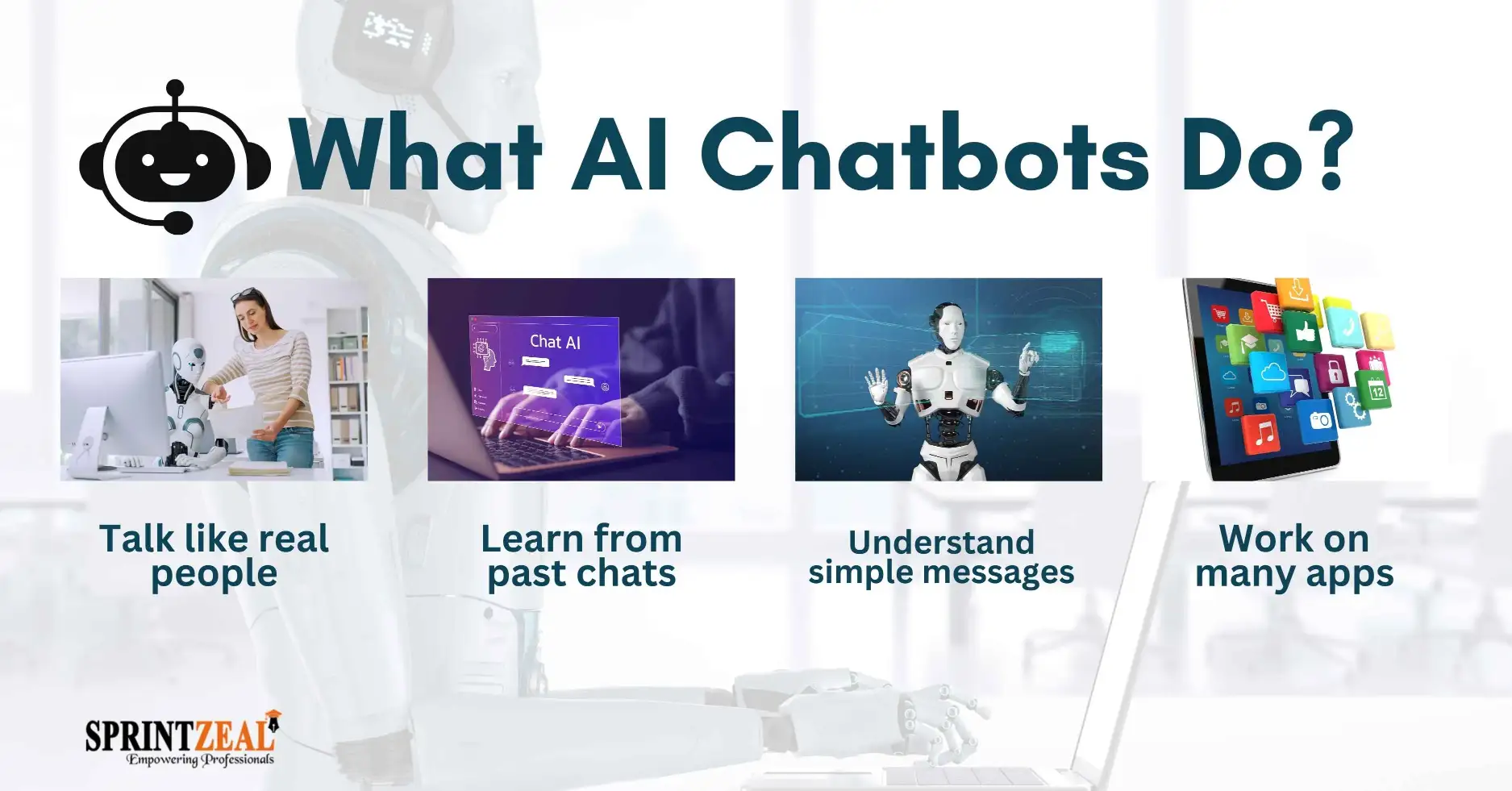
One of the changes in the way most common applications of artificial intelligence (AI) is chatbots, which we use technology. AI chatbots are a vital element both for people and enterprises because they standardize customer support, increase engagement, and enhance workflows.
In history's digital-first world, having a chatbot is essential to staying competitive. You must know how to develop and improve a chatbot whether you're a developer wishing to experiment with AI or a business owner's customer support. This guide will teach you how to design a customized chatbot that suits your needs using AI.
Understanding the fundamental elements of AI chatbots is vital for their effective achievement:
1) Natural Language Processing (NLP):
NLP is the backbone of any AI chatbot. It enables chatbots to comprehend human language, interpret intent, and respond intelligently. Modern NLP models like OpenAI’s GPT-4 and Google’s BERT are designed to handle complex conversational tasks.
2) Machine Learning (ML):
Chatbots can learn and get better with time due largely to machine learning. Machine learning algorithms keep improving chatbot responses by inspecting user interactions, which helps make them more precise and situationally aware.
3) Integration with Platforms:
It is imperative that your chatbot smoothly integrates with various platforms, such as social media, mobile apps, and websites. By doing this, you can make sure your chatbot can participate with your audience where they are most involved.
4) User Interface (UI):
An operating system user involvement. inspires Users can participate with the chatbot with ease owing to an intuitive interface, which ultimately results in a satisfying experience.
5) Customization:
Making your chatbot distinctive demands personalization. Start developing a chatbot that is particularly customised to the prerequisites of your audience and offers interactive and academic responses.
This is the detailed process for creating your chatbot:
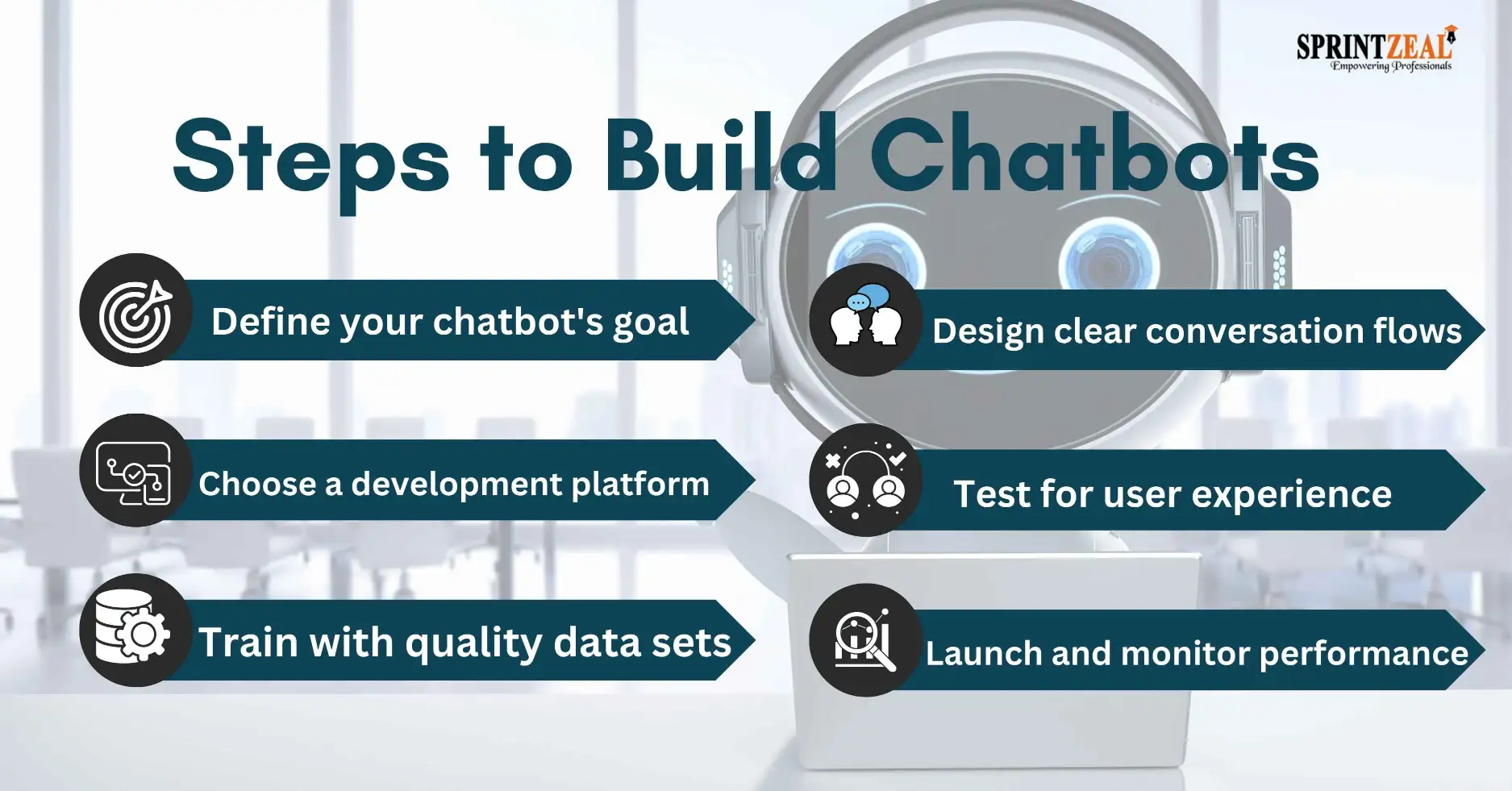
1) Define Your Goals:
Start by identifying the purpose of your chatbot. Is it meant for customer service, lead generation, or internal support? Every choice you make throughout the development process will be directed by clear goals. For example, a sales chatbot might give priority to lead qualification, whereas a customer customer support chatbot might focus solely on answering frequently asked questions. Possessing particular objectives assures that your chatbot will meet users ’ expectations.
2) Choose the Right Platform:
Select a platform that suits your needs based on your level of technical expertise. While developers may favour structures like Rasa or Dialogflow for more personalization, beginners can use no-code tools like ChatGPT or Tidio.
To get your chatbot up and running, these platforms offer the required resources and tools, such as templates, required control, and pre-trained models.
3) Design the Conversation Flow:
Planning your chatbot’s conversation flow is essential for delivering a seamless user experience. Begin by mapping out possible user queries and corresponding responses.
Visualization tools like Miro or Lucidchart can help you design logical and intuitive interaction pathways, ensuring that your chatbot addresses user needs effectively.
4) Incorporate AI Models:
Leverage advanced AI models like GPT-4 or Claude to give your chatbot robust conversational capabilities. These models allow your chatbot to understand context, manage ambiguity, and respond in a human-like manner.
You can also train these models further using domain-specific data to make your chatbot more relevant to your audience.
5) Test Rigorously:
After your chatbot is formed, it is available to complete extensive testing. Get input from a variety of users and make modifications to the responses in light of their ideas.
Be mindful of user-friendliness, speed, and precision. Testing helps you identify gaps and make improvements before deploying your chatbot to a broader audience.
6) Deploy and Optimize:
After successful testing, deploy your chatbot on your preferred platform. Use analytics tools to monitor its performance, identify issues, and implement updates regularly.
Maintaining the chatbot effective and trying to make sure it stays meaningful as user needs change involves continual improvement.
In 2026, providing your own AI chatbot will be an exciting adventure that blends creativity and innovation. You can build a chatbot that adds value, creates a connection, and appropriate tools to efficiently solve problems. Take advantage of Sprintzeal's top-notch AI and Machine Learning Training Programs to improve your skills. Our courses are meant to give you the understanding to create sophisticated AI applications, such as chatbots. Sprintzeal can help you access the future of AI with its globally renowned certifications, practical training, and knowledgeable advice
With Sprintzeal, start your journey now and realise your AI chatbot vision!
How do I build my own AI chatbot?
Choose a software platform, generate conversation flows, integrate having to cut AI models, define the goal of your AI chatbot, and behaviour examination ahead of launch.
How to create a GPT chatbot for free?
Platforms like ChatGPT and Hugging Face offer free tools to create basic GPT chatbots. While these options are cost-effective, advanced features may require paid plans.
How much does it cost to develop an AI chatbot?
Costs range from free for basic models to thousands of dollars for customized, feature-rich solutions. Your budget will depend on your chatbot’s complexity and features.
Is creating a chatbot free?
Yes, basic chatbots can be created for free using no-code platforms. However, more advanced features often come with associated costs.

Sprintzeal
Tue, 15 October 2024
Fri, 06 December 2024

Wed, 16 October 2024

© 2024 Sprintzeal Americas Inc. - All Rights Reserved.

 USA : +1315-322-7821
 UK : +44 7700 174870
 IND : +919008230179
 AUS : +61 480 005 455
Leave a comment