Customer Experience (CX): Definition, Importance, and Strategies for Success
Tue, 25 February 2025

Follow the stories of academics and their research expeditions
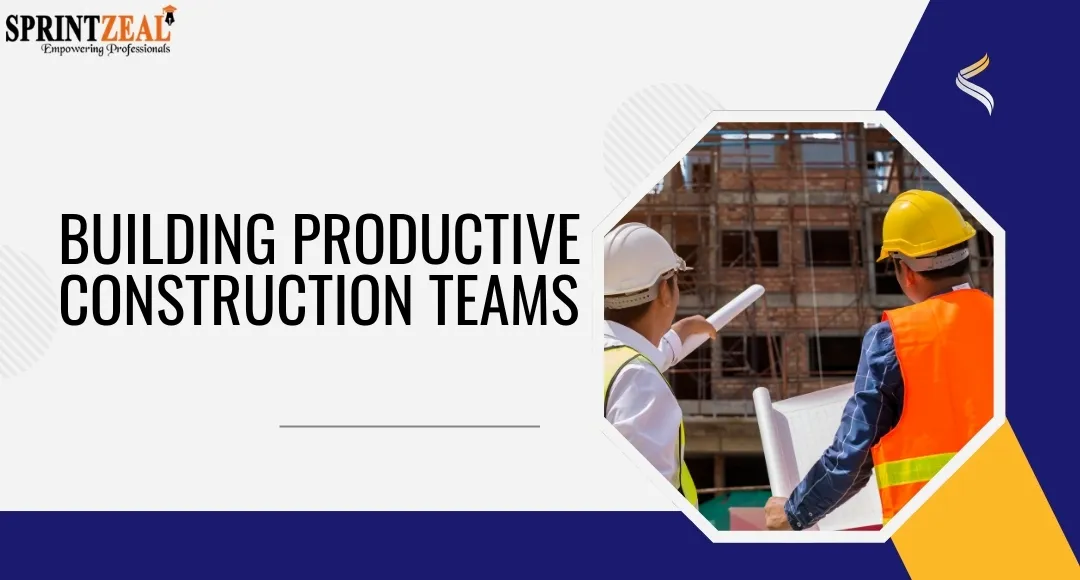
It doesn't take much error to derail a whole project, right? Hence, a team that is professionally capable, certified, and versatile should be able to alter the situation completely. After all, 48% of construction managers say unskilled labor poses major risks to projects.
When you prioritize and invest in leadership training and flexible skill enhancement, then you are basically paving the way to finishing your projects on time, saving from unexpected costs, and even facilitating the personal growth of your team members through the work they do.
In this article, we’ve curated and highlighted practical strategies for you to boost your team’s productivity, safety, and project results.
If your projects have been delayed or affected by errors, rest assured, you're not alone. Numerous teams are dealing with the same issues of skill gaps, miscommunication, and compliance stress, which are all causes of lowered productivity and failure to meet deadlines.
Inconsistent skills and workforce shortages are a recipe for bottlenecks on your sites. One of the ways you can solve that problem is by implementing a patterned education system. Incorporating a top learning management system, like Kallidus, enables training standardization, progress tracking, and meeting industry standards for all participants.
Provision of equal capabilities to your team members will result in a lower number of mistakes and higher productivity, and your employees will be equipped to switch to new tools or techniques effortlessly and confidently.
Construction projects run better when communication feels simple. Create routines your team can rely on, like quick updates and shared progress tracking.
When information flows easily between the field and leadership, problems get solved sooner, teamwork improves naturally, and work continues steadily without unnecessary slowdowns or confusion.
Compliance shouldn't be a burden to your already packed schedule. If your team grasps the regulations via hands-on, targeted training, safety turns into a natural aspect of the daily work routine.
When employees have a clear understanding, they can operate with confidence, prevent costly errors, and progress with their projects without frequent disruptions or an unplanned compliance rush.
One cannot neglect the issue of safety, as it has a very direct impact on productivity. Employees who are trained to adhere to good safety measures will have fewer accidents and work more consistently. Besides that, employees are the single most valuable asset of a company, and it’s very wise to keep them safe.
Why Safer Sites Deliver Faster Results
Fewer accidents will naturally result in less downtime. And if your crew really makes safety a part of their habit, then you will get scheduled projects with set hours and a regular output volume.
Besides, a great safety environment instills a sense of security, thus allowing your workers to concentrate on their tasks rather than being distracted by worries about hazards. This makes productivity remain uninterrupted and even gets more efficient.
You can embed safety into daily routines with regular audits, hands-on training, and certification programs. Clear and streamlined processes make compliance second nature.
Insights from agricultural land classification projects by LandTech show how structured data and planning reduce risk. Applying the same principle to your sites ensures your team works safely, confidently, and efficiently every day.
Most people don't stop long enough to consider the question of building a team that can last. However, it's important that your initial recruits have great potential and thus create a pool for continuous, structured skill development. This doesn't just help your team grow with your projects but also helps them stay flexible and be ready for any new challenge.
The degree of training your team is given through certifications is something that establishes a shared knowledge base among them. When a team is, to a large extent, familiar with the set standards of the industry, the number of mistakes is minimized, and even the client's trust is greatly increased.
Besides, certifications also help in setting clear expectations so that you’re not left to depend on experience or guesswork. Once there’s a mutual understanding among everyone, the team will perform both more effectively and with greater uniformity on all occasions.
Learning may become your strongest advantage. Providing your employees with training on a regular basis will rapidly familiarize them with new working methods, tools, and legislation changes.
Also, skill enhancement keeps them interested and engaged. It reduces employee turnover and strengthens workforce productivity. By training your team to respond to the evolving requirements of projects, you’re not only increasing the output, but you are also creating a culture in which each person considers their career development alongside your projects.
If the team isn’t really clear on who is responsible for what, then the result is wasted effort. Clearly defined roles and accountability structures give each individual a clear picture of their position in the team, thus helping to make faster decisions and keep the projects progressing.
By giving clear definitions of roles, you can help your team members to avoid duplicate work and confusion. Supervisors, contractors, and field employees can know what to expect, thereby making the coordination process more effortless.
When employees understand what their role is, it also lessens the hassle of bringing new hires on board. You spend less time managing conflicts and delivering more results.
You can maintain your team alignment through straightforward and consistent communication routines. Daily briefings, reporting workflows, and shared platforms simplify the tracking of progress and the making of necessary adjustments.
If your team is given clear updates, everyone is aware of their tasks and timings, thus helping you stay away from delays and guaranteeing the accomplishment of projects according to the schedule.
Leadership isn’t limited to managers. If you cultivate leadership qualities in your team members, the whole team will be better coordinated and more motivated, and therefore be able to come up with solutions, enabling your team to deal with difficulties effectively and keep workflows streamlined.
Leadership training can help elevate technicians to become your frontline leaders. It provides your leaders with the necessary tools, methods, and strategies to inspire, use delegation, and handle disputes.
With this assistance, they can really lead their teams confidently, even recognize problems before they become a real issue, and at the same time maintain high standards. These ensure that your projects run smoothly and have decreased the number of costly mistakes.
Experience brings a lot of learning by practice, but formally training your supervisors in leadership skills gives them handy frameworks that they can refer to. You'll note that decisions are taken more quickly, planning is more effective, and results are not so variable.
Incorporating training with experience guarantees your managers won’t merely respond to situations but will be able to lead their teams in a more forward-looking manner.
You want your team to keep up with the competition and be interested in their work. Infusing learning into the center of your culture regularly builds up skills, retains the right talent, and gets your team ready for a continually changing project challenges environment.
Giving a transparent career progression is a great way to keep your employees motivated and prevent them from leaving. The moment your team can spot their personal and professional development opportunities, they get more work, are focused, and are supportive of the organization.
Learning on the go not only makes one confident in their abilities but also keeps the skills up-to-date and prepares the team to deal with complicated projects effectively, thus allowing you to have a reliable and competent workforce.
Training is most effective when it is hands-on and readily available. Brief learning bits, peer mentoring, and the guidance from the job itself can assist your team in growing without them having to step away from their work.
In this manner, skills are developed in a natural way while the daily work goes on, thus everyone remains confident and prepared for the new requirements.
If you want your construction projects to succeed, it's important to put the focus on leadership, a well-structured way of learning, and constant upskilling.
By giving a high priority to certifications and continuous development, your team will be able to work with greater speed, meet the requirements, and at the same time get very good quality results on a consistent basis, while also enabling career development for each and every one of them.
Rilwan Kazeem is a writer who focuses on how technology, people, and strategy shape modern businesses. With several years of experience in content marketing, SEO, and digital platforms, he breaks down complex topics into clear, practical insights for diverse audiences. Away from work, He values stillness through meditation and prioritizes time with his family.
It doesn't take much error to derail a whole project, right? Hence, a team that is professionally capable, certified, and versatile should be able to alter the situation completely. After all, 48% of construction managers say unskilled labor poses major risks to projects.
When you prioritize and invest in leadership training and flexible skill enhancement, then you are basically paving the way to finishing your projects on time, saving from unexpected costs, and even facilitating the personal growth of your team members through the work they do.
In this article, we’ve curated and highlighted practical strategies for you to boost your team’s productivity, safety, and project results.
If your projects have been delayed or affected by errors, rest assured, you're not alone. Numerous teams are dealing with the same issues of skill gaps, miscommunication, and compliance stress, which are all causes of lowered productivity and failure to meet deadlines.
Inconsistent skills and workforce shortages are a recipe for bottlenecks on your sites. One of the ways you can solve that problem is by implementing a patterned education system. Incorporating a top learning management system, like Kallidus, enables training standardization, progress tracking, and meeting industry standards for all participants.
Provision of equal capabilities to your team members will result in a lower number of mistakes and higher productivity, and your employees will be equipped to switch to new tools or techniques effortlessly and confidently.
Construction projects run better when communication feels simple. Create routines your team can rely on, like quick updates and shared progress tracking.
When information flows easily between the field and leadership, problems get solved sooner, teamwork improves naturally, and work continues steadily without unnecessary slowdowns or confusion.
Compliance shouldn't be a burden to your already packed schedule. If your team grasps the regulations via hands-on, targeted training, safety turns into a natural aspect of the daily work routine.
When employees have a clear understanding, they can operate with confidence, prevent costly errors, and progress with their projects without frequent disruptions or an unplanned compliance rush.
One cannot neglect the issue of safety, as it has a very direct impact on productivity. Employees who are trained to adhere to good safety measures will have fewer accidents and work more consistently. Besides that, employees are the single most valuable asset of a company, and it’s very wise to keep them safe.
Why Safer Sites Deliver Faster Results
Fewer accidents will naturally result in less downtime. And if your crew really makes safety a part of their habit, then you will get scheduled projects with set hours and a regular output volume.
Besides, a great safety environment instills a sense of security, thus allowing your workers to concentrate on their tasks rather than being distracted by worries about hazards. This makes productivity remain uninterrupted and even gets more efficient.
You can embed safety into daily routines with regular audits, hands-on training, and certification programs. Clear and streamlined processes make compliance second nature.
Insights from agricultural land classification projects by LandTech show how structured data and planning reduce risk. Applying the same principle to your sites ensures your team works safely, confidently, and efficiently every day.
Most people don't stop long enough to consider the question of building a team that can last. However, it's important that your initial recruits have great potential and thus create a pool for continuous, structured skill development. This doesn't just help your team grow with your projects but also helps them stay flexible and be ready for any new challenge.
The degree of training your team is given through certifications is something that establishes a shared knowledge base among them. When a team is, to a large extent, familiar with the set standards of the industry, the number of mistakes is minimized, and even the client's trust is greatly increased.
Besides, certifications also help in setting clear expectations so that you’re not left to depend on experience or guesswork. Once there’s a mutual understanding among everyone, the team will perform both more effectively and with greater uniformity on all occasions.
Learning may become your strongest advantage. Providing your employees with training on a regular basis will rapidly familiarize them with new working methods, tools, and legislation changes.
Also, skill enhancement keeps them interested and engaged. It reduces employee turnover and strengthens workforce productivity. By training your team to respond to the evolving requirements of projects, you’re not only increasing the output, but you are also creating a culture in which each person considers their career development alongside your projects.
If the team isn’t really clear on who is responsible for what, then the result is wasted effort. Clearly defined roles and accountability structures give each individual a clear picture of their position in the team, thus helping to make faster decisions and keep the projects progressing.
By giving clear definitions of roles, you can help your team members to avoid duplicate work and confusion. Supervisors, contractors, and field employees can know what to expect, thereby making the coordination process more effortless.
When employees understand what their role is, it also lessens the hassle of bringing new hires on board. You spend less time managing conflicts and delivering more results.
You can maintain your team alignment through straightforward and consistent communication routines. Daily briefings, reporting workflows, and shared platforms simplify the tracking of progress and the making of necessary adjustments.
If your team is given clear updates, everyone is aware of their tasks and timings, thus helping you stay away from delays and guaranteeing the accomplishment of projects according to the schedule.
Leadership isn’t limited to managers. If you cultivate leadership qualities in your team members, the whole team will be better coordinated and more motivated, and therefore be able to come up with solutions, enabling your team to deal with difficulties effectively and keep workflows streamlined.
Leadership training can help elevate technicians to become your frontline leaders. It provides your leaders with the necessary tools, methods, and strategies to inspire, use delegation, and handle disputes.
With this assistance, they can really lead their teams confidently, even recognize problems before they become a real issue, and at the same time maintain high standards. These ensure that your projects run smoothly and have decreased the number of costly mistakes.
Experience brings a lot of learning by practice, but formally training your supervisors in leadership skills gives them handy frameworks that they can refer to. You'll note that decisions are taken more quickly, planning is more effective, and results are not so variable.
Incorporating training with experience guarantees your managers won’t merely respond to situations but will be able to lead their teams in a more forward-looking manner.
You want your team to keep up with the competition and be interested in their work. Infusing learning into the center of your culture regularly builds up skills, retains the right talent, and gets your team ready for a continually changing project challenges environment.
Giving a transparent career progression is a great way to keep your employees motivated and prevent them from leaving. The moment your team can spot their personal and professional development opportunities, they get more work, are focused, and are supportive of the organization.
Learning on the go not only makes one confident in their abilities but also keeps the skills up-to-date and prepares the team to deal with complicated projects effectively, thus allowing you to have a reliable and competent workforce.
Training is most effective when it is hands-on and readily available. Brief learning bits, peer mentoring, and the guidance from the job itself can assist your team in growing without them having to step away from their work.
In this manner, skills are developed in a natural way while the daily work goes on, thus everyone remains confident and prepared for the new requirements.
If you want your construction projects to succeed, it's important to put the focus on leadership, a well-structured way of learning, and constant upskilling.
By giving a high priority to certifications and continuous development, your team will be able to work with greater speed, meet the requirements, and at the same time get very good quality results on a consistent basis, while also enabling career development for each and every one of them.
Rilwan Kazeem is a writer who focuses on how technology, people, and strategy shape modern businesses. With several years of experience in content marketing, SEO, and digital platforms, he breaks down complex topics into clear, practical insights for diverse audiences. Away from work, He values stillness through meditation and prioritizes time with his family.

Sprintzeal
Tue, 25 February 2025
Mon, 31 March 2025

Tue, 25 February 2025


© 2024 Sprintzeal Americas Inc. - All Rights Reserved.

 USA : +1315-322-7821
 UK : +44 7700 174870
 IND : +919008230179
 AUS : +61 480 005 455
Leave a comment