Customer Experience (CX): Definition, Importance, and Strategies for Success
Tue, 25 February 2025

Follow the stories of academics and their research expeditions
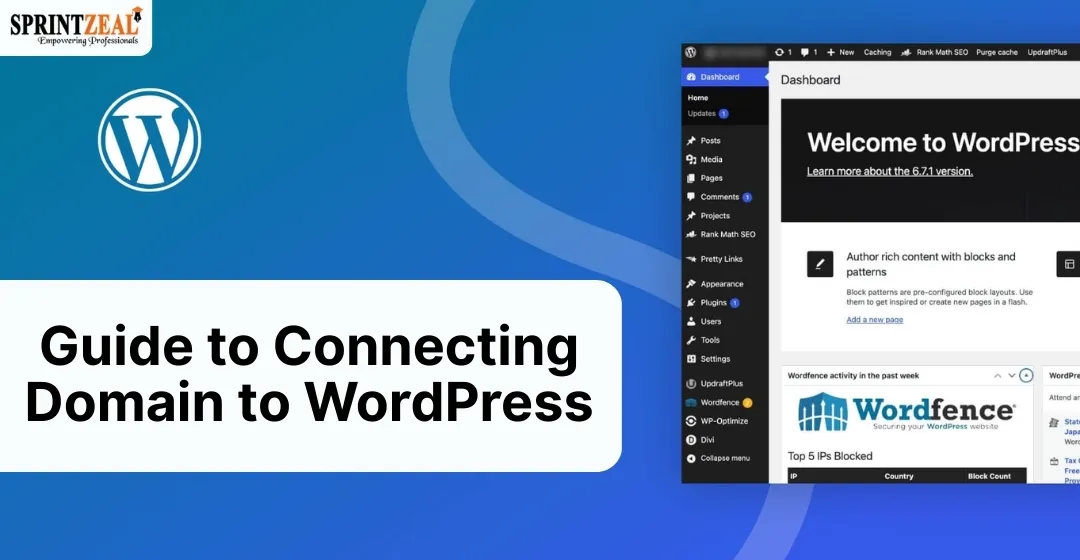
The purchase of a domain that is custom such as yourbrand.com It is an important aspect of your website. It gives you a professional appearance as well as helps users locate and recall you. It's the final step to connect this address with your WordPress website. It may sound as if it's a task for someone with technical expertise, however it's actually an easy process that anybody can master.
This tutorial will guide you through the procedure in simple terms. Learn how to connect your custom domains to WordPress and finish the custom domain name setup, regardless of the place you bought the domain from or which hosting provider you use for your site. This will be broken into steps that are easy to follow and explain the process in plain language and help you get your brand website's new address up and running.
Keep the basics. There are two essential elements:
It's your Domain Name: This is your web address (like your address for your house). You purchased it through an organization such as GoDaddy, Namecheap, or Google Domains.
Your WordPress Website It is the actual site (like your residence). It's hosted on a computer hosted by a hosting provider like Bluehost, SiteGround, or maybe WordPress.com.
Connect custom domain wordpress to your website is similar to saying to the internet's GPS: "Hey, when someone types in mybrand.com, please send them to my website over here." It's done by altering the setting that you set when you acquired your domain.
What You'll Need to Have Ready:
The new domain you have chosen (e.g., myawesomeblog.com).
The login credentials to the domain's website from which you purchased the domain (your domain registrar).
Login details to the account on the WordPress hosting account.
A majority of users purchase their domains from one firm and host their site through another. If this is you, then this is your way. This is the most simple method, suggested for those who are new to the game.
Then, sign in first to your WordPress hosting accounts (like SiteGround, Bluehost, or Kinsta). You will find a tab on your dashboard titled "DNS Settings," "Nameservers," or "Domain Connection Info."
Two lines of text which look similar to the following:
ns1.yourhostingcompany.com
ns2.yourhostingcompany.com
They are also known as nameservers. Imagine them as the hosting provider's unique "call forwarding" numbers for on the web. Take these two lines and copy them down or leave the tab open. These are the vital details that you will need.
Log in to the account you used to purchase the domain (like GoDaddy or Namecheap). It is where you register your domain.
Locate the webpage to manage the domain you have chosen. You'll usually see an "My Domains" list, then choose "Manage" next to your domain's name. You should look for a setting that says "Nameservers," "DNS Management," or "Domain Server Settings."
The names of servers that are currently in use. These are likely assigned to the default settings of the nameservers you purchased at (like ns1.godaddy.com). It is your responsibility to change the default settings.
The first nameserver you change to the nameserver copy from the hosting account (e.g., ns1.siteground.com). Switch the second nameserver to the nameserver you copied from the first (e.g., ns2.siteground.com). If you have additional fields to fill in, just leave them blank, or erase the previous information.
Click "Save" or "Update." Congrats, you've accomplished your technical work! You now have to rest.
This information needs to be notified and accepted by all computers around the globe. This is known as propagation. It could take anything from one hour up to a period of 48 hours although it's usually faster.
What is this implying to you? In this period your website could function for certain people and not work for other people. It could be that you see an old website, an error or a brand new one. It's completely normal and expected. One of the best things to do is to be patient. Take a break and return in a couple of hours.
This is the most straightforward setup! If you have a domain after signing up for Bluehost, Hostinger, IONOS and so on. They are usually already in place behind the scenes.
For security reasons, ensure that you are logged into the hosting control panel. Check for the website administration area. You should see a clearly-marked button or hyperlink that states "Assign Domain," "Custom Domain Name Setup," or "Connect Custom Domain wordpress" in your web configurations.
Simply click it, choose your domain from the list and then save. The service handles everything technical for you. It's usually the easiest route for anyone who's just starting out.
WordPress.com offers an exclusive, supervised method:
On Your WordPress.com Dashboard Click Upgrades and then Domains.
Select "Add a domain" and select the option "Connect a domain you already own."
Enter your customized Domain address (e.g., yourname.com).
WordPress.com can provide you with very particular options (called DNS records). The form will appear as tiny forms with numerals and names.
It is then time for you to return to the registrar of your domain (where you purchased the domain such as GoDaddy) and then enter the options exactly the way that WordPress.com will show you. It's a good thing that WordPress.com offers easy-to-follow, step-by-step instructions for each major registrar (GoDaddy, Namecheap, Google as well as Namecheap.) that will appear to aid you.
When your domain is given the chance to grow (give the domain at minimum about 4-6 hours) There is an additional, simple procedure in WordPress.
Sign in to your WordPress administration dashboard. It is possible that you will have to access your old temporary URL provided by your hosting provider to access the dashboard (your hosting provider can explain the exact details).
Go to Settings > General.
There are two key areas: WordPress Address (URL) and Site Address (URL).
Replace both of these boxes to reflect your brand new domain. Make sure to include https:// (e.g., https://yourdomain.com).
Click "Save Changes."
Your website is now live at the new address! The next step is to complete the following three essential tasks to ensure that it's safe as well as consistent and functioning flawlessly.
The hosting service will probably give the security certificate for free known as SSL. The SSL certificate gives your website secure https:// address and the padlock symbol that is secure in the bar of your browser. It is a must to look credible and professional.
Most of the time, all you have to do is hit a button on the hosting dashboard that says "Enable SSL" or "Security." If it's not there then a simple, free program named Really Simple SSL can do the job for you, with just a single button after installing and enabling it.
Decide the address you'd like for your site to have www.yourdomain.com or simply yourdomain.com. This is a matter of personal choice; there's no correct or incorrect solution. But, it is recommended to pick the one you prefer as your primary address and then make your other address redirect to it.
This will avoid confusion for both visitors as well as the search engines. It is important to note that your SSL software (like Really Simple SSL) as well as your host settings typically include a straightforward option titled "Canonical Redirect" or "Force WWW / Non-WWW" to manage this on autopilot.
You will appear as a person:
Select every menu link to ensure the pages are loaded.
Make sure you test your contact form to be sure that it's submitted.
Browse through blog posts and pages to make sure the images are displayed correctly.
Check that your website looks great on your mobile.
It is a quality test for ensuring that everything was done to complete the transfer successfully.
Connecting a domain that you have created to WordPress is an important step. Following these simple and step-by-step instructions to connect custom domain wordpress to your site, you've gone from a generic, difficult-to-remember website address to a professional website with a branded identity. Your website is now up and running with a custom domain name setup.
Keep in mind that the procedure is as simple as following a recipe: Gather your tools (your logins) Follow the instructions in a sequence, and allow time for it to complete. This brief wait time is common. After the green padlock is secured and your website loads flawlessly, you are able to feel confident that you've created a strong base for your website. Well done
The purchase of a domain that is custom, such as yourbrand.com It is an important aspect of your website. It gives you a professional appearance as well as helps users locate and recall you. It's the final step to connect this address with your WordPress website. It may sound as if it's a task for someone with technical expertise; however, it's actually an easy process that anybody can master.
This tutorial will guide you through the procedure in simple terms. Learn how to connect your custom domains to WordPress and finish the custom domain name setup, regardless of the place you bought the domain from or which hosting provider you use for your site. This will be broken into steps that are easy to follow and explain the process in plain language and help you get your brand website's new address up and running.
Keep the basics. There are two essential elements:
Connecting a custom domain to your WordPress website is similar to saying to the internet's GPS: "Hey, when someone types in mybrand.com, please send them to my website over here." It's done by altering the setting that you set when you acquired your domain.
What You'll Need to Have Ready:
A majority of users purchase their domains from one firm and host their site through another. If this is you, then this is your way. This is the most simple method, suggested for those who are new to the game.
Then, sign in first to your WordPress hosting accounts (like SiteGround, Bluehost, or Kinsta). You will find a tab on your dashboard titled "DNS Settings," "Nameservers," or "Domain Connection Info."
Two lines of text that look similar to the following:
They are also known as nameservers. Imagine them as the hosting provider's unique "call forwarding" numbers for on the web. Take these two lines and copy them down or leave the tab open. These are the vital details that you will need.
Log in to the account you used to purchase the domain (like GoDaddy or Namecheap). It is where you register your domain.
Locate the webpage to manage the domain you have chosen. You'll usually see a "My Domains" list, then choose "Manage" next to your domain's name. You should look for a setting that says "Nameservers," "DNS Management," or "Domain Server Settings."
The names of servers that are currently in use. These are likely assigned to the default settings of the nameservers you purchased at (like ns1.godaddy.com). It is your responsibility to change the default settings.
The first nameserver you change to is the nameserver copy from the hosting account (e.g., ns1.siteground.com). Switch the second nameserver to the nameserver you copied from the first (e.g., ns2.siteground.com). If you have additional fields to fill in, just leave them blank, or erase the previous information.
Click "Save" or "Update." Congrats, you've accomplished your technical work! You now have to rest.
This information needs to be notified and accepted by all computers around the globe. This is known as propagation. It could take anything from one hour up to a period of 48 hours, although it's usually faster.
What is this implying to you? In this period your website could function for certain people and not work for other people. It could be that you see an old website, an error, or a brand new one. It's completely normal and expected. One of the best things to do is to be patient. Take a break and return in a couple of hours.
This is the most straightforward setup! If you have a domain after signing up for Bluehost, Hostinger, IONOS, and so on. They are usually already in place behind the scenes.
For security reasons, ensure that you are logged into the hosting control panel. Check for the website administration area. You should see a clearly marked button or hyperlink that states "Assign Domain," "Custom Domain Name Setup," or "Connect Custom Domain WordPress" in your web configurations.
Simply click it, choose your domain from the list, and then save. The service handles everything technical for you. It's usually the easiest route for anyone who's just starting out.
WordPress.com offers an exclusive, supervised method:
When your domain is given the chance to grow (give the domain at minimum about 4-6 hours), There is an additional, simple procedure in WordPress.
Your website is now live at the new address! The next step is to complete the following three essential tasks to ensure that it's safe as well as consistent and functioning flawlessly.
The hosting service will probably give the security certificate for free, known as SSL. The SSL certificate gives your website a secure https:// address and the padlock symbol that is secure in the bar of your browser. It is a must to look credible and professional.
Most of the time, all you have to do is hit a button on the hosting dashboard that says "Enable SSL" or "Security." If it's not there, then a simple, free program named Really Simple SSL can do the job for you with just a single button after installing and enabling it.
Decide the address you'd like for your site to have: www.yourdomain.com or simply yourdomain.com. This is a matter of personal choice; there's no correct or incorrect solution. But it is recommended to pick the one you prefer as your primary address and then make your other address redirect to it.
This will avoid confusion for both the visitors and the search engines. It is important to note that your SSL software (like Really Simple SSL) as well as your host settings typically include a straightforward option titled "Canonical Redirect" or "Force WWW / Non-WWW" to manage this on autopilot.
You will appear as a person:
It is a quality test for ensuring that everything was done to complete the transfer successfully.
Connecting a domain that you have created to WordPress is an important step. Following these simple and step-by-step instructions to connect a custom domain to your WordPress site, you've gone from a generic, difficult-to-remember website address to a professional website with a branded identity. Your website is now up and running with a custom domain name setup.
Keep in mind that the procedure is as simple as following a recipe: Gather your tools (your logins). Follow the instructions in a sequence, and allow time for it to complete. This brief wait time is common. After the green padlock is secured and your website loads flawlessly, you are able to feel confident that you've created a strong base for your website. Well done

Sprintzeal
Tue, 25 February 2025
Mon, 31 March 2025

Tue, 25 February 2025

© 2024 Sprintzeal Americas Inc. - All Rights Reserved.

 USA : +1315-322-7821
 UK : +44 7700 174870
 IND : +919008230179
 AUS : +61 480 005 455
Leave a comment