Customer Experience (CX): Definition, Importance, and Strategies for Success
Tue, 25 February 2025

Severity: Warning
Message: file_get_contents(http://www.geoplugin.net/json.gp?ip=216.73.216.239): Failed to open stream: HTTP request failed! HTTP/1.1 403 Forbidden
Filename: helpers/location_helper.php
Line Number: 77
Backtrace:
File: /home/sprintzeal.org/public_html/application/helpers/location_helper.php
Line: 77
Function: file_get_contents
File: /home/sprintzeal.org/public_html/application/controllers/Blog.php
Line: 109
Function: location_details
File: /home/sprintzeal.org/public_html/index.php
Line: 289
Function: require_once
Follow the stories of academics and their research expeditions

What is cybersecurity? Cybersecurity is the process of implementing methods to protect against unauthorized access and related cyber-attacks and threats.
The Future of Cybersecurity completely relies on the current state and the balance between security, privacy, and other confidential information.
Cybersecurity helps maintaining confidential businesses information secured. This helps businesses provide good services to their customers and maintain quality in their products.
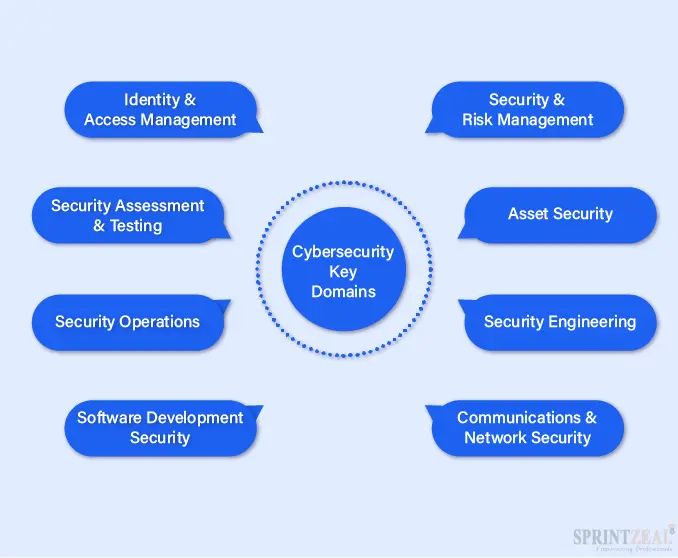
Cybersecurity protects the confidential assets of an organization. Application security, network security, cloud security, and other such sub-domains make up cybersecurity.
It is said that, by the year 2025, 80% of organizations will begin to adapt methods to merge web services and cloud services from a single service edge. By 2030, 80% of organizations will begin to use cybersecurity risks in business transactions and third-party transactions as a prime element.
Cybersecurity in 2024 would have a change in all the current trends, and the job scope would change as well. This would lead to a need for more cybersecurity data analysts.
In the following years, it is definite that there will be an increased risk of ransomware attacks. This places a significant toil on the organizations' security teams.
As the economic value of data increases, so do the threats to it. Since it is crucial to protect sensitive data that could pose a major threat, cybersecurity is very important. These threats make it very complicated for the organizations to handle the data breaching.
Maintaining a good reputation is very important to any organization in the market.
Even a small breach in the data can cause a great loss to the company's reputation. With this, it becomes very crucial for every organization to secure such data, both to avoid cyber threats and to maintain a good reputation.

Devices that are connected to public Wi-Fi are more vulnerable to any confidential information they contain. In any case, relying on systematic cybersecurity software tools aids in identifying operating system flaws.
Detection, or anticipating data breaches, assists individuals in remaining aware of data thefts.
Currently, data has become a much more valuable asset. This is because of all the details that can be decrypted and the knowledge they can provide. So, cybersecurity helps in securing such sensitive business data by securing the connected devices from cybercriminals.
What will cybersecurity look like in 2024?
With the current rates of cybercrimes, by the end of the year 2024, there would be a critical need for data-centric security and privacy. Securing user data would become one of the most prioritized assets for any organization.
Privacy-encrypting technologies would take the lead, because this would create a requirement for the users to protect their assets.
Ransomware attacks have now begun to become more threatening since the cybercriminals only continue to sharpen their skills and amplify their attacks. This leads to an imbalance in the market.
For the year 2024, here are some of the possible changes that are to be expected in the field of cybersecurity.
Cybersecurity predictions in 2024 (Suggested Read)
One does not have to be qualified from the MIT to work in cybersecurity. A proper training done with a good certification is the only thing it needs.
It is important to note that, under the same field, there are plenty of paths to choose from. Out of all those career paths, which one should you choose? Which is the best Cybersecurity Certification?

Here are a few career paths and jobs to consider in cybersecurity in 2024.
Entry-Level Cybersecurity Jobs:
This career path is for those who have considered beginning their career in the field of cybersecurity. For beginners with no experience, this would be the best place to start their career. All one would need is a good certification to get started.
1. Incident Responder
The role includes tasks like automation testing and conducting system analysis, which helps in identifying the sources of potential breaches.
This is a high-pressure role that also requires a productive and focused mind to analyze the data and communicate across departments. The role is to create and manage comprehensive reports and communicate with individuals from non-technical backgrounds.
2. Security Auditor
Auditing in cybersecurity can offer great opportunities for career growth. The role of the security auditor in cybersecurity is to compile all the reports provided. With the data provided, verification of security and system safety are performed.
This position necessitates the ability to detect any internal system vulnerabilities. The role is to perform multiple penetration tests and to communicate between departments.
Mid-Level Cybersecurity Jobs:
Most working professionals, just after 2-4 years of experience as a security analyst, try to move up to mid-level roles. These job roles are more strategic than the entry-level job roles, but these roles necessarily do not include the leadership positions.
1. Penetration Tester
Key skills expected for this role include:
- Programming skills in Python, Java.
- Network related protocols like HTTPS.
- Vulnerability Assessment and Penetration Testing (VASP)
Certification that helps
2. Forensics Analyst
The role of Forensics Analyst is to investigate digital evidences to solve a crime. They mend all the necessary data to investigate and determine how the breaching happened.
Expected Key skills:
- Assess new tools to identify security vulnerabilities.
- Developing digital forensics based practices
- Perform forensic tasks to detect indicators
Certification that helps
- Certified Forensic Computer Examiner
- Certified Computer Examiner
Senior-level Cybersecurity Jobs:
Senior-level jobs such as Chief Information Security Officer help lead the industry by setting standards for the industry. Hence, these roles involve strategic thinking and futuristic approaches for technical advancements.
1. CISO
The role is to secure every necessary piece of data belonging to the organization. Since organizations collect massive amounts of users' data, privacy and security become more and more crucial.
Key skills expected for the role of Chief Information Security Officer:
- 10+ years of experience in risk management
- Bachelor’s degree in information security
- Knowledge of security frameworks
Certifications considered necessary:
- Certified Information Systems Security Professional (CISSP)
- Certified Information Security Manager (CISM)
- Certified Information Systems Auditor (CISA)
2. CIO
The role of Chief Information Officer does not necessarily come from a cybersecurity background. As the amount of data being collected and used increased, enterprises began to hire leaders from the information and data sectors. Thus, CIOs are not technically part of the field of cybersecurity.
Skills and experience expected:
- A Bachelor's degree in information technology or computer science
- 15+ years of experience, including at least 2-3 years in a senior leadership position
- Capability to work effectively with the CDO and CISO
- Knowledge of cloud technologies
- Keen interest in developing data technologies
On the basis of current cybersecurity methodologies, the scope in the field of data analysis and security would only expand. The scope of cybersecurity jobs for professionals is rising.
To create and implement an initiative to develop security systems for organizations, they stay updated on the latest technologies and trends.
According to the Data Security Council of India (DSCI), cybersecurity businesses employed around 1.30–2 lakh workers in 2020, compared to 1.10 lakh in 2019.
According to projections, the cybersecurity market will hire approximately 10 lakh more professionals by 2025.
Cybersecurity is one of these extremely lucrative career paths to pursue.
A cybersecurity career path can be a good place to start if you want to build a strong career base in the field of security and risk analysis. This helps you gain good experience in the field.
By mastering the necessary skills, acquiring more experience would only become easier for any individual aiming for senior-level job roles.
Given the recent market trends, the increased demand for security analysis indicates that the role of cybersecurity professionals will not be a problem for the foreseeable future.
This article details the necessary skills that need to be mastered for the designated job role. This helps you comprehend what must be done to start your career.
The mentioned certifications assist you in mapping your skills to the career path you desire.
To become a certified Security Manager, enroll now to Sprintzeal’s CISM Certification Training and get certified as Certified Information Security Manager.
Related courses to checkout:
CISSP Certification Training Course
CISA Certification Training Course
To explore more courses, consider visiting Sprintzeal’s All Courses page.
What is cybersecurity? Cybersecurity is the process of implementing methods to protect against unauthorized access and related cyber-attacks and threats.
The Future of Cybersecurity completely relies on the current state and the balance between security, privacy, and other confidential information.
Cybersecurity helps maintaining confidential businesses information secured. This helps businesses provide good services to their customers and maintain quality in their products.
Cybersecurity protects the confidential assets of an organization. Application security, network security, cloud security, and other such sub-domains make up cybersecurity.
It is said that, by the year 2025, 80% of organizations will begin to adapt methods to merge web services and cloud services from a single service edge. By 2030, 80% of organizations will begin to use cybersecurity risks in business transactions and third-party transactions as a prime element.
Cybersecurity in 2024 would have a change in all the current trends, and the job scope would change as well. This would lead to a need for more cybersecurity data analysts.
In the following years, it is definite that there will be an increased risk of ransomware attacks. This places a significant toil on the organizations' security teams.
As the economic value of data increases, so do the threats to it. Since it is crucial to protect sensitive data that could pose a major threat, cybersecurity is very important. These threats make it very complicated for the organizations to handle the data breaching.
Maintaining a good reputation is very important to any organization in the market.
Even a small breach in the data can cause a great loss to the company's reputation. With this, it becomes very crucial for every organization to secure such data, both to avoid cyber threats and to maintain a good reputation.
Devices that are connected to public Wi-Fi are more vulnerable to any confidential information they contain. In any case, relying on systematic cybersecurity software tools aids in identifying operating system flaws.
Detection, or anticipating data breaches, assists individuals in remaining aware of data thefts.
Currently, data has become a much more valuable asset. This is because of all the details that can be decrypted and the knowledge they can provide. So, cybersecurity helps in securing such sensitive business data by securing the connected devices from cybercriminals.
What will cybersecurity look like in 2024?
With the current rates of cybercrimes, by the end of the year 2024, there would be a critical need for data-centric security and privacy. Securing user data would become one of the most prioritized assets for any organization.
Privacy-encrypting technologies would take the lead, because this would create a requirement for the users to protect their assets.
Ransomware attacks have now begun to become more threatening since the cybercriminals only continue to sharpen their skills and amplify their attacks. This leads to an imbalance in the market.
For the year 2024, here are some of the possible changes that are to be expected in the field of cybersecurity.
Cybersecurity predictions in 2024 (Suggested Read)
One does not have to be qualified from the MIT to work in cybersecurity. A proper training done with a good certification is the only thing it needs.
It is important to note that, under the same field, there are plenty of paths to choose from. Out of all those career paths, which one should you choose? Which is the best Cybersecurity Certification?
Here are a few career paths and jobs to consider in cybersecurity in 2024.
Entry-Level Cybersecurity Jobs:
This career path is for those who have considered beginning their career in the field of cybersecurity. For beginners with no experience, this would be the best place to start their career. All one would need is a good certification to get started.
1. Incident Responder
The role includes tasks like automation testing and conducting system analysis, which helps in identifying the sources of potential breaches.
This is a high-pressure role that also requires a productive and focused mind to analyze the data and communicate across departments. The role is to create and manage comprehensive reports and communicate with individuals from non-technical backgrounds.
2. Security Auditor
Auditing in cybersecurity can offer great opportunities for career growth. The role of the security auditor in cybersecurity is to compile all the reports provided. With the data provided, verification of security and system safety are performed.
This position necessitates the ability to detect any internal system vulnerabilities. The role is to perform multiple penetration tests and to communicate between departments.
Mid-Level Cybersecurity Jobs:
Most working professionals, just after 2-4 years of experience as a security analyst, try to move up to mid-level roles. These job roles are more strategic than the entry-level job roles, but these roles necessarily do not include the leadership positions.
1. Penetration Tester
Key skills expected for this role include:
- Programming skills in Python, Java.
- Network related protocols like HTTPS.
- Vulnerability Assessment and Penetration Testing (VASP)
Certification that helps
2. Forensics Analyst
The role of Forensics Analyst is to investigate digital evidences to solve a crime. They mend all the necessary data to investigate and determine how the breaching happened.
Expected Key skills:
- Assess new tools to identify security vulnerabilities.
- Developing digital forensics based practices
- Perform forensic tasks to detect indicators
Certification that helps
- Certified Forensic Computer Examiner
- Certified Computer Examiner
Senior-level Cybersecurity Jobs:
Senior-level jobs such as Chief Information Security Officer help lead the industry by setting standards for the industry. Hence, these roles involve strategic thinking and futuristic approaches for technical advancements.
1. CISO
The role is to secure every necessary piece of data belonging to the organization. Since organizations collect massive amounts of users' data, privacy and security become more and more crucial.
Key skills expected for the role of Chief Information Security Officer:
- 10+ years of experience in risk management
- Bachelor’s degree in information security
- Knowledge of security frameworks
Certifications considered necessary:
- Certified Information Systems Security Professional (CISSP)
- Certified Information Security Manager (CISM)
- Certified Information Systems Auditor (CISA)
2. CIO
The role of Chief Information Officer does not necessarily come from a cybersecurity background. As the amount of data being collected and used increased, enterprises began to hire leaders from the information and data sectors. Thus, CIOs are not technically part of the field of cybersecurity.
Skills and experience expected:
- A Bachelor's degree in information technology or computer science
- 15+ years of experience, including at least 2-3 years in a senior leadership position
- Capability to work effectively with the CDO and CISO
- Knowledge of cloud technologies
- Keen interest in developing data technologies
On the basis of current cybersecurity methodologies, the scope in the field of data analysis and security would only expand. The scope of cybersecurity jobs for professionals is rising.
To create and implement an initiative to develop security systems for organizations, they stay updated on the latest technologies and trends.
According to the Data Security Council of India (DSCI), cybersecurity businesses employed around 1.30–2 lakh workers in 2020, compared to 1.10 lakh in 2019.
According to projections, the cybersecurity market will hire approximately 10 lakh more professionals by 2025.
Cybersecurity is one of these extremely lucrative career paths to pursue.
A cybersecurity career path can be a good place to start if you want to build a strong career base in the field of security and risk analysis. This helps you gain good experience in the field.
By mastering the necessary skills, acquiring more experience would only become easier for any individual aiming for senior-level job roles.
Given the recent market trends, the increased demand for security analysis indicates that the role of cybersecurity professionals will not be a problem for the foreseeable future.
This article details the necessary skills that need to be mastered for the designated job role. This helps you comprehend what must be done to start your career.
The mentioned certifications assist you in mapping your skills to the career path you desire.
To become a certified Security Manager, enroll now to Sprintzeal’s CISM Certification Training and get certified as Certified Information Security Manager.
Related courses to checkout:
CISSP Certification Training Course
CISA Certification Training Course
To explore more courses, consider visiting Sprintzeal’s All Courses page.

Sushmith T
Our technical content writer, Sushmith, is an experienced writer, creating articles and content for websites, specializing in the areas of training programs and educational content. His writings are mainly concerned with the most major developments in specialized certification and training, e-learning, and other significant areas in the field of education.
Tue, 25 February 2025
Mon, 31 March 2025

Tue, 25 February 2025


© 2024 Sprintzeal Americas Inc. - All Rights Reserved.

 USA : +1315-322-7821
 UK : +44 7700 174870
 IND : +919008230179
 AUS : +61 480 005 455
Leave a comment