What Is Secure Access Service Edge (SASE)?
Tue, 15 October 2024

Follow the stories of academics and their research expeditions
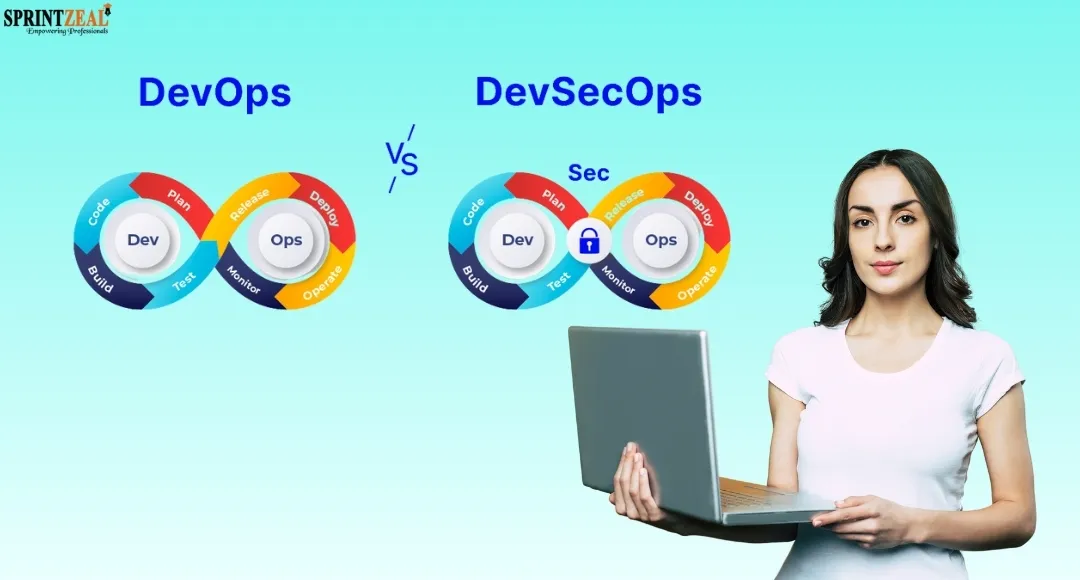
Devops or Devsecops sounds similar, right? What do you think? Are they the same or different? Let's burst the bubble; this blog will provide you with a thorough understanding of both processes. Do you know that the majority of companies utilise DevOps and DevSecOps for the fast and safe writing and keeping of their code, there are still some that can't figure out the difference between DevSecOps and DevOps. Both the models are close and have a lot of common things, but they are different. In order to make a suitable decision, it is crucial to weigh the pros and cons of both DevOps and DevSecOps first.
DevOps is a collaborative approach that unites development (Dev) and operations (Ops) teams with the overall aim to reduce the time of the software development lifecycle, raise the product quality, and have the new features delivered faster. DevOps, instead of separate departments working in isolation, brings teams to work together through the shared standards of ownership, automation, and continuous improvement. This method concentrates on the creation of a culture that ensures software delivery is done in a quick, secure, and reliable manner.
Before moving on if you are preparing for a DevOps interview, we have got the top interview questions asked at one stop.
Core Principles of DevOps
Benefits of DevOps
Key Components of DevOps
How DevOps Works
If you want to scale up your DevOps journey, go check out this guide.
DevSecOps is a new software engineering method that involves embedding security measures in each phase of the DevOps life cycle. Instead of considering security as just the last point to be checked, DevSecOps guarantees that developers, security teams, and operations are all on the same page from the outset. The concept of "shifting left with security" allows companies to find security holes quickly, to have security tasks performed by machines, and to be at liberty to deliver safe, compliant, and stable software that can easily be scaled.
Core Principles of DevSecOps
No longer is it effective to assign solely to a team the responsibility for security. Security is a shared responsibility among developers, operations, and the security team.
Automation is a key factor in speeding up the time from code to production and reducing the amount of manual effort required through automated tools for such tasks as code scanning, container security, vulnerability detection, and compliance validation.
Security efforts can all occur without interruption in each CI/CD pipeline. By implementing SAST, SCA, secrets scanning, and IaC, developers can ensure that their code has been secured prior to its release.
Real-time monitoring allows you to quickly identify any abnormal events, security breaches or misconfigured systems. Continuous feedback loops from teams help ensure that security practices are continuously improving.
The model of shift left indicates that security should be built into the code when it is written and built. Conversely, shift-right security involves securing running applications and responding to any identified threats after deployment.
Benefits of DevSecOps
Early vulnerability detection reduces the cost of fixing the issues. The quality of software becomes better through automated and standard security checks being established. The speed of delivery cycles can be increased without security being compromised. Compliance with such frameworks as PCI DSS, HIPAA, and GDPR will be enhanced. The risk of breaches, misconfigurations, and downtime will be lowered. The level of teamwork will be raised, as there will be a flow of work that is common to all and which they will also be equally accountable for.
Key Components of DevSecOps
The DevSecOps lifecycle is a set of processes that aims to integrate security in every phase of software delivery through a continuous and seamless flow. The first step is planning, when teams outline security requirements, threat models, and compliance needs right from the start. While coding, developers create secure code and comply with pre-commit checks that attempt to find the issues locally before going to the repository. After code is pushed, the build phase leads to CI pipelines that are automatically triggered to run SAST, SCA, and Infrastructure-as-Code scans so that any security vulnerabilities or misconfigurations may be detected.
Test stage happens next where DAST tools, penetration testing, and policy validations are carried out to ensure that the application remains secure under given real-world scenarios. During the release stage, signatures and verifications are done on artefacts to establish trustworthiness and guard against tampering. Deployment-step relies upon fully automated and security-aware methods along with container and cloud policies so as to assure production is the place where only trusted components are allowed to go.
Afterward, continuous monitoring is there to perform log, metric, threat, and anomaly analysis for always strong runtime protection. Last but not least, feedback loops convert these monitoring results into security-enhancement measures that give teams the possibility to not only tighten security controls but also improve future product versions.
DevOps is all about speed, automation, and continuous delivery by merging the development and operations teams for a quicker and more stable release via CI/CD pipelines and tools like Git, Jenkins, Docker, Kubernetes, and Terraform. DevSecOps takes this change one step further by including security from the very beginning and therefore, no security issue is left unnoticed, e.g., with automated checks like SAST, SCA, DAST, and threat modelling while still keeping the velocity.
The core teams of DevOps are development and operations, and the main goal is the release of the software with high stability confirmed via functional and performance testing. DevSecOps is a concept that includes not only development, security, and operations but also a common goal of releasing software faster and at the same time continuous security improvements through security tests conducted at each stage.
Security in DevOps is a late-stage or post-deployment activity accompanied by reactive risk management and compliance that are outside of pipelines. DevSecOps makes a change by moving security to the left side, i.e., from the planning to the deployment stage and thus, security is ensured by taking the most proactive measures, using IaC scanners, WAF, SIEM, and compliance-as-code to catch vulnerabilities early.
DevOps is a culture where the different teams work together, share the ownership, and thereby accelerate the whole deployment cycle. DevSecOps is a culture where security is the responsibility of all and that leads to the fast release cycles with the risk level being also low thanks to continuous monitoring and automated compliance.
Though DevOps and DevSecOps may be twins in many ways, they still have different emphases. Where one concentrates on speed and collaboration, the other, security, is integrated into the same workflow; however, these two concepts share a lot of foundational similarities and thus are closely linked in modern software engineering. Firstly, both these paradigms were conceived to cater to the problems of conventional development, save on delivery time, and grant powers to the team to craft quality software without the trouble of unnecessary postponements. The major correspondences between these were explained and enumerated as follows:
The main objectives of DevOps as well as DevSecOps are to simplify the software development lifecycle and to serve customers with their orders in a speedy and ever-reliable way. Succeeding are the obstacles of silos, bottlenecks, and release cycles; thus, the practice becomes a mainstay in a development environment which brings robust applications fast as well as steady to the market.
A collaborative culture is the core of the two named techniques. DevOps encourages cooperation between development and operations, whereas DevSecOps facilitates this collaboration further by bringing security teams on board. The principles reflected in the models include communication, openness, and joint responsibility, which form the groundwork for abandoning the delivery method known as "throw it over the wall".
Both methodologies dot the i's and cross the t's with automation in their strategies. 'To automate' is the word in wholly describing DevOps scenarios such as CI/CD, testing, deployment, and monitoring. On the other hand, DevSecOps leverages the same processes but attaches automated security checks (SAST, SCA, policy validation, etc.). The point of automation is to lessen the manual efforts part of the job, heighten the chances of success, and keep the standards.
For the reason of striving for continuous improvement, both DevOps and DevSecOps have embraced this idea. Continuous integration, continuous testing, continuous monitoring, and feedback loops are implemented as solutions to issues of late detection and hence, refining upcoming versions. DevSecOps just simply incorporates the same concept for security.
Both DevOps and DevSecOps lean on contemporary tools such as containers, microservices, orchestration systems, CI/CD platforms, and monitoring dashboards. SecOps does it in the same way but with the addition of security scanners, compliance tools, and runtime protection systems.
Both DevOps and DevSecOps work to lessen the risks of the operation, downtime, and deployment failures. The orchestration of the mitigations is done through infrastructure automation and observability in the case of DevOps, while to empower the overall resilience, DevOps adds vulnerability detection and threat mitigation to it.
Both models are in line with the principles of Agile by facilitating iterative development, rapid releases, and ongoing collaboration. The only difference is that in DevSecOps security becomes a part of Agile sprints and ceremonies
Encourage the collaboration between development, operations, and security teams so that they can agree on shared goals, co-operate in breaking down silos for seamless workflows and generate mutual trust. Combining these teams in this way leads to faster, secure software delivery while also ensuring that the shared accountability is there from the very beginning.
Provide training to the teams on DevOps and DevSecOps principles, and then let them see the value of these principles by the increased efficiency, innovation, and security posture that are the result of them. The process of sharing knowledge leads to the formation of a common language; therefore, resistance is lowered, and the teams become empowered in the proactive management of vulnerabilities.
Use CI/CD and security testing tools such as SAST and DAST to perform the operations automatically; thus, the number of errors is lowered, the releases are sped up but the quality is not compromised. Automation is a way of ensuring that the work is done consistently and that there are checks done; at the same time, it allows the teams to be free for other tasks of higher value.
The security measures must be integrated in every development stage – planning, coding and deployment – so security vulnerabilities can be detected early and the costs for fixing them will be lower. This proactive "shift left" strategy leads to an increase in the overall software resilience.
Implement strong tools such as Git for the purposes of change tracking, collaboration facilitation, and quick rollback in case of problems. Centralised control is the one that supports branching strategies, which are used for maintaining code integrity across teams.
Put in place the mechanisms for continuous feedback that will lead to process refinement, faster issue detection, and iterative improvements in development and security. Short loops are beneficial as they encourage transparency as well as rapid adaptation to the changing characteristics of the threats.
Performance of the application as well as security-related metrics after the deployment should be followed with the help of tools such as SIEM in order to obtain real-time insights and make optimisations. Continuous monitoring is an assurance of a sustained user experience as well as compliance in production environments.
To know in detail about the best DevOps practices, check out this amazing blog.
1. DevOps — When to Choose It
The right choice for a DevOps approach would be if your main emphasis was on:
On the other hand, if security was your main concern, then DevSecOps would be your choice, and the list of priorities would be as follows:
1. DevOps Tools - Focused on Speed, Automation & Delivery
CI/CD & Automation Tools
Containerization & Orchestration
Infrastructure as Code (IaC)
Monitoring & Observability
2. DevSecOps Tools Focused on Security, Compliance, and Risk Prevention
Code & Application Security
SAST Tools:
DAST Tools:
Container & Cloud Security
Secrets & Identity Management
Compliance & Policy Automation
Not only are there many other tools, but here we have also created a list of DevOps tools do follow.
1. Make Security a Shared Responsibility
Secure integration roles should be a part of daily DevOps routines. Developers should be trained in secure coding and security concepts.
DevSecOps is the next step for companies that want fast software releases and strong security. Short release cycles plus cloud systems now demand that security checks begin at the first design stage, not later. To succeed, every role must treat security as part of daily work - automation, the right tools and clear metrics support this new habit.
The best payoff comes from a narrow start - add dependency scans but also secure templates for infrastructure. After those run smoothly, expand to always on monitoring, rules written as code and alerts that reach coders within their normal tools. A maturity map lets teams pick early projects, watch security KPIs as well as avoid buying duplicate tools.
People who want solid DevOps skills and a later move to DevSecOps gain speed from formal training that covers tools, processes or long-term upkeep
No. It moves every security task into the same timeline as design, coding, testing and release.
No, Operators also security staff share the load – a few security champions inside each squad guide the rest.
DevOps needs CI/CD, containers and monitors - devSecOps adds static code scans, dependency checks, dynamic tests, infrastructure scans and safe storage for secrets.
Done well, it shortens them – early fixes remove later rework.
For modern cloud-native applications, DevSecOps is the smarter evolution of DevOps.

Sprintzeal
Tue, 15 October 2024
Fri, 06 December 2024

Wed, 16 October 2024


© 2024 Sprintzeal Americas Inc. - All Rights Reserved.

 USA : +1315-322-7821
 UK : +44 7700 174870
 IND : +919008230179
 AUS : +61 480 005 455
Leave a comment