What Is Secure Access Service Edge (SASE)?
Tue, 15 October 2024

Follow the stories of academics and their research expeditions

The project summary is a concise and important document that includes an overview, intellectual merits, and broader impacts sections. These sections are very important and need to be defined precisely.
An expertly written project overview is a potent tool for project management, streamlining procedures, and bringing all team members and stakeholders together. It gives a quick overview of the project's development, key achievements, metrics, and schedule updates. On the inside, it facilitates efficient collaboration between staff members, project managers, contractors, and service providers by allowing them to track progress.
Successful project management requires effective communication. Objectives, scope, and outcomes must all be clearly expressed in a project summary. This article explains its importance and provides detailed instructions.
A project summary is a brief summary of a project that offers essential information in an organized manner. With the help of this quick-look project snapshot, stakeholders can quickly comprehend the project's objective, scope, and deliverables. The project summary should contain useful information and be interesting to read. It serves as a communication tool, informing all parties as the project progresses.

Writing a project summary requires careful consideration of the project's key elements. Follow these steps to create a compelling and effective project summary:
Step 1: Know Your Audience
Before diving into the step-by-step project summary, it is critical to understand your target audience. Think about the reader of the summary and the details they require. Tailor your language and level of detail accordingly. For instance, if your audience consists of high-level executives, focus on strategic goals and outcomes.
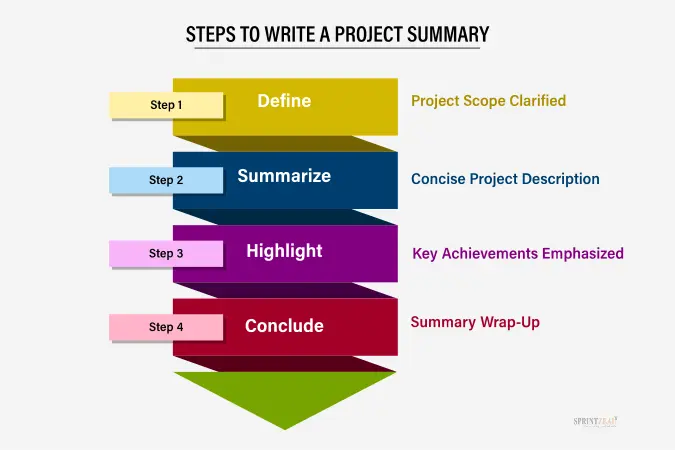
Step 2: Identify the Essential Elements
To write a comprehensive project summary, include the following essential elements:
Project Title: Start with a clear and informative title that conveys the essence of your project.
Objectives: Outline the precise aims and targets of the project.
Scope: Specify the project's parameters, including its deliverables and significant milestones.
Methodology: Briefly explain the approach or methodology you will use to achieve the project objectives.
Timeline: Provide a timeline or schedule overview to give readers a sense of the project's duration.
Resources: Give the vital resources required for the project, including personnel, equipment, or a budget.
Stakeholders: Identify the project's main stakeholders and their roles.
Expected Outcomes: Clearly articulate the anticipated results, benefits, or impact of the project.
Step 3: Keep It Concise
Remember, a project summary should be brief and to the point. Avoid excessive jargon or technical details that may confuse or overwhelm readers. Aim for clarity and simplicity. Use bullet points or subheadings to organize information and improve readability.
Step 4: Edit and Review
The project summary should be reviewed and edited after you've finished writing it. Verify the text for any grammatical mistakes, unclear language, or errors. Ensure that the summary accurately represents the project's objectives and key aspects.

The exact project summary guide content will depend on the project and its surroundings, but the following are some standard things to have in a project summary:
Project Description: Give a succinct rundown of the project's objectives and the issue it seeks to resolve.
Key Deliverables: Enumerate the tangible outputs or outcomes that the project will produce.
Target Audience: Specify the intended beneficiaries or users of the project's results.
Budget: Highlight the estimated budget or financial resources required for the project.
Risks and Challenges: Identify any potential risks, difficulties, or limitations that may jeopardize the project's success.
Success Criteria: Outline the criteria that will be used to assess the project's success.
Suggested Read - What Is Project Management?
Project summaries are versatile and can be used in various contexts. Here are a few instances where a project summary becomes invaluable:
Project Proposals: When submitting a project proposal, a well-crafted project summary can pique the interest of decision-makers and convince them of the project's value.
Stakeholder Updates: Regularly sharing project summaries with stakeholders keeps them informed about project progress and aligns expectations.
Executive Presentations: When presenting to senior executives or management, a concise project summary ensures that key information is conveyed effectively in a limited timeframe.
Project Documentation: Including a project summary in the project documentation archives provides a quick reference for future teams and stakeholders.
To maximize the effectiveness of your project summary, keep these project summary best practices in mind:
Be concise: Aim for a summary that can be quickly read and understood within a few minutes.
Focus on the essentials: Include only the most critical information relevant to the project's goals and outcomes.
Use plain language: Avoid technical jargon and use clear, simple language that is easily comprehensible by all stakeholders.
Proofread and edit: Ensure your project summary is error-free and well-polished before sharing it with others.
Format for readability: Use bullet points, headings, and subheadings to organize information and improve readability.
Tailor to the audience: Adapt your project summary to the knowledge level and interests of the target readers.
Revise periodically: Update your project summary as the project progresses, ensuring it remains accurate and up-to-date.
The above are the best tips for summarizing projects, keeping every team under one page with the project flow.
Conclusion
The ability to create a project summary is crucial for effective project management. Making a meticulously organized project summary ensures that all teams and stakeholders are knowledgeable, committed, and on the same page. You can create an impactful project summary that effectively conveys the major parts of your project by following the instructions in this manual and taking into account established techniques. Remember that a project summary's success depends on its clarity, concision, and relevance because these qualities promote understanding and participation.
To enhance project summaries, consider Project Management Professional (PMP) certification from Sprintzeal, a PMI Registered Training Provider. Boost your career with internationally recognized certification courses.
For more information, click here or chat with our course expert.
What is project quick summary?
A project quick summary is a concise overview of a project, highlighting its key elements such as objectives, scope, deliverables, and timelines.
How do you write a one-page project summary?
To write a one page project summary, focus on the project's main goals, deliverables, timelines, and key stakeholders. Be concise, organized, and emphasize the most critical information.
How do you start a summary report example?
The example of project summary starts by providing a brief introduction to the report's purpose and context. Then summarize the main findings, conclusions, and recommendations in a clear and concise manner.
What are the 7 steps in writing a summary?
The 7 steps in writing a summary are: understanding the text, identifying the main ideas, highlighting key details, condensing the information, organizing the summary, reviewing and revising, and ensuring clarity and coherence.
What is summary report format?
A summary report format typically includes an introduction, a summary of the main points or findings, supporting details or data, conclusions, and recommendations. Project summary format aims to provide a concise overview of the subject matter.
The project summary is a concise and important document that includes an overview, intellectual merits, and broader impacts sections. These sections are very important and need to be defined precisely.
An expertly written project overview is a potent tool for project management, streamlining procedures, and bringing all team members and stakeholders together. It gives a quick overview of the project's development, key achievements, metrics, and schedule updates. On the inside, it facilitates efficient collaboration between staff members, project managers, contractors, and service providers by allowing them to track progress.
Successful project management requires effective communication. Objectives, scope, and outcomes must all be clearly expressed in a project summary. This article explains its importance and provides detailed instructions.
A project summary is a brief summary of a project that offers essential information in an organized manner. With the help of this quick-look project snapshot, stakeholders can quickly comprehend the project's objective, scope, and deliverables. The project summary should contain useful information and be interesting to read. It serves as a communication tool, informing all parties as the project progresses.
Writing a project summary requires careful consideration of the project's key elements. Follow these steps to create a compelling and effective project summary:
Step 1: Know Your Audience
Before diving into the step-by-step project summary, it is critical to understand your target audience. Think about the reader of the summary and the details they require. Tailor your language and level of detail accordingly. For instance, if your audience consists of high-level executives, focus on strategic goals and outcomes.
Step 2: Identify the Essential Elements
To write a comprehensive project summary, include the following essential elements:
Project Title: Start with a clear and informative title that conveys the essence of your project.
Objectives: Outline the precise aims and targets of the project.
Scope: Specify the project's parameters, including its deliverables and significant milestones.
Methodology: Briefly explain the approach or methodology you will use to achieve the project objectives.
Timeline: Provide a timeline or schedule overview to give readers a sense of the project's duration.
Resources: Give the vital resources required for the project, including personnel, equipment, or a budget.
Stakeholders: Identify the project's main stakeholders and their roles.
Expected Outcomes: Clearly articulate the anticipated results, benefits, or impact of the project.
Step 3: Keep It Concise
Remember, a project summary should be brief and to the point. Avoid excessive jargon or technical details that may confuse or overwhelm readers. Aim for clarity and simplicity. Use bullet points or subheadings to organize information and improve readability.
Step 4: Edit and Review
The project summary should be reviewed and edited after you've finished writing it. Verify the text for any grammatical mistakes, unclear language, or errors. Ensure that the summary accurately represents the project's objectives and key aspects.
The exact project summary guide content will depend on the project and its surroundings, but the following are some standard things to have in a project summary:
Project Description: Give a succinct rundown of the project's objectives and the issue it seeks to resolve.
Key Deliverables: Enumerate the tangible outputs or outcomes that the project will produce.
Target Audience: Specify the intended beneficiaries or users of the project's results.
Budget: Highlight the estimated budget or financial resources required for the project.
Risks and Challenges: Identify any potential risks, difficulties, or limitations that may jeopardize the project's success.
Success Criteria: Outline the criteria that will be used to assess the project's success.
Suggested Read - What Is Project Management?
Project summaries are versatile and can be used in various contexts. Here are a few instances where a project summary becomes invaluable:
Project Proposals: When submitting a project proposal, a well-crafted project summary can pique the interest of decision-makers and convince them of the project's value.
Stakeholder Updates: Regularly sharing project summaries with stakeholders keeps them informed about project progress and aligns expectations.
Executive Presentations: When presenting to senior executives or management, a concise project summary ensures that key information is conveyed effectively in a limited timeframe.
Project Documentation: Including a project summary in the project documentation archives provides a quick reference for future teams and stakeholders.
To maximize the effectiveness of your project summary, keep these project summary best practices in mind:
Be concise: Aim for a summary that can be quickly read and understood within a few minutes.
Focus on the essentials: Include only the most critical information relevant to the project's goals and outcomes.
Use plain language: Avoid technical jargon and use clear, simple language that is easily comprehensible by all stakeholders.
Proofread and edit: Ensure your project summary is error-free and well-polished before sharing it with others.
Format for readability: Use bullet points, headings, and subheadings to organize information and improve readability.
Tailor to the audience: Adapt your project summary to the knowledge level and interests of the target readers.
Revise periodically: Update your project summary as the project progresses, ensuring it remains accurate and up-to-date.
The above are the best tips for summarizing projects, keeping every team under one page with the project flow.
The ability to create a project summary is crucial for effective project management. Making a meticulously organized project summary ensures that all teams and stakeholders are knowledgeable, committed, and on the same page. You can create an impactful project summary that effectively conveys the major parts of your project by following the instructions in this manual and taking into account established techniques. Remember that a project summary's success depends on its clarity, concision, and relevance because these qualities promote understanding and participation.
To enhance project summaries, consider Project Management Professional (PMP) certification from Sprintzeal, a PMI Registered Training Provider. Boost your career with internationally recognized certification courses.
For more information, click here or chat with our course expert.
What is project quick summary?
A project quick summary is a concise overview of a project, highlighting its key elements such as objectives, scope, deliverables, and timelines.
How do you write a one-page project summary?
To write a one page project summary, focus on the project's main goals, deliverables, timelines, and key stakeholders. Be concise, organized, and emphasize the most critical information.
How do you start a summary report example?
The example of project summary starts by providing a brief introduction to the report's purpose and context. Then summarize the main findings, conclusions, and recommendations in a clear and concise manner.
What are the 7 steps in writing a summary?
The 7 steps in writing a summary are: understanding the text, identifying the main ideas, highlighting key details, condensing the information, organizing the summary, reviewing and revising, and ensuring clarity and coherence.
What is summary report format?
A summary report format typically includes an introduction, a summary of the main points or findings, supporting details or data, conclusions, and recommendations. Project summary format aims to provide a concise overview of the subject matter.

Nchumbeni Yanthan
Nchumbeni, a content specialist, creates easy-to-understand educational content, helping diverse clients and millions of learners achieve career goals with clarity and impact.
Tue, 15 October 2024
Fri, 06 December 2024

Wed, 16 October 2024


© 2024 Sprintzeal Americas Inc. - All Rights Reserved.

 USA : +1315-322-7821
 UK : +44 7700 174870
 IND : +919008230179
 AUS : +61 480 005 455
Leave a comment