Machine Learning Interview Questions and Answers 2026
Mon, 09 December 2024

Follow the stories of academics and their research expeditions
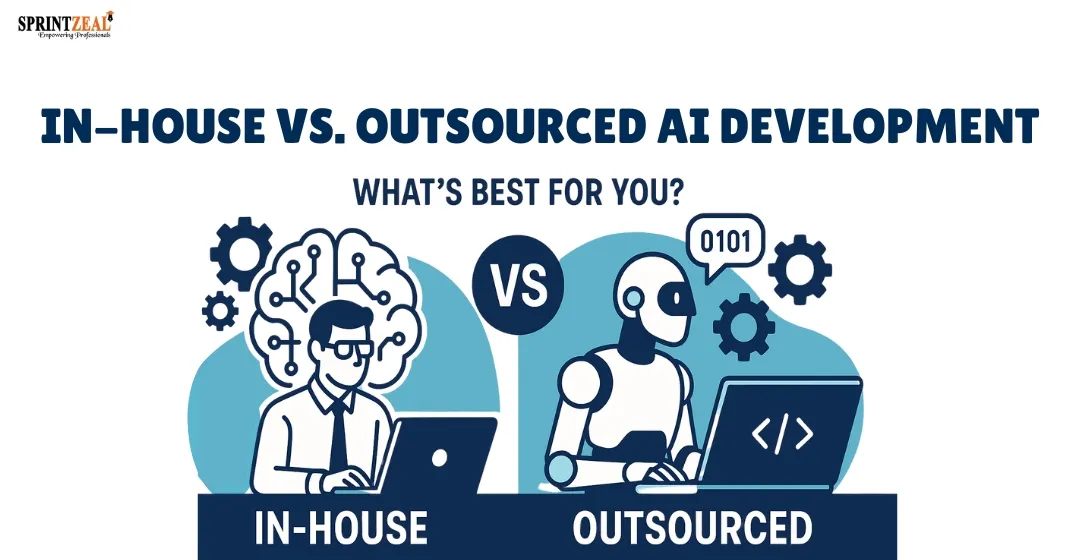
The market for AI talent has never been higher. Job listings demonstrate "junior" machine learning engineers earning $180K base pay. Before bonuses. Before stock. Before firms add other benefits to keep talent from leaping to OpenAI.
And yet, it's not succeeding. Firms continue to lose AI talent at a rate they cannot replace.
This leaves companies in a no-win situation. Do they spend cash and two years trying to develop an internal team? Or should they be strategic about obtaining the talent they require?
Arithmetic hurts. That "junior" ML engineer who costs $180K? Add payroll tax, benefits, hardware, and training. Companies are really paying $220K for someone who may leave in six months.
Need a data scientist as well? Add another $160K. Project manager that won't blow things off course? $150K minimum, and they're scarcer than unicorns.
Three individuals, half a million bucks, zero promises they'll stay around or create anything worthwhile.
But the cash isn't even the worst of it. Getting these individuals is like winning the lottery in reverse.
One fintech CEO recently spent eight months searching for a single AI engineer. Made four offers. First three candidates accepted better offers elsewhere. The fourth candidate accepted, worked precisely six weeks, then departed for Google with a 40% increase.
Meanwhile, their leading competitor rolled out AI-driven fraud detection and began poaching customers left and right.
Let's say a company somehow succeeds in hiring someone. There's a high likelihood they can't deliver what's required.
The majority of AI engineers have an academic or Google/Facebook background. The academics are familiar with all research papers written since 2015 but have never worked with dirty real-world data. Veterans from big tech assume infinite computing resources and legion-sized data engineers.
Most startups don't have either.
Perfect illustration: A medical company recruited a Stanford PhD in machine learning. Great scientist, sterling CV. Half a year later they had terrific deep learning models that collapsed entirely when presented with real patient data from real hospitals.
Why? Because this specialist had only dealt with immaculate cleaned-up research datasets. Real medical data is dirty, incomplete, and contains strange edge cases that destroy textbook algorithms.
Each industry has its own idiosyncrasies. Healthcare requires HIPAA expertise. Manufacturing involves knowledge of industrial processes. Finance calls for experience in fraud detection. Good luck locating someone technically brilliant AND knowledgeable about particular business issues.
What's changing minds about outsourcing: dealing with an appropriate AI development company fixes most of these headaches in an instant.
Good external teams are not just random groups of freelancers. They are groups of individuals who have been working together for years. The data scientist understands how the ML engineer's brain works. The project manager knows what's real and what's fantasy. They've established systems for working together.
Most importantly, they possess experience businesses simply cannot employ. Computer vision engineers who've tuned factory inspection systems. NLP engineers who've created medical document analysis software. Recommendation engine designers who've managed millions of users.
These are not theoretical experts. These are individuals who've developed actual solutions and made actual mistakes. They know what actually works and what sounds great but blows months of development time.
Case in point: A logistics firm required AI to optimize routes. Zero in-house ML competence. Rather than taking 18 months to assemble a team, they sourced an outside partner. Four months later, the solution was deployed and shaving $300K per year off fuel expenses. The project had paid for itself after the first quarter.
Certain situations essentially shout for outsourcing:
Testing Concepts Without Obligation Need to establish that AI can fix something before committing to full-time staff? External teams allow companies to test ideas quickly. If it works, wonderful. If not, there are no hired guns that can't be employed.
Specialized Technical Needs Computer vision for quality assurance? Natural language processing for contracts? These are one-off skills, not full-time positions for most organizations.
Deadline Pressure External teams begin next week. Internal hiring is months. Occasionally speed trumps all else.
Clear Project Boundaries Defined scope with precise deliverables? External teams frequently produce better outcomes sooner than creating capabilities that will infrequently be utilized.
Smartest firms have learned: maintain a small internal staff for strategy and direction, yet ally with external experts for development muscle and technical proficiency.
Internal personnel manage requirements, make strategic choices, and own systems over the long term. External partners provide development firepower and deep skill for given projects.
Flexible Capacity: Need a big project? Scale up external resources. Project finished? Scale down. No permanent staff, no inactive costly talent in slow times.
Knowledge Remains Internal Internal team members remain engaged during development, so firms aren't at a loss when outside partners complete their efforts. And internal teams benefit from experienced developers.
Cost Control Pay for expert skills only when necessary, not on a full-time basis. Works well for computer vision or high-level NLP that isn't constantly required.
Risk Management Having multiple sources of capability means firms aren't ruined if one resource is experiencing issues.
Access to Innovation External partners serve several clients from various industries. They introduce new ideas internal teams wouldn't consider.
A manufacturing organization does this to perfection. Two veteran AI engineers internal for strategy and upkeep. Three various external partners for niche work - computer vision with one company, predictive analytics with another, overall development with a third.
End result: they essentially have 15+ AI experts at their disposal without having to hire them all.
No matter how good external partners are, companies do require a bit of internal AI brawn. Otherwise they can't analyze work or make decent decisions.
Minimum team requirements:
AI Product Manager A person who speaks business needs and technical reality. They communicate with internal and external development teams to ensure that projects really do address business issues.
Technical Lead Engineer familiar enough with AI to analyze architectures and check code. Not necessarily a research scientist, but just fundamentally sound.
Data Engineering AI is only as good as the data. Need internal staff operating data pipelines, access controls, and quality problems.
This internal core team should be able to co-operate with external partners while incrementally developing more internal expertise.
Not every AI development business is an investment worth making. Here's what really counts:
Industry Experience Healthcare AI is nothing like retail AI. Making stuff has nothing to do with finance. Get individuals who've tackled related issues in the past.
Stable Teams' high turnover is a warning sign. Seek veteran individuals who've worked together as a unit, not businesses that swap junior developers between assignments.
Communication Skills Technical brilliance is useless if they can't explain what they're doing. Good partners ask smart questions about business and constraints.
Proven Process Look for structured approaches with regular check-ins and clear milestones. Avoid anyone who wants to disappear for months then show up with a finished system.
Ongoing Support AI systems need continuous care. Make sure they'll stick around after launch, not dump everything and run.
Good outsourcing requires active management:
Detailed Requirements Up Front External teams require far more context than internal folks. Take time to describe business, users, and constraints in detail.
Regular Check-ins Weekly reviews avoid nasty surprises. Don't wait until the end to realize they've built the wrong thing.
Knowledge Transfer Planning: Make this a part of the project from day one. Internal folks need to know the system architecture and key decisions.
Performance Monitoring Establish tracking and measurement prior to launch. Benefits in development and upkeep over the long term.
Internal vs external vs blend based on particular circumstances:
- Strategic Significance
Key competitive competency likely must be held internally. Support functions are okay externally.
- Timeline Urgency
External collaborators begin sooner but in-house groups gain speed over time for steady work.
- Budget Reality
Internal teams require continuous investment for years. External partnerships provide flexible costs associated with individual projects.
- Control Requirements
Require close control and thorough customization? Internal development. Clear requirements with proven methods? External is wonderful.
This AI talent shortage isn't disappearing. Although universities can't churn out qualified individuals quickly enough, and each company wants the same talent.
Smart business leaders work with AI development companies like 8allocate for flexible resourcing when internal teams hit capacity or need specialized expertise for new projects.
Businesses are not simply outsource-developing - they are purchasing access to skills that would take years to develop in-house.
Internal vs external costs are compared:
Internal Costs:
- Compensation and benefits ($150K-220K+ total per individual)
- Hiring costs (frequently 20-30% of initial-year pay)
- Training and hardware
- Management burden
External Costs:
- Project fees (dependent on scope and complexity)
- Coordination and management time
- Investment in knowledge transfer
Break-even usually occurs at the 12-18 month mark. But this ignores vital considerations such as speed to market, access to special skills, and ability to scale up or down.
For time-critical projects or specialist requirements, external collaborations usually achieve much better ROI.
AI is changing rapidly. New tools and methods emerge regularly. Methods must keep up with the technology.
Internal teams get updated with training and conferences. External partners must provide leading-edge knowledge from working on multiple industries and clients.
Hybrid strategies provide firms with both - internal continuity and external innovation. Core teams retain institutional know-how while partners add new methods and technologies.
Firms succeeding with AI get a sense of when to retain AI development internally versus outsource to specialists. They develop adaptable strategies that balance cost, speed, and strategic control.
There is no magic rule to apply here. The correct course of action will vary with situation, resource, and objective.
Begin by objectively assessing existing capability and how long in reality it will take to develop expertise internally. Include the actual cost of attracting and retaining the best AI talent in today's difficult environment.
Consider project pipelines as well. Ongoing AI development efforts could warrant internal spend. Complex projects or immediate capability requirements tend to be more effective with external partners.
Successful companies usually end up with hybrid models. They begin with external partners to validate concepts and achieve quick wins, and then build up internal capabilities over time for longer-term sustainability.
The secret is keeping the focus on business outcomes, rather than technology for the sake of it. AI development must address actual problems and deliver competitive opportunities, rather than simply showcase technical prowess.
Ready to avoid the recruitment headaches and begin delivering AI outcomes? Work with seasoned AI development professionals who can get projects underway while businesses work out their future strategy.
The market for AI talent has never been higher. Job listings demonstrate "junior" machine learning engineers earning $180K base pay. Before bonuses. Before stock. Before firms add other benefits to keep talent from leaping to OpenAI.
And yet, it's not succeeding. Firms continue to lose AI talent at a rate they cannot replace.
This leaves companies in a no-win situation. Do they spend cash and two years trying to develop an internal team? Or should they be strategic about obtaining the talent they require?
Arithmetic hurts. That "junior" ML engineer who costs $180K? Add payroll tax, benefits, hardware, and training. Companies are really paying $220K for someone who may leave in six months.
Need a data scientist as well? Add another $160K. Project manager that won't blow things off course? $150K minimum, and they're scarcer than unicorns.
Three individuals, half a million bucks, zero promises they'll stay around or create anything worthwhile.
But the cash isn't even the worst of it. Getting these individuals is like winning the lottery in reverse.
One fintech CEO recently spent eight months searching for a single AI engineer. Made four offers. First three candidates accepted better offers elsewhere. The fourth candidate accepted, worked precisely six weeks, then departed for Google with a 40% increase.
Meanwhile, their leading competitor rolled out AI-driven fraud detection and began poaching customers left and right.
Let's say a company somehow succeeds in hiring someone. There's a high likelihood they can't deliver what's required.
The majority of AI engineers have an academic or Google/Facebook background. The academics are familiar with all research papers written since 2015 but have never worked with dirty real-world data. Veterans from big tech assume infinite computing resources and legion-sized data engineers.
Most startups don't have either.
Perfect illustration: A medical company recruited a Stanford PhD in machine learning. Great scientist, sterling CV. Half a year later they had terrific deep learning models that collapsed entirely when presented with real patient data from real hospitals.
Why? Because this specialist had only dealt with immaculate cleaned-up research datasets. Real medical data is dirty, incomplete, and contains strange edge cases that destroy textbook algorithms.
Each industry has its own idiosyncrasies. Healthcare requires HIPAA expertise. Manufacturing involves knowledge of industrial processes. Finance calls for experience in fraud detection. Good luck locating someone technically brilliant AND knowledgeable about particular business issues.
What's changing minds about outsourcing: dealing with an appropriate AI development company fixes most of these headaches in an instant.
Good external teams are not just random groups of freelancers. They are groups of individuals who have been working together for years. The data scientist understands how the ML engineer's brain works. The project manager knows what's real and what's fantasy. They've established systems for working together.
Most importantly, they possess experience businesses simply cannot employ. Computer vision engineers who've tuned factory inspection systems. NLP engineers who've created medical document analysis software. Recommendation engine designers who've managed millions of users.
These are not theoretical experts. These are individuals who've developed actual solutions and made actual mistakes. They know what actually works and what sounds great but blows months of development time.
Case in point: A logistics firm required AI to optimize routes. Zero in-house ML competence. Rather than taking 18 months to assemble a team, they sourced an outside partner. Four months later, the solution was deployed and shaving $300K per year off fuel expenses. The project had paid for itself after the first quarter.
Certain situations essentially shout for outsourcing:
Testing Concepts Without Obligation Need to establish that AI can fix something before committing to full-time staff? External teams allow companies to test ideas quickly. If it works, wonderful. If not, there are no hired guns that can't be employed.
Specialized Technical Needs Computer vision for quality assurance? Natural language processing for contracts? These are one-off skills, not full-time positions for most organizations.
Deadline Pressure External teams begin next week. Internal hiring is months. Occasionally speed trumps all else.
Clear Project Boundaries Defined scope with precise deliverables? External teams frequently produce better outcomes sooner than creating capabilities that will infrequently be utilized.
Smartest firms have learned: maintain a small internal staff for strategy and direction, yet ally with external experts for development muscle and technical proficiency.
Internal personnel manage requirements, make strategic choices, and own systems over the long term. External partners provide development firepower and deep skill for given projects.
Flexible Capacity: Need a big project? Scale up external resources. Project finished? Scale down. No permanent staff, no inactive costly talent in slow times.
Knowledge Remains Internal Internal team members remain engaged during development, so firms aren't at a loss when outside partners complete their efforts. And internal teams benefit from experienced developers.
Cost Control Pay for expert skills only when necessary, not on a full-time basis. Works well for computer vision or high-level NLP that isn't constantly required.
Risk Management Having multiple sources of capability means firms aren't ruined if one resource is experiencing issues.
Access to Innovation External partners serve several clients from various industries. They introduce new ideas internal teams wouldn't consider.
A manufacturing organization does this to perfection. Two veteran AI engineers internal for strategy and upkeep. Three various external partners for niche work - computer vision with one company, predictive analytics with another, overall development with a third.
End result: they essentially have 15+ AI experts at their disposal without having to hire them all.
No matter how good external partners are, companies do require a bit of internal AI brawn. Otherwise they can't analyze work or make decent decisions.
Minimum team requirements:
AI Product Manager A person who speaks business needs and technical reality. They communicate with internal and external development teams to ensure that projects really do address business issues.
Technical Lead Engineer familiar enough with AI to analyze architectures and check code. Not necessarily a research scientist, but just fundamentally sound.
Data Engineering AI is only as good as the data. Need internal staff operating data pipelines, access controls, and quality problems.
This internal core team should be able to co-operate with external partners while incrementally developing more internal expertise.
Not every AI development business is an investment worth making. Here's what really counts:
Industry Experience Healthcare AI is nothing like retail AI. Making stuff has nothing to do with finance. Get individuals who've tackled related issues in the past.
Stable Teams' high turnover is a warning sign. Seek veteran individuals who've worked together as a unit, not businesses that swap junior developers between assignments.
Communication Skills Technical brilliance is useless if they can't explain what they're doing. Good partners ask smart questions about business and constraints.
Proven Process Look for structured approaches with regular check-ins and clear milestones. Avoid anyone who wants to disappear for months then show up with a finished system.
Ongoing Support AI systems need continuous care. Make sure they'll stick around after launch, not dump everything and run.
Good outsourcing requires active management:
Detailed Requirements Up Front External teams require far more context than internal folks. Take time to describe business, users, and constraints in detail.
Regular Check-ins Weekly reviews avoid nasty surprises. Don't wait until the end to realize they've built the wrong thing.
Knowledge Transfer Planning: Make this a part of the project from day one. Internal folks need to know the system architecture and key decisions.
Performance Monitoring Establish tracking and measurement prior to launch. Benefits in development and upkeep over the long term.
Internal vs external vs blend based on particular circumstances:
- Strategic Significance
Key competitive competency likely must be held internally. Support functions are okay externally.
- Timeline Urgency
External collaborators begin sooner but in-house groups gain speed over time for steady work.
- Budget Reality
Internal teams require continuous investment for years. External partnerships provide flexible costs associated with individual projects.
- Control Requirements
Require close control and thorough customization? Internal development. Clear requirements with proven methods? External is wonderful.
This AI talent shortage isn't disappearing. Although universities can't churn out qualified individuals quickly enough, and each company wants the same talent.
Smart business leaders work with AI development companies like 8allocate for flexible resourcing when internal teams hit capacity or need specialized expertise for new projects.
Businesses are not simply outsource-developing - they are purchasing access to skills that would take years to develop in-house.
Internal vs external costs are compared:
Internal Costs:
- Compensation and benefits ($150K-220K+ total per individual)
- Hiring costs (frequently 20-30% of initial-year pay)
- Training and hardware
- Management burden
External Costs:
- Project fees (dependent on scope and complexity)
- Coordination and management time
- Investment in knowledge transfer
Break-even usually occurs at the 12-18 month mark. But this ignores vital considerations such as speed to market, access to special skills, and ability to scale up or down.
For time-critical projects or specialist requirements, external collaborations usually achieve much better ROI.
AI is changing rapidly. New tools and methods emerge regularly. Methods must keep up with the technology.
Internal teams get updated with training and conferences. External partners must provide leading-edge knowledge from working on multiple industries and clients.
Hybrid strategies provide firms with both - internal continuity and external innovation. Core teams retain institutional know-how while partners add new methods and technologies.
Firms succeeding with AI get a sense of when to retain AI development internally versus outsource to specialists. They develop adaptable strategies that balance cost, speed, and strategic control.
There is no magic rule to apply here. The correct course of action will vary with situation, resource, and objective.
Begin by objectively assessing existing capability and how long in reality it will take to develop expertise internally. Include the actual cost of attracting and retaining the best AI talent in today's difficult environment.
Consider project pipelines as well. Ongoing AI development efforts could warrant internal spend. Complex projects or immediate capability requirements tend to be more effective with external partners.
Successful companies usually end up with hybrid models. They begin with external partners to validate concepts and achieve quick wins, and then build up internal capabilities over time for longer-term sustainability.
The secret is keeping the focus on business outcomes, rather than technology for the sake of it. AI development must address actual problems and deliver competitive opportunities, rather than simply showcase technical prowess.
Ready to avoid the recruitment headaches and begin delivering AI outcomes? Work with seasoned AI development professionals who can get projects underway while businesses work out their future strategy.

Sprintzeal
Mon, 09 December 2024
Tue, 11 March 2025

Tue, 11 March 2025


© 2024 Sprintzeal Americas Inc. - All Rights Reserved.

 USA : +1315-322-7821
 UK : +44 7700 174870
 IND : +919008230179
 AUS : +61 480 005 455
Leave a comment