What Is Secure Access Service Edge (SASE)?
Tue, 15 October 2024

Follow the stories of academics and their research expeditions

Microsoft, founded in 1975 by Bill Gates and Paul Allen, is a global technological behemoth with well-known software products such as the Windows operating system, the Microsoft Office suite of apps, and cloud-based services via Microsoft Azure. The company has established itself as a market leader in cloud, big data, gaming, and enterprise solutions.
Microsoft's objective is to enable individuals and companies to achieve greater success by constantly improving its products and services to satisfy the requirements of both consumers and major businesses.
Its comprehensive product range, which includes Azure, Office 365, Teams, LinkedIn, and Dynamics 365, propels global company productivity, collaboration, and digital transformation forward. Microsoft has also made tremendous strides in hardware, with items like the Surface computer line and the Xbox game system.
Microsoft's success in the fast-paced IT business may be attributed in large part to its established project management system, which fosters innovation and delivers consistent high-fidelity outcomes.
The organization balances innovation and conformity by utilizing modern project planning tools and software. Microsoft's success is based on Agile, Resource Management, risk, and stakeholder cooperation.
Microsoft's project management methodology prioritizes innovation and operational efficiency, covering planning, monitoring, and closure. This allows for large projects, maintaining corporate objectives, and responding to changing requirements.
Microsoft uses collaboration platforms like Teams, SharePoint, and Azure DevOps for real-time communication. Agile principles are promoted, with teams working in short iterations. Risk management and quality assurance are integrated, and Power BI solutions provide real-time insights for decision-making.
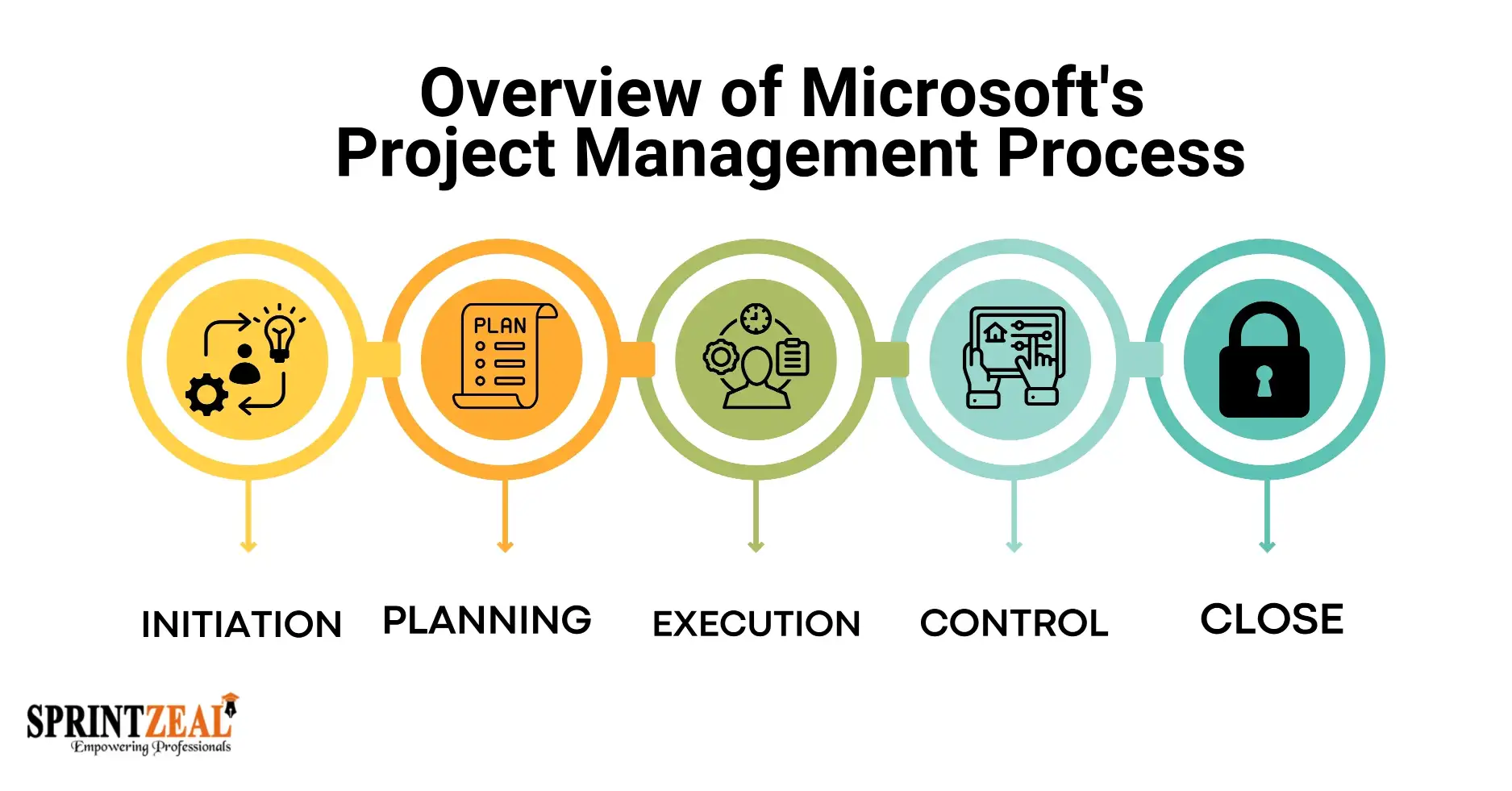
Initiation:
Microsoft does a high-level review of a project's viability, scope, and objectives, identifying important business objectives and stakeholders and clearly describing the scope to ensure alignment with strategic goals.
Planning:
Microsoft's planning phase comprises carrying out the project, creating timelines, allocating resources, and preparing for hazards. The work breakdown structure (WBS) separates the project into manageable tasks and deliverables, assigning each job to team members and giving a clear path for the project.
Execution:
Microsoft's project execution phase stresses cross-team collaboration and communication, with the team carrying out activities described in the WBS via daily stand-ups or weekly meetings to guarantee alignment and effective completion.
Control:
The project's progress will be monitored against the initial schedule to ensure that it stays on track in terms of scope, time, and money, and stakeholders get frequent updates and progress reports using Microsoft Project and Power BI dashboards.
Close:
After meeting project objectives, Microsoft conducts a demanding closure process that includes completing all deliverables, closing contracts, debriefing the team, and reviewing all deliverables to ensure they match initial scope and quality expectations.
Microsoft's project management style is adaptable and strategic, combining strategic planning, agile execution, and constant monitoring to provide high-quality results. It focuses on teamwork, resource management, and risk reduction, aligning projects with corporate objectives and responding to changing demands.
Agile and Hybrid Methodologies: Microsoft frequently utilizes both agile and waterfall approaches. Microsoft often utilizes Azure DevOps (among other things) to handle agile software development processes such as sprint planning, backlog grooming, and iteration.
Communication and collaboration: Microsoft uses technology (Microsoft Teams, SharePoint, and Outlook) to facilitate stakeholder engagement internally and externally.
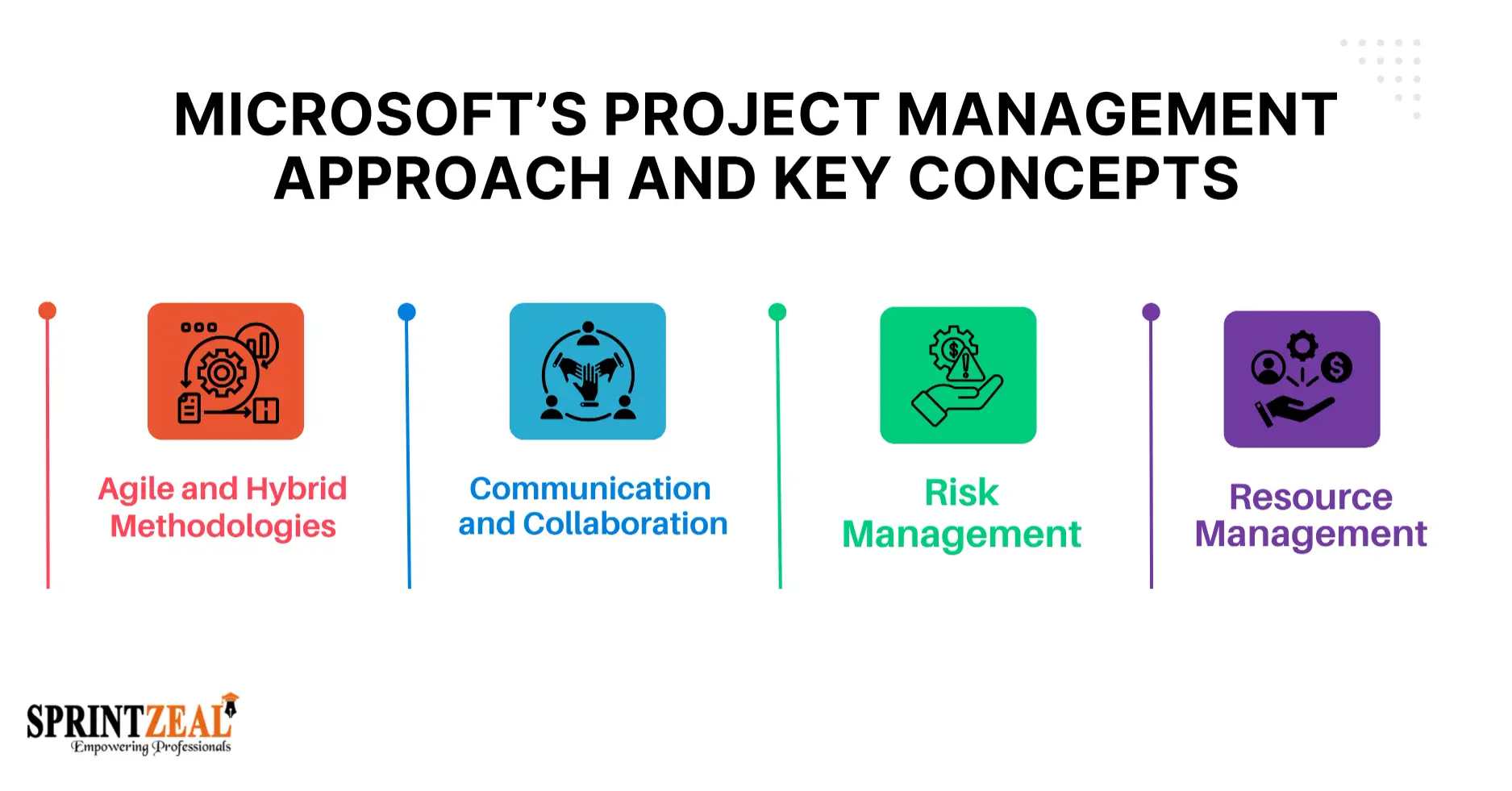
Risk Management: Proactive risk management is critical in Microsoft's project management methodology. Risks are continuously assessed and minimized utilizing Microsoft Project capabilities that enable risk tracking and the development of contingency plans.
Resource Management: Effective resource management is essential for keeping projects within scope and budget. Microsoft Project's resource allocation tools guarantee that each team member is fully utilized and that bottlenecks are avoided.
Microsoft's project management practices, associated with its strong tools, enable it to maintain a balance between innovation and efficiency. They use tools like Microsoft Project, Azure DevOps, Teams, and Power BI to execute projects in a structured yet flexible manner, assuring success in even the most complicated and large-scale efforts.
One of the most difficult components of project management is properly allocating resources. Microsoft's approach to resource management comprises not just assigning work and funds, but also deploying the necessary technology at the right time. Microsoft uses data-driven insights to distribute resources in ways that enhance productivity and creativity.
The organization receives thorough visibility into how resources are used and where changes are required using technologies such as Power BI and Microsoft Project. These technologies allow project managers to make better resource allocation decisions, ensuring that the innovation process is free of bottlenecks and resource shortages.
Microsoft further encourages a culture of cross-functional cooperation in which teams from several divisions work together. This not only maximizes resource use but also inspires creativity and new ideas, allowing innovation to thrive inside the organized framework of project management.
Microsoft's success in project management is due to its ability to establish a balance between innovation and execution, with a focus on continuous improvement via Agile retrospectives, Power BI insights, and Teams feedback loops. The company's ability to continually produce new solutions comes from its long-term strategy, which includes investing in the professional development of its project managers and teams.
Microsoft provides continual technical and soft skills training programs to prepare its workers for future demanding projects. Furthermore, stakeholder management is critical for project success because maintaining clear and open communication with stakeholders prevents scope creep and ensures that new ideas are effectively translated into real-world solutions.
Microsoft's creative approach to project management highlights its well-structured but flexible approach. Using Agile approaches, advanced software such as Microsoft Project and Teams, and a strong emphasis on risk and resource management, the organization guarantees that projects meet deadlines while providing cutting-edge innovation.
Microsoft's dedication to continual development and stakeholder involvement strengthens its position as a technology and project management industry leader.
Become a pro project manager and become a part of the global demand with a authentic PMI accridicted certification. Enroll in Sprintzeal's PMP Certification Training Course.
Our newsletter is free! Subscribe and stay updated with the latest insights get early access to exclusive training discounts!

Sprintzeal
Tue, 15 October 2024
Fri, 06 December 2024

Wed, 16 October 2024


© 2024 Sprintzeal Americas Inc. - All Rights Reserved.

 USA : +1315-322-7821
 UK : +44 7700 174870
 IND : +919008230179
 AUS : +61 480 005 455
Leave a comment