Customer Experience (CX): Definition, Importance, and Strategies for Success
Tue, 25 February 2025

Follow the stories of academics and their research expeditions
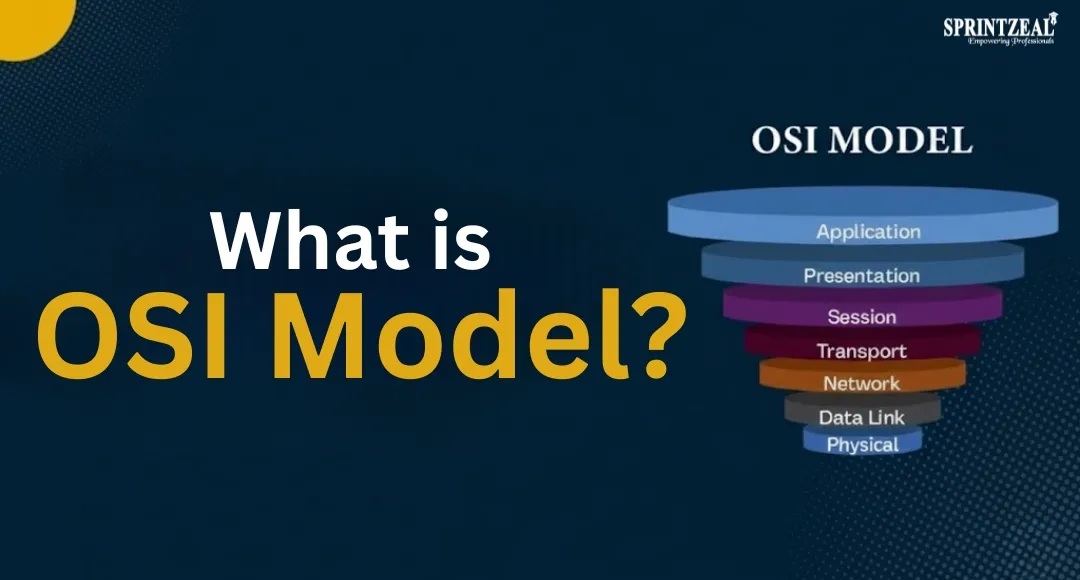
You may wonder—why is the OSI model called a “reference model” if it’s not used directly in real-world networks? The answer lies in its purpose. The OSI model was designed as a standard networking framework by the International Organization for Standardization (ISO) to serve as a universal guide. It doesn’t dictate how vendors must build their products, but it provides a common language for developers, engineers, and security teams to communicate effectively. When someone says “the issue is at Layer 3,” everyone instantly knows what that means.
The OSI (Open Systems Interconnection) Model is essentially the communication protocol that different computing systems must follow if they are to communicate with each other via a network. The International Organization for Standardization (ISO) created the OSI Model.
The OSI Model has seven layers with specific functions and operations. By using a layered structure, it allowed for the easier use of various technologies and devices with one another.
But how can this be used in when sending messages in everyday language? Imagine if you were to send a letter via courier. You would first write out the letter, place it inside of an envelope, seal it shut, and hand it off to the courier. The courier would then have to go through various checkpoints before getting the letter delivered to its intended recipient. The OSI model is quite similar to that. Each layer is like the one taking the data from the previous layer and doing its own part—whether that means getting the data ready, finding mistakes, sending it through the network, or, at last, giving it to the right application. This layered approach helps networking professionals clearly understand where things happen and where things can go wrong.
The OSI model is essentially a map in the mind of the learner or the professional which can be referred to anytime while dealing with networking. It is a tool that enables students to understand basic networking concepts and helps engineers to locate the problem in less time and therefore, the cybersecurity teams get the exact point of threat. Have you ever experienced a networking problem and asked yourself if it could be a cable issue, a routing problem or an application error? This is the point where the knowledge of the OSI model is of great help.
Basically, the Open Systems Interconnection model breaks down the complicated parts, makes communication uniform, and gives the freedom to the network staff to come up with their solutions in an organized manner. Moreover, when you get the OSI model, networking does not seem like a big challenge anymore; you can actually see how it gradually unfolds, layer by layer.
To know latest update about the Comptia A+ training, check out this blog
The OSI model, or Open Systems Interconnection Model, was a concept introduced by the International Organization for Standardization (ISO) in the late 1970s. This was the time when computer networks were rapidly evolving but very diverse in terms of their "languages".
Why, therefore, was the OSI model invented?
ISO's objective was one: to design a universal model explaining how data transfer takes place between systems irrespective of the hardware, software, or vendor. The open systems interconnection model layered communication into seven logical layers without specifying any technology. Each layer had its own set of functions. This made networking more accessible in terms of designing, understanding, and most importantly, troubleshooting.
What kind of problems was the OSI model supposed to solve?
It is said that when you are trying to solve a network problem, you should question whether the fault is with the cable, IP address, or application. OSI model provided a common reference point to engineers to locate issues layer by layer. Besides it, vendors were able to manufacture products that could work together and learners could understand networking concepts without getting confused.
Although networks in the real world use TCP/IP, the OSI model is still considered the best model for learning, troubleshooting, and security analysis. Isn't it amazing how a theoretical model from decades ago is still the basis of our understanding of modern networks?
The Open Systems Interconnection Model (OSI Model) is essentially an idea that separates complicated network communication into different layers so it is easier to understand, design, and troubleshoot. Rather than thinking of networking as an incomprehensible single unit, the OSI model arranges the data communication from one device to another into seven different layers, each having its own function and responsibility.
The Physical layer, which is the layer closest to the earth, is the layer where everything originates. It is the layer that is concerned with the actual hardware – - the cables, the switches, the electrical signals, and the bits in the form of 0s and 1s. The Data Link layer, which is one layer above, makes it possible for devices on the same network to exchange data in a reliable manner and it does this by performing tasks like error detection and MAC addressing. The Network layer, as the next one, deals with routing, thus it selects the best way that data should take to get from one network to another to reach the destination. How your data reaches the internet to be sent to the proper address is the work of this layer.
After that, the Transport layer is the layer which is commonly referred to as the core of the communication of the reliable type. The Transport layer is the one which regulates the data flow, it guarantees error recovery, and in addition to that, it can tell if speed (UDP) or reliability (TCP) is more important. Heading further up, the Session layer is the one which has the power to control the interactions between the devices it thus can open, it can keep and it can close the sessions without any problem.
As far as the Presentation layer is concerned this comes down to the security and format of the data, as this layer is responsible for data translation and application of encryption so that the systems can interact in an agreeable and safe manner. Ultimately, the Application layer is the one that is closest to users as it has direct interaction with them, it is the source of power for the daily services like web browsers, email, and file transfers.
There are many mnemonics that are very useful for learners when they want to remember the layers and one of the most common is: “All People Seem To Need Data Processing.” It's quite simple, isn't it? However, are you aware of whether the data are transferred from top to bottom or vice versa? Truth be told, it does happen in both ways. When data are sent, the operation is from top to bottom, starting at the Application layer to the Physical one, with every layer putting its 'wrapper' around the data. The data that a layer gets hold of and needs to be processed are handed over from the layer which is higher to the one which is lower. When data are being received, the operation is from bottom to top, with the data getting 'unwrapped' at each layer, until they finally get to the user.
Trying to understand the network by breaking down communication into layers was the insight that led to the creation of the OSI model which is still a valid standard today. With the help of this framework, which works in a hierarchical fashion, the complicated processes involved can be reduced into a simple model with seven layers and the functions at each level become clear and developers, designers and engineers can easily coordinate their activities and comprehend each other. The OSI model is a framework that is fundamental not only to networking theories but also to network implementation and troubleshooting, thus if you grasp how the OSI model performs, you will have not only the clarity but also the confidence as to how the current networks operate. Making use of ossi model is a good idea if you are pursuing a career in it and are preparing for the interview.
Main Task: The Physical Layer is the lowest layer of the OSI Model and is concerned with the physical transfer of unprocessed binary information (0’s and 1’s) over a physical medium. This layer also specifies all of the hardware associated with the physical medium (cables, connectors, pin assignments, voltage, timing, and speed). The Physical Layer does not differentiate between the pieces of data; instead, it simply guarantees that signals are transmitted from one location to another.
Example: For example, connecting your laptop to your router via Ethernet or Wi-Fi for Internet access is based on how you connect to an Ethernet or Wi-Fi network. All of the real work being done is happening at the Physical Layer level. If there are issues with the Ethernet cable (disconnection, breakage) or the Wi-Fi signal is too weak to facilitate the transmission of data, then the transmission won't work, no matter how advanced the communication software may be.
Common Protocols & Technologies: Several technologies that are linked with this layer are the Ethernet cabling standards, fiber-optic cables and radio signals of Wi-Fi, Bluetooth, and USB. These standards specify the physical transmission of bits over the network.
Core Function: The Data Link Layer is the layer that enables the Data Link Layer. With Data Link Layer we can communication control and has a protocol For instance the ieee language those two point errors sent the frame control field header address error the the Data Link Layer of the OSI model network control fields application launching that data to the Data Link Layer the Data Link Layer convinced in the data layer ethernet technology apparatus to the campaign
Real-World Example: The network switch at the office can be your perfect example of a situation. It takes the data and then based on the MAC addresses, it only sends the data to the device it is meant for, whereas previously by broadcasts, it sent the data to everyone. Such target delivery functionality not only saves time but also enhances security.
Common Protocols & Technologies: At this layer operate the following: local-area networking technologies such as IEEE 802.3/Ethernet, and IEEE 802.11/802.11ac Wi-Fi, Address Resolution Protocol (ARP), Media Access Control (MAC) addresses, switches, and VLANs. If two devices are on the same local network, the Data Link Layer is responsible for their communication.
Core Function: Network Layer serves as the router in the OSI model. Its main function is logical addressing and routing. It determines the way data packets move from the source network to the target network, even if the two networks are on different sides of the world.
Real-World Example: Network Layer is the one that decides the best way for your data to go through different routers and networks to get to the website server in another country that you want to access. It is the one who makes sure that the data packets go to the right IP address.
Common Protocols & Technologies: At this layer the major players are the Internet Protocol (IPv4 and IPv6), ICMP, and routing protocols like OSPF and BGP. The main location for routers is here. This is where they make their routing decisions live and on the spot.
Core Function: The main aim of the Transport Layer is the establishment of communication between the two end systems and to make the communication reliable. It divides the data into smaller pieces, keeps track of the data, and also deals with flow control and error recovery. This layer can even select the option where data delivery is both reliable and fast.
Real-World Example: While downloading a file, TCP will be the one to guarantee that all data packets will come to the destination side in the right way and in the correct order. On the other hand, if it's video streaming or online gaming, then UDP will be utilized and the main focus will be on speed thus there will be no buffering.
Common Protocols & Technologies: Layer 4 contains two main communication protocols which are TCP and UDP. The port numbers which manage different applications communicating simultaneously are also here.
Session Layer will create and maintain and terminate sessions, as well as perform the following functions: maintain synchronisation/connection of data, as well as reconnecting to the lost connection if there is a network interruption.
Example of this Layer in the Real-World: When you log into a website, the Session Layer is what keeps your session to the server alive while you log in and keep your connection with the server while on a video call with someone. If your Network goes down for a little while, you can use the Session Layer to maintain your conversation from where you left off without having to restart.
Protocols and Technologies that Take Place in this Layer: Some common protocols and technologies that provide these services to the Session Layer are NetBIOS, RPC, and session management APIs. This layer is not always visible but is crucial for effective communication.
Basic Functions: The Presentation Layer converts data formats to make them understandable. It helps ensure that data is quick to read, usable, and properly converted by using methods to encode, compress, and encrypt the information sent across the OSI model.
Example in Action: When using an HTTPS connection for a secure website, the Presentation Layer will perform both the encrypting of your information before it is transmitted and the decrypting of it upon receipt. Additionally, it will convert graphics (e.g., images or videos), text and other types of information from their various formats into the standard format used by browsers.
Common Technologies and Protocols: Common examples of protocols and technologies included in this layer would be SSL/TLS, JPEG, PNG, MP3, ASCII and Unicode. The Presentation Layer plays a key role in ensuring the interoperability and protection of data.
Core Function: Application Layer is the one that is closest to the end user. It offers network services to applications directly and gives the user the ability to interact with the network.
Real-World Example: Browser-based activities, emailing, file transfer, and cloud apps are the things that happen at this layer. It is the place where users actually interact with the network.
Common Protocols & Technologies :The application Layer is the place where the following services operate: HTTP/HTTPS, FTP, SMTP, DNS, POP3, and IMAP. If it is something that you can see or use, then it is most probably a part of Layer 7.
Data flow in the OSI model (Open Systems Interconnection Model) is based on a simple but effective principle—dividing complex network communication into understandable, manageable stages.
When a user decides on the data transmission, the entire process is started at the Application layer and then moves layer by layer down the OSI model. This is called encapsulation. While the data moves at each level, additional data (some headers or trailers) is included at each level to show the way the data must be handled and delivered.
Consider the process of wrapping a gift—each layer puts its own sticker on the parcel before dispatching it.
At the other side of the line, the opposite is done with decapsulation. The data is coming up from the Physical layer to the Application layer and at every level of the OSI the corresponding information is taken out and the remaining ones are ready for use.
Why troubleshooting becomes simpler if you know this flow? It is because understanding the data failure point in the OSI model means that you are able to locate the cause of the problem more quickly and accurately.
The OSI model, or the Open Systems Interconnection Model, is a conceptual framework that was developed to illustrate the way data moves from one system to another. It segments network communication into seven distinct layers, thus making it simpler to understand, design, and troubleshoot networks. On the other hand, the TCP/IP model can be considered as a practical solution that can be utilized in networks of the real world, like the internet, and it is based on a less complicated four-layer structure.
So what is the difference? The OSI model is about cleanliness and clarification of functions, while TCP/IP is focused on saving resources and being usable in the real world. It could be said that the OSI model is like a detailed blueprint and TCP/IP is like the real building.
Comparative analysis of the models shows that first of all, the OSI Network Layer is equivalent to the Internet Layer in the TCP/IP model. The TCP/IP Internet Layer is responsible for logical addressing and the routing of the data.
OSI Model (7 Layers) | TCP/IP Model (4 Layers) |
Application | Application |
Presentation | Application |
Session | Application |
Transport | Transport |
Network | Internet |
Data Link | Network Access |
Physical | Network Access |
This layer mapping is a good example why the Open Systems Interconnection Model is very widely used in learning and troubleshooting. Every single OSI layer has a certain function, which enables a very simple way to locate the place of the problem. For instance, is it a problem with data formatting? The Presentation layer. Is the data not going to the destination? Check the Network layer. TCP/IP which is quite powerful, however, merges the different functions of the six layers into four or five, thus, it is less descriptive for beginners but better for performance.
In fact, the TCP/IP model is the clear winner in real-life scenarios usage; it is, however, the model which is less known is the OSI one. The internet, corporate networks, and cloud infrastructure of today are the TCP/IP-based. As a consequence, the very few and simple protocols such as TCP, IP, HTTP, and FTP are directly based on it. Nevertheless, when it comes to networking concepts, interview prep, and solving difficult issues, the OSI model is usually referred to. Network engineers, security experts, and teachers still find it very useful to work with the OSI model as it gives them a common language to pinpoint the problem.
The OSI model, formally known as the Open Systems Interconnection Model, remains one of the most powerful frameworks in networking—not because it’s used directly in production, but because it helps humans think clearly about how networks work. E The OSI model gives you a structured way to find the answer instead of guessing.
In fact, the OSI model is like a checklist from a troubleshooting point of view. Is there a cable that is not plugged? This is layer 1. Are devices able to communicate on the same network? Check Layer 3. Is the application functioning slowly? It is time to check Layer 7. Such a layered method not only saves the time but also lessens the confusion and helps teams in isolating problems more quickly, a thing which is highly appreciated by every network engineer and DevOps professional.
By using the open systems interconnection model as an example, network designers are urged to think in a modular way. Each layer having a definite function makes it quite easy to create networks which are scalable, interoperable and vendor-neutral.
The cybersecurity relevance of the OSI model is equally critical. Security risks aren’t limited to a single layer, but rather they exist at different layers. For example, firewalls work at the Network layer, TLS encryption is a safeguard for the Presentation layer, and application attacks such as SQL injection are aimed at Layer 7. The use of the OSI is instrumental for security teams so that they can pinpoint threats, establish appropriate controls, and provide an effective response to those threats more quickly.
The Application Layer includes many of the protocols that we engage with on a daily basis, including HTTP, HTTPS and FTP. These protocols represent the application of Internet technologies that we commonly use; e.g., accessing a website, securely logging into a secure website or moving a file from one person to another. Have you ever stopped to consider the difference between the two "secure" and "non-secure" versions of the same protocol? This is a reflection of how the OSI Model is able to effectively keep application layers separate from security layers and transport layers.
If you move one layer down, you will find TCP and UDP at the Transport layer. TCP is the one that makes the connection reliable—thus it's great for emails and web pages—whereas UDP is a speed-oriented protocol, hence streaming and gaming are its perfect domains. How comes Netflix loads flawlessly even on weak networks? UDP is largely responsible for that.
At the Network layer, IP and ICMP are in charge of addressing and error signaling. Without them, data would have no way to come to its destination. In the end, Ethernet and ARP are at the lower layers, which allow devices to communicate within local networks. This layered transparency is the reason why the OSI model is still a great educational and troubleshooting tool.
Before you can fight cyber threats, you have to understand the battlefield. Start your security journey with the certification that every employer respects. Get grounded, get certified, and get hired with CompTIA Security+ Certification Training.
A: The OSI model is the 7-layer conceptual framework that is used to understand how data travels via a network.
A: The seven layers in each layer separate the networking functionalities, thus troubleshooting and learning get more easy.
A: It is. People still use it for learning, troubleshooting, and security mapping, even though TCP/IP is the actual protocol.
A: OSI is a conceptual 7-layer model, whereas TCP/IP is a 4-layer model that is practical.
A: Security is embedded in different layers, however, the encryption is predominantly dealt with at the Presentation layer.
You may wonder—why is the OSI model called a “reference model” if it’s not used directly in real-world networks? The answer lies in its purpose. The OSI model was designed as a standard networking framework by the International Organization for Standardization (ISO) to serve as a universal guide. It doesn’t dictate how vendors must build their products, but it provides a common language for developers, engineers, and security teams to communicate effectively. When someone says “the issue is at Layer 3,” everyone instantly knows what that means.
The OSI (Open Systems Interconnection) Model is essentially the communication protocol that different computing systems must follow if they are to communicate with each other via a network. The International Organization for Standardization (ISO) created the OSI Model.
The OSI Model has seven layers with specific functions and operations. By using a layered structure, it allowed for the easier use of various technologies and devices with one another.
But how can this be used in when sending messages in everyday language? Imagine if you were to send a letter via courier. You would first write out the letter, place it inside of an envelope, seal it shut, and hand it off to the courier. The courier would then have to go through various checkpoints before getting the letter delivered to its intended recipient. The OSI model is quite similar to that. Each layer is like the one taking the data from the previous layer and doing its own part—whether that means getting the data ready, finding mistakes, sending it through the network, or, at last, giving it to the right application. This layered approach helps networking professionals clearly understand where things happen and where things can go wrong.
The OSI model is essentially a map in the mind of the learner or the professional which can be referred to anytime while dealing with networking. It is a tool that enables students to understand basic networking concepts and helps engineers to locate the problem in less time and therefore, the cybersecurity teams get the exact point of threat. Have you ever experienced a networking problem and asked yourself if it could be a cable issue, a routing problem or an application error? This is the point where the knowledge of the OSI model is of great help.
Basically, the Open Systems Interconnection model breaks down the complicated parts, makes communication uniform, and gives the freedom to the network staff to come up with their solutions in an organized manner. Moreover, when you get the OSI model, networking does not seem like a big challenge anymore; you can actually see how it gradually unfolds, layer by layer.
To know latest update about the Comptia A+ training, check out this blog
The OSI model, or Open Systems Interconnection Model, was a concept introduced by the International Organization for Standardization (ISO) in the late 1970s. This was the time when computer networks were rapidly evolving but very diverse in terms of their "languages".
Why, therefore, was the OSI model invented?
ISO's objective was one: to design a universal model explaining how data transfer takes place between systems irrespective of the hardware, software, or vendor. The open systems interconnection model layered communication into seven logical layers without specifying any technology. Each layer had its own set of functions. This made networking more accessible in terms of designing, understanding, and most importantly, troubleshooting.
What kind of problems was the OSI model supposed to solve?
It is said that when you are trying to solve a network problem, you should question whether the fault is with the cable, IP address, or application. OSI model provided a common reference point to engineers to locate issues layer by layer. Besides it, vendors were able to manufacture products that could work together and learners could understand networking concepts without getting confused.
Although networks in the real world use TCP/IP, the OSI model is still considered the best model for learning, troubleshooting, and security analysis. Isn't it amazing how a theoretical model from decades ago is still the basis of our understanding of modern networks?
The Open Systems Interconnection Model (OSI Model) is essentially an idea that separates complicated network communication into different layers so it is easier to understand, design, and troubleshoot. Rather than thinking of networking as an incomprehensible single unit, the OSI model arranges the data communication from one device to another into seven different layers, each having its own function and responsibility.
The Physical layer, which is the layer closest to the earth, is the layer where everything originates. It is the layer that is concerned with the actual hardware – - the cables, the switches, the electrical signals, and the bits in the form of 0s and 1s. The Data Link layer, which is one layer above, makes it possible for devices on the same network to exchange data in a reliable manner and it does this by performing tasks like error detection and MAC addressing. The Network layer, as the next one, deals with routing, thus it selects the best way that data should take to get from one network to another to reach the destination. How your data reaches the internet to be sent to the proper address is the work of this layer.
After that, the Transport layer is the layer which is commonly referred to as the core of the communication of the reliable type. The Transport layer is the one which regulates the data flow, it guarantees error recovery, and in addition to that, it can tell if speed (UDP) or reliability (TCP) is more important. Heading further up, the Session layer is the one which has the power to control the interactions between the devices it thus can open, it can keep and it can close the sessions without any problem.
As far as the Presentation layer is concerned this comes down to the security and format of the data, as this layer is responsible for data translation and application of encryption so that the systems can interact in an agreeable and safe manner. Ultimately, the Application layer is the one that is closest to users as it has direct interaction with them, it is the source of power for the daily services like web browsers, email, and file transfers.
There are many mnemonics that are very useful for learners when they want to remember the layers and one of the most common is: “All People Seem To Need Data Processing.” It's quite simple, isn't it? However, are you aware of whether the data are transferred from top to bottom or vice versa? Truth be told, it does happen in both ways. When data are sent, the operation is from top to bottom, starting at the Application layer to the Physical one, with every layer putting its 'wrapper' around the data. The data that a layer gets hold of and needs to be processed are handed over from the layer which is higher to the one which is lower. When data are being received, the operation is from bottom to top, with the data getting 'unwrapped' at each layer, until they finally get to the user.
Trying to understand the network by breaking down communication into layers was the insight that led to the creation of the OSI model which is still a valid standard today. With the help of this framework, which works in a hierarchical fashion, the complicated processes involved can be reduced into a simple model with seven layers and the functions at each level become clear and developers, designers and engineers can easily coordinate their activities and comprehend each other. The OSI model is a framework that is fundamental not only to networking theories but also to network implementation and troubleshooting, thus if you grasp how the OSI model performs, you will have not only the clarity but also the confidence as to how the current networks operate. Making use of ossi model is a good idea if you are pursuing a career in it and are preparing for the interview.
The OSI model, or the Open Systems Interconnection Model, is a conceptual framework that was developed to illustrate the way data moves from one system to another. It segments network communication into seven distinct layers, thus making it simpler to understand, design, and troubleshoot networks. On the other hand, the TCP/IP model can be considered as a practical solution that can be utilized in networks of the real world, like the internet, and it is based on a less complicated four-layer structure.
So what is the difference? The OSI model is about cleanliness and clarification of functions, while TCP/IP is focused on saving resources and being usable in the real world. It could be said that the OSI model is like a detailed blueprint and TCP/IP is like the real building.
Comparative analysis of the models shows that first of all, the OSI Network Layer is equivalent to the Internet Layer in the TCP/IP model. The TCP/IP Internet Layer is responsible for logical addressing and the routing of the data.
|
OSI Model (7 Layers) |
TCP/IP Model (4 Layers) |
|
Application |
Application |
|
Presentation |
Application |
|
Session |
Application |
|
Transport |
Transport |
|
Network |
Internet |
|
Data Link |
Network Access |
|
Physical |
Network Access |
This layer mapping is a good example why the Open Systems Interconnection Model is very widely used in learning and troubleshooting. Every single OSI layer has a certain function, which enables a very simple way to locate the place of the problem. For instance, is it a problem with data formatting? The Presentation layer. Is the data not going to the destination? Check the Network layer. TCP/IP which is quite powerful, however, merges the different functions of the six layers into four or five, thus, it is less descriptive for beginners but better for performance.
In fact, the TCP/IP model is the clear winner in real-life scenarios usage; it is, however, the model which is less known is the OSI one. The internet, corporate networks, and cloud infrastructure of today are the TCP/IP-based. As a consequence, the very few and simple protocols such as TCP, IP, HTTP, and FTP are directly based on it. Nevertheless, when it comes to networking concepts, interview prep, and solving difficult issues, the OSI model is usually referred to. Network engineers, security experts, and teachers still find it very useful to work with the OSI model as it gives them a common language to pinpoint the problem.
The OSI model, formally known as the Open Systems Interconnection Model, remains one of the most powerful frameworks in networking—not because it’s used directly in production, but because it helps humans think clearly about how networks work. E The OSI model gives you a structured way to find the answer instead of guessing.
In fact, the OSI model is like a checklist from a troubleshooting point of view. Is there a cable that is not plugged? This is layer 1. Are devices able to communicate on the same network? Check Layer 3. Is the application functioning slowly? It is time to check Layer 7. Such a layered method not only saves the time but also lessens the confusion and helps teams in isolating problems more quickly, a thing which is highly appreciated by every network engineer and DevOps professional.
By using the open systems interconnection model as an example, network designers are urged to think in a modular way. Each layer having a definite function makes it quite easy to create networks which are scalable, interoperable and vendor-neutral.
The cybersecurity relevance of the OSI model is equally critical. Security risks aren’t limited to a single layer, but rather they exist at different layers. For example, firewalls work at the Network layer, TLS encryption is a safeguard for the Presentation layer, and application attacks such as SQL injection are aimed at Layer 7. The use of the OSI is instrumental for security teams so that they can pinpoint threats, establish appropriate controls, and provide an effective response to those threats more quickly.
The Application Layer includes many of the protocols that we engage with on a daily basis, including HTTP, HTTPS and FTP. These protocols represent the application of Internet technologies that we commonly use; e.g., accessing a website, securely logging into a secure website or moving a file from one person to another. Have you ever stopped to consider the difference between the two "secure" and "non-secure" versions of the same protocol? This is a reflection of how the OSI Model is able to effectively keep application layers separate from security layers and transport layers.
If you move one layer down, you will find TCP and UDP at the Transport layer. TCP is the one that makes the connection reliable—thus it's great for emails and web pages—whereas UDP is a speed-oriented protocol, hence streaming and gaming are its perfect domains. How comes Netflix loads flawlessly even on weak networks? UDP is largely responsible for that.
At the Network layer, IP and ICMP are in charge of addressing and error signaling. Without them, data would have no way to come to its destination. In the end, Ethernet and ARP are at the lower layers, which allow devices to communicate within local networks. This layered transparency is the reason why the OSI model is still a great educational and troubleshooting tool.
Before you can fight cyber threats, you have to understand the battlefield. Start your security journey with the certification that every employer respects. Get grounded, get certified, and get hired with CompTIA Security+ Certification Training.
A: The OSI model is the 7-layer conceptual framework that is used to understand how data travels via a network.
A: The seven layers in each layer separate the networking functionalities, thus troubleshooting and learning get more easy.
A: It is. People still use it for learning, troubleshooting, and security mapping, even though TCP/IP is the actual protocol.
A: OSI is a conceptual 7-layer model, whereas TCP/IP is a 4-layer model that is practical.
A: Security is embedded in different layers, however, the encryption is predominantly dealt with at the Presentation layer.

Sprintzeal
Tue, 25 February 2025
Mon, 31 March 2025

Tue, 25 February 2025


© 2024 Sprintzeal Americas Inc. - All Rights Reserved.

 USA : +1315-322-7821
 UK : +44 7700 174870
 IND : +919008230179
 AUS : +61 480 005 455
Leave a comment