What Is Secure Access Service Edge (SASE)?
Tue, 15 October 2024

Follow the stories of academics and their research expeditions

The product management frameworks assess, analyze, define, deliver, and execute innovative products that customers need. The framework aligns with organizational structure, models, and workflows that benefit the business.
With better competitors and changing, product improvements with thousands of similar products out in the market, the product management framework guides numerous companies to understand the product value and to propel the product management strategy forward to the next level.
Multiple aspects like budget, pricing, channels, collaborators, and others come into play to optimize and develop a customer-oriented product.
This article covers the 7 top product management frameworks applied by various companies. Such a framework successfully ensures the product caters adequate value to the business and customer's level in the dynamic market.
Who does the Project Management Frameworks?
Product managers from the beginning till the end of the product success along with the product team emphasize research, planning, and organizing to meet product standards and implement a powerful market strategy.
In fact, Product Lifecycle Management plays an integral role to plan, testing, launching, conceiving, deliver before the exposure of the products or services in the market. This product is split into four portions;
Internal: Current Teams, Management
External: Supply Chain, Market
Upstream: Planning, Development, Launch
Downstream: In-Progress Lifecycle Management
The main objective and goal are not only to reach customer satisfaction with project success but to apply a feasible strategy to review work processes that benefits the organization and your product.
The product management role demands product management skills like hands-on accountability, collaboration with multiple internal stakeholders, and achieving the company brand standards.
Entrepreneurs, Project Managers, and Market leaders apply product management frameworks to deliver successful and better products. Frameworks simplify the product-building methodology, and processes and identify the issues or problems with the changes that need to be done. This approach aims to solve customer problems, reach user-intent requirements, outplay the other competitors, grow market shares and maintain consistent brand awareness at the business game.
Here are the saving 7 popular frameworks in practice to polish and develop a quality product:
Storytelling
Storytelling is the most basic framework for mobilities, performativity, and performances to help consolidate hypothetical concepts and break down complex contents that aid brands to communicate to their target audience.
Just like a story has a character, beginning, body, and ending; a product must have stories too. Similarly, in a storytelling framework, product managers must aim at the target audience, the need for their product or service, how their service provides a solution, and the parameters of the product in terms of market share, brand awareness, subscriptions, returns and customer experience that help to create customer-oriented products.
CIRCLES
A CIRCLES method is a problem-solving framework that guides project managers to approach an introspective response to any product design question.
It comprises seven linear steps to follows as to,
Comprehend the situation (What? Why? Who? How?): Know about the need for the product and its client's requirements.
Identify the customer: Design persons for your target audience.
Report the customer’s needs: Create lists of why customers might require the product.
Cut, through prioritization: Base the prioritization of products that are more important to create.
List solutions: Possible solutions to resolve issues.
Evaluate tradeoffs: Analyze, and evaluate objectives and solutions options with the pros and cons of the solutions.
Summarize your recommendation: Design a product summary of the above points.
AARRR
It is an Agile Product Management Framework that includes five methods to help businesses grow.
The AARR comprises,
Acquisition: Implements strategic plans to acquire new customers.
Activation: Focus to develop better customer experience service.
Retention: Drive insights and brainstorm on improvising products to maintain consistent new and old customers.
Revenue: Draw ideas to escalate finance growth through your customers.
Referral: Delivers quality product quality that gains users' trust and recommendation to others through them.
HEART
The HEART Product Management Framework designed by the Google Research Team is a methodology to improve the user experience (UX) of software. The rows are the steps, and the columns are the parameters. Parameters include goals, signals, and metrics to determine and monitor product results.

Following are the steps,
Happiness: Scales feedback, experience, and features secure from the clients.
Engagement: Gauge the number of users engaging or interacting per given time.
Adoption: The number of signups, subscriptions, and new users with the product.
Retention: Measures active users, repeat purchases, and return customers from customer data.
Task Success: Number of successful goals by users from the assigned goals using the product or features.
5 Whys
The 5 Whys enables the product managers to solve the main cause of problems or issues. These superficial issues or problems are analyzed to reach the root cause that questions the situation 5 times. This, in turn, unlocked new ways to analyze a problem.
For instance; ask about;
Why did the issue occur? (1) If the problem runs into another underlying problem, ask again, why did this occur? (2). Similarly, until the root cause is confirmed. A total of 5 Whys is necessary.
4Ps of Marketing
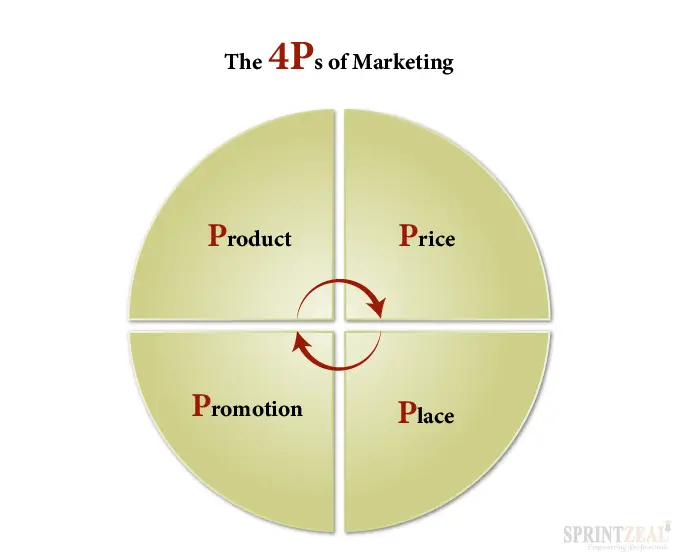
A process where the four key considerations perform analysis for overall stages before successfully marketing a product or service. The 4Ps of marketing comprise:
Product: Outlines the features (form, functions, appearance, and packing) of the product or service.
Price: Pricing strategy is studied by taking considerations of the discount, offer, perceived value, and devaluation with the trend, and time in particular. Pricing value is a key consideration for a customer.
Place: Activities in which the release of the product or service will be stored, transported, and target market for selling.
Promotion: Circulating information about the product, product line, brand, and company to potential buyers through public relations, campaigns, online advertisement, and others.
5 Cs of Pricing
The 5 Cs of pricing is a system utilized by lenders to calculate the creditworthiness of your customers for your product or service. Various 5 Cs are;
Cost: This factor is the most integral section which affects pricing decisions. One must know your product cost structure in and out.
Customers: Product value by customers must be in tune with the price, market size, buying process, trends, and customer satisfaction.
Channels of distribution: Considerations of how much intermediaries, third parties, alliances, transportation, and other distribution channels raise the product price.
Competition: A bird's eye view of current and prospective competitors with similar product costs and market share.
Compatibility: Examine an adaptable approach with the total pricing and sales objectives to boost your business.

Without product management frameworks, it will be an exhausting metric to figure out the issues affecting your product and ways to sustainable changes to prioritize the requirements.
It actually provides the simplest workflows that allow the overall team involvement in the product to work without any roadblocks about the product.
Furthermore, it is the quickest solution to eliminate deliverables delays and is a saver for business.
To further your career in project management and product management, a thorough understanding of these concepts is a must. Getting a certification offered by a governing body like PMI can help prove your competence in this regard. Taking the help of a reputed training body like Sprintzeal will be highly beneficial in the pursuit of this knowledge as well as the certifications. Join Sprintzeal now!
Courses to check out,
PRINCE2® 6th Edition Foundation Certification Training Course
PMI PBA Certification Training Course
What are product management frameworks?
Product development frameworks are a step-by-step approach to creating and growing businesses.
A product roadmap to discover, solve problems, backlog items, prioritize, and decide product objectives and ideas with the product team to achieve product success.
What are the five stages of product management frameworks?
The five major stages in product management frameworks are;
Identify: Finding customer requirements and managing product ideas.
Develop: Initiate vision to problem-solving.
Implement: A guide for having effective management.
Prioritize: Organize product features as per the relevancy and demand.
Delivery: Estimate and meet the deliverables and maintain product records and performance.
What are the 3 major areas of product management?
The product management frameworks focus on these three major areas;
- Product discovery
- Product Planning
- Product Development
What is a product framework?
A Product Management Framework is a series of processes an organization or company follows during the product creation process. It gives a pyramid of clarity with the time it takes to produce a quality product that interests customers.
The product management frameworks assess, analyze, define, deliver, and execute innovative products that customers need. The framework aligns with organizational structure, models, and workflows that benefit the business.
With better competitors and changing, product improvements with thousands of similar products out in the market, the product management framework guides numerous companies to understand the product value and to propel the product management strategy forward to the next level.
Multiple aspects like budget, pricing, channels, collaborators, and others come into play to optimize and develop a customer-oriented product.
This article covers the 7 top product management frameworks applied by various companies. Such a framework successfully ensures the product caters adequate value to the business and customer's level in the dynamic market.
Who does the Project Management Frameworks?
Product managers from the beginning till the end of the product success along with the product team emphasize research, planning, and organizing to meet product standards and implement a powerful market strategy.
In fact, Product Lifecycle Management plays an integral role to plan, testing, launching, conceiving, deliver before the exposure of the products or services in the market. This product is split into four portions;
Internal: Current Teams, Management
External: Supply Chain, Market
Upstream: Planning, Development, Launch
Downstream: In-Progress Lifecycle Management
The main objective and goal are not only to reach customer satisfaction with project success but to apply a feasible strategy to review work processes that benefits the organization and your product.
The product management role demands product management skills like hands-on accountability, collaboration with multiple internal stakeholders, and achieving the company brand standards.
Entrepreneurs, Project Managers, and Market leaders apply product management frameworks to deliver successful and better products. Frameworks simplify the product-building methodology, and processes and identify the issues or problems with the changes that need to be done. This approach aims to solve customer problems, reach user-intent requirements, outplay the other competitors, grow market shares and maintain consistent brand awareness at the business game.
Here are the saving 7 popular frameworks in practice to polish and develop a quality product:
Storytelling
Storytelling is the most basic framework for mobilities, performativity, and performances to help consolidate hypothetical concepts and break down complex contents that aid brands to communicate to their target audience.
Just like a story has a character, beginning, body, and ending; a product must have stories too. Similarly, in a storytelling framework, product managers must aim at the target audience, the need for their product or service, how their service provides a solution, and the parameters of the product in terms of market share, brand awareness, subscriptions, returns and customer experience that help to create customer-oriented products.
CIRCLES
A CIRCLES method is a problem-solving framework that guides project managers to approach an introspective response to any product design question.
It comprises seven linear steps to follows as to,
Comprehend the situation (What? Why? Who? How?): Know about the need for the product and its client's requirements.
Identify the customer: Design persons for your target audience.
Report the customer’s needs: Create lists of why customers might require the product.
Cut, through prioritization: Base the prioritization of products that are more important to create.
List solutions: Possible solutions to resolve issues.
Evaluate tradeoffs: Analyze, and evaluate objectives and solutions options with the pros and cons of the solutions.
Summarize your recommendation: Design a product summary of the above points.
AARRR
It is an Agile Product Management Framework that includes five methods to help businesses grow.
The AARR comprises,
Acquisition: Implements strategic plans to acquire new customers.
Activation: Focus to develop better customer experience service.
Retention: Drive insights and brainstorm on improvising products to maintain consistent new and old customers.
Revenue: Draw ideas to escalate finance growth through your customers.
Referral: Delivers quality product quality that gains users' trust and recommendation to others through them.
HEART
The HEART Product Management Framework designed by the Google Research Team is a methodology to improve the user experience (UX) of software. The rows are the steps, and the columns are the parameters. Parameters include goals, signals, and metrics to determine and monitor product results.
Following are the steps,
Happiness: Scales feedback, experience, and features secure from the clients.
Engagement: Gauge the number of users engaging or interacting per given time.
Adoption: The number of signups, subscriptions, and new users with the product.
Retention: Measures active users, repeat purchases, and return customers from customer data.
Task Success: Number of successful goals by users from the assigned goals using the product or features.
5 Whys
The 5 Whys enables the product managers to solve the main cause of problems or issues. These superficial issues or problems are analyzed to reach the root cause that questions the situation 5 times. This, in turn, unlocked new ways to analyze a problem.
For instance; ask about;
Why did the issue occur? (1) If the problem runs into another underlying problem, ask again, why did this occur? (2). Similarly, until the root cause is confirmed. A total of 5 Whys is necessary.
4Ps of Marketing
A process where the four key considerations perform analysis for overall stages before successfully marketing a product or service. The 4Ps of marketing comprise:
Product: Outlines the features (form, functions, appearance, and packing) of the product or service.
Price: Pricing strategy is studied by taking considerations of the discount, offer, perceived value, and devaluation with the trend, and time in particular. Pricing value is a key consideration for a customer.
Place: Activities in which the release of the product or service will be stored, transported, and target market for selling.
Promotion: Circulating information about the product, product line, brand, and company to potential buyers through public relations, campaigns, online advertisement, and others.
5 Cs of Pricing
The 5 Cs of pricing is a system utilized by lenders to calculate the creditworthiness of your customers for your product or service. Various 5 Cs are;
Cost: This factor is the most integral section which affects pricing decisions. One must know your product cost structure in and out.
Customers: Product value by customers must be in tune with the price, market size, buying process, trends, and customer satisfaction.
Channels of distribution: Considerations of how much intermediaries, third parties, alliances, transportation, and other distribution channels raise the product price.
Competition: A bird's eye view of current and prospective competitors with similar product costs and market share.
Compatibility: Examine an adaptable approach with the total pricing and sales objectives to boost your business.
Without product management frameworks, it will be an exhausting metric to figure out the issues affecting your product and ways to sustainable changes to prioritize the requirements.
It actually provides the simplest workflows that allow the overall team involvement in the product to work without any roadblocks about the product.
Furthermore, it is the quickest solution to eliminate deliverables delays and is a saver for business.
To further your career in project management and product management, a thorough understanding of these concepts is a must. Getting a certification offered by a governing body like PMI can help prove your competence in this regard. Taking the help of a reputed training body like Sprintzeal will be highly beneficial in the pursuit of this knowledge as well as the certifications. Join Sprintzeal now!
Courses to check out,
PRINCE2® 6th Edition Foundation Certification Training Course
PMI PBA Certification Training Course
What are product management frameworks?
Product development frameworks are a step-by-step approach to creating and growing businesses.
A product roadmap to discover, solve problems, backlog items, prioritize, and decide product objectives and ideas with the product team to achieve product success.
What are the five stages of product management frameworks?
The five major stages in product management frameworks are;
Identify: Finding customer requirements and managing product ideas.
Develop: Initiate vision to problem-solving.
Implement: A guide for having effective management.
Prioritize: Organize product features as per the relevancy and demand.
Delivery: Estimate and meet the deliverables and maintain product records and performance.
What are the 3 major areas of product management?
The product management frameworks focus on these three major areas;
- Product discovery
- Product Planning
- Product Development
What is a product framework?
A Product Management Framework is a series of processes an organization or company follows during the product creation process. It gives a pyramid of clarity with the time it takes to produce a quality product that interests customers.

Nchumbeni Yanthan
Nchumbeni, a content specialist, creates easy-to-understand educational content, helping diverse clients and millions of learners achieve career goals with clarity and impact.
Tue, 15 October 2024
Fri, 06 December 2024

Wed, 16 October 2024


© 2024 Sprintzeal Americas Inc. - All Rights Reserved.

 USA : +1315-322-7821
 UK : +44 7700 174870
 IND : +919008230179
 AUS : +61 480 005 455
Leave a comment