What Is Secure Access Service Edge (SASE)?
Tue, 15 October 2024

Follow the stories of academics and their research expeditions

What is Project Description? In project management, a Project Description serves as an important document that outlines the key details, objectives, and scope of the entire project. It provides a clear roadmap for all stakeholders involved, ensuring a common understanding of the project's purpose and guiding successful execution.
A project manager, a team member, or a common project client, understanding how to write an effective project description helps every project staff member since it is essential for effective project planning and communication.
The project's essence is captured in a project description, which also lays the groundwork for the project's successful completion. It summarizes the project's objectives, deliverables, timetables, available resources, and possible dangers.
One of a project description's key objectives is to provide decision-makers with a strong foundation. It can be used by stakeholders to evaluate the project's likelihood of success, determine how well it fits with organizational objectives, and determine what has to be done to make it happen.
In this Comprehensive Project Description Guide, we shall discuss all the necessary concepts that help businesses maintain a keen understanding of the quality, progress, and deliverables of a project.
As discussed earlier, a project description is a concise document that provides an overview of your project, its objectives, deliverables, and key details. Hence, it becomes crucial to extend the project services and their outcomes. The following are a few key components and structures of a well-crafted project description that can help create a very efficient Project Description.
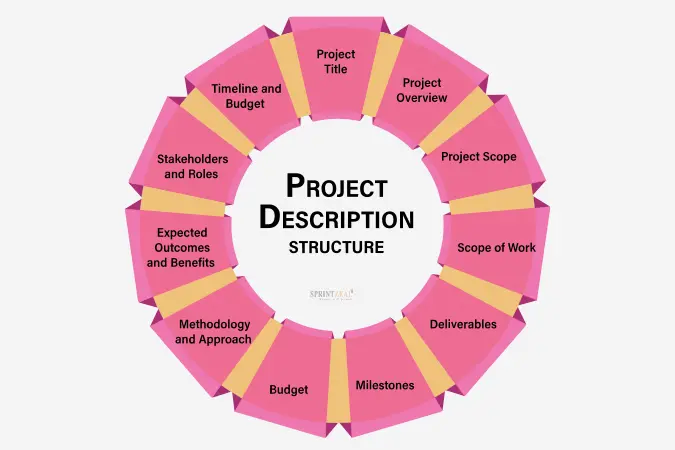
Key components of a project description include:
- Project Title: Create a concise and attention-grabbing title that encapsulates the essence of the project.
- Project Overview: Provide a brief introductory section that provides a brief summary of the project, highlighting its main objectives and significance.
- Project Scope: Clearly define the boundaries and extent of the project, including what is included and what is not.
- Scope of Work: Outlining the boundaries and limitations of the project
- Deliverables: Outlining the tangible outputs or outcomes expected from the project and specifying what will be delivered upon completion
- Milestones: Key checkpoints or deadlines to track progress and ensure timely completion.
- Budget: Providing an estimate of the project's financial resources required to accomplish the objectives
- Methodology and Approach: Describing the approach, methodologies, and tools that will be utilized to execute the project successfully
- Expected Outcomes and Benefits: Here, start creating a section of anticipated results and benefits of the project.
- Stakeholders and Roles: Identify the key stakeholders involved in the project and define their roles and responsibilities.
- Timeline and Budget: Setting realistic timelines for project completion and outlining the estimated budget
Preparing to Write a Project Description
Before diving into writing the project description, proper preparation is essential to ensure that the document accurately reflects the project's goals and aligns with the needs of the stakeholders.
Before putting pen to paper (or fingers to the keyboard), consider the following steps:
Define Project Goals and Objectives: Clearly articulate the primary goals and objectives you aim to achieve through the project. Ensure they are specific, measurable, achievable, relevant, and time-bound (SMART).
Identify Target Audience and Stakeholders: Determine who your project description is intended for, like its intended audience, and tailor the language and content accordingly. Consider the interests and needs of various stakeholders, including clients, team members, investors, and grant reviewers.
Conduct Research and Gather Necessary Information: Gather all the relevant information related to your project by adding key concepts like market research, background details, statistical data, industry trends, or any other supporting information that will help you communicate the project's value effectively.
Crafting an Effective Project Description
Crafting an effective project description requires attention to detail and a clear understanding of your project. Follow these steps to create a compelling and informative project description:

- Clearly State the Project's Purpose: Begin by providing a concise statement that clearly defines the purpose and communicates the intended outcomes of your project. This sets the tone and captures the reader's attention from the start.
- Outline the Project Scope: Clearly define the boundaries and scope of your project. This guarantees that the stakeholders are provided with a clear understanding of what the project includes and excludes.
- Specify Deliverables and Milestones: Clearly outline the specific deliverables and milestones that will be achieved throughout the project's lifecycle. This helps stakeholders visualize the progress and ensures everyone is aligned on the project's timeline.
- Describe the Project Methodology and Approach: Provide an overview of the methodology and approach that will be employed to accomplish the project's objectives. This demonstrates your strategic thinking and helps stakeholders understand the project's execution plan.
- Highlight Expected Outcomes and Benefits: Articulate the expected outcomes and benefits of the project. Will it increase efficiency, generate revenue, or address a specific problem? Clearly communicate the value proposition to engage and motivate stakeholders.
When structuring and formatting your project description, to ensure that your project description is clear, concise, and visually appealing, consider the following tips:
- Organize the Document: Structure the project description into sections or headings to enhance readability and navigation.
- Use Clear and Concise Language: Communicate your ideas using straightforward language, avoiding jargon or complex terminology that may confuse readers.
- Incorporate Visual Elements: Where appropriate, incorporate visual elements such as charts, graphs, or diagrams to enhance understanding and visualize key information.
- Proofread and Edit: Thoroughly proofread your project description to eliminate any grammatical or spelling errors. Edit for clarity, coherence, and professionalism to ensure a polished final document.
Reviewing and Finalizing the Project Description
Obtaining feedback and conducting a thorough review process is crucial to ensuring the quality and effectiveness of your project description. Consider the following steps before finalizing your project description:
Seek Feedback from Stakeholders and Subject Matter Experts: Share your project description with relevant stakeholders and subject matter experts to gather valuable feedback. Incorporate their suggestions and address any concerns or gaps identified.
Make Revisions Based on Feedback: Review the feedback received and make necessary revisions to improve the clarity, accuracy, and overall quality of your project description.
Ensure Consistency and Coherence: Double-check that your project description maintains a consistent tone, style, and formatting throughout. Ensure all sections are logically organized and flow seamlessly.
Finalize the Project Description: Once you are satisfied with the content and structure, finalize your project description and prepare it for distribution or submission.
A well-written project description is a useful tool for aligning stakeholders, effectively communicating project information, and directing the project's successful implementation. You will have the skills and information necessary to help you produce a project description that grabs attention, involves stakeholders, and communicates the essence of your project if you follow the instructions provided in this tutorial.
Remember to clearly define your project's goals, outline the description to your audience, outline the scope and deliverables, incorporate key components, and present your information clearly and professionally by seeking feedback to ensure a polished final documentation.
This essential skill will contribute to your success in managing projects and achieving desired outcomes.

Sprintzeal is your one stop destination for mastering all your project management skills that help you skyrocket your resume to your dreams job. With Sprintzeal’s comprehensive training, you will be able to master all key components of also refine necessary skills that help can help you land in your dream job.
Sprintzeal’s PMP certification tanning is designed with a wide range of project management topics, including project initiation, planning, execution, monitoring, and closure. With our experienced instructors and comprehensive study materials, you'll gain a deep understanding of project management principles, methodologies, and tools.
Start your journey to becoming a certified project manager today and boost your career with Sprintzeal’s CAPM Certification Training!
Master the Art of Project Management with PMP Certification and Take Your Career to the Next Level as a Project Manager. Enroll Now!
What is Project Description? In project management, a Project Description serves as an important document that outlines the key details, objectives, and scope of the entire project. It provides a clear roadmap for all stakeholders involved, ensuring a common understanding of the project's purpose and guiding successful execution.
A project manager, a team member, or a common project client, understanding how to write an effective project description helps every project staff member since it is essential for effective project planning and communication.
The project's essence is captured in a project description, which also lays the groundwork for the project's successful completion. It summarizes the project's objectives, deliverables, timetables, available resources, and possible dangers.
One of a project description's key objectives is to provide decision-makers with a strong foundation. It can be used by stakeholders to evaluate the project's likelihood of success, determine how well it fits with organizational objectives, and determine what has to be done to make it happen.
In this Comprehensive Project Description Guide, we shall discuss all the necessary concepts that help businesses maintain a keen understanding of the quality, progress, and deliverables of a project.
As discussed earlier, a project description is a concise document that provides an overview of your project, its objectives, deliverables, and key details. Hence, it becomes crucial to extend the project services and their outcomes. The following are a few key components and structures of a well-crafted project description that can help create a very efficient Project Description.
Key components of a project description include:
- Project Title: Create a concise and attention-grabbing title that encapsulates the essence of the project.
- Project Overview: Provide a brief introductory section that provides a brief summary of the project, highlighting its main objectives and significance.
- Project Scope: Clearly define the boundaries and extent of the project, including what is included and what is not.
- Scope of Work: Outlining the boundaries and limitations of the project
- Deliverables: Outlining the tangible outputs or outcomes expected from the project and specifying what will be delivered upon completion
- Milestones: Key checkpoints or deadlines to track progress and ensure timely completion.
- Budget: Providing an estimate of the project's financial resources required to accomplish the objectives
- Methodology and Approach: Describing the approach, methodologies, and tools that will be utilized to execute the project successfully
- Expected Outcomes and Benefits: Here, start creating a section of anticipated results and benefits of the project.
- Stakeholders and Roles: Identify the key stakeholders involved in the project and define their roles and responsibilities.
- Timeline and Budget: Setting realistic timelines for project completion and outlining the estimated budget
Before diving into writing the project description, proper preparation is essential to ensure that the document accurately reflects the project's goals and aligns with the needs of the stakeholders.
Before putting pen to paper (or fingers to the keyboard), consider the following steps:
Define Project Goals and Objectives: Clearly articulate the primary goals and objectives you aim to achieve through the project. Ensure they are specific, measurable, achievable, relevant, and time-bound (SMART).
Identify Target Audience and Stakeholders: Determine who your project description is intended for, like its intended audience, and tailor the language and content accordingly. Consider the interests and needs of various stakeholders, including clients, team members, investors, and grant reviewers.
Conduct Research and Gather Necessary Information: Gather all the relevant information related to your project by adding key concepts like market research, background details, statistical data, industry trends, or any other supporting information that will help you communicate the project's value effectively.
Crafting an effective project description requires attention to detail and a clear understanding of your project. Follow these steps to create a compelling and informative project description:
- Clearly State the Project's Purpose: Begin by providing a concise statement that clearly defines the purpose and communicates the intended outcomes of your project. This sets the tone and captures the reader's attention from the start.
- Outline the Project Scope: Clearly define the boundaries and scope of your project. This guarantees that the stakeholders are provided with a clear understanding of what the project includes and excludes.
- Specify Deliverables and Milestones: Clearly outline the specific deliverables and milestones that will be achieved throughout the project's lifecycle. This helps stakeholders visualize the progress and ensures everyone is aligned on the project's timeline.
- Describe the Project Methodology and Approach: Provide an overview of the methodology and approach that will be employed to accomplish the project's objectives. This demonstrates your strategic thinking and helps stakeholders understand the project's execution plan.
- Highlight Expected Outcomes and Benefits: Articulate the expected outcomes and benefits of the project. Will it increase efficiency, generate revenue, or address a specific problem? Clearly communicate the value proposition to engage and motivate stakeholders.
When structuring and formatting your project description, to ensure that your project description is clear, concise, and visually appealing, consider the following tips:
- Organize the Document: Structure the project description into sections or headings to enhance readability and navigation.
- Use Clear and Concise Language: Communicate your ideas using straightforward language, avoiding jargon or complex terminology that may confuse readers.
- Incorporate Visual Elements: Where appropriate, incorporate visual elements such as charts, graphs, or diagrams to enhance understanding and visualize key information.
- Proofread and Edit: Thoroughly proofread your project description to eliminate any grammatical or spelling errors. Edit for clarity, coherence, and professionalism to ensure a polished final document.
Obtaining feedback and conducting a thorough review process is crucial to ensuring the quality and effectiveness of your project description. Consider the following steps before finalizing your project description:
Seek Feedback from Stakeholders and Subject Matter Experts: Share your project description with relevant stakeholders and subject matter experts to gather valuable feedback. Incorporate their suggestions and address any concerns or gaps identified.
Make Revisions Based on Feedback: Review the feedback received and make necessary revisions to improve the clarity, accuracy, and overall quality of your project description.
Ensure Consistency and Coherence: Double-check that your project description maintains a consistent tone, style, and formatting throughout. Ensure all sections are logically organized and flow seamlessly.
Finalize the Project Description: Once you are satisfied with the content and structure, finalize your project description and prepare it for distribution or submission.

Sushmith T
Our technical content writer, Sushmith, is an experienced writer, creating articles and content for websites, specializing in the areas of training programs and educational content. His writings are mainly concerned with the most major developments in specialized certification and training, e-learning, and other significant areas in the field of education.
Tue, 15 October 2024
Fri, 06 December 2024

Wed, 16 October 2024


© 2024 Sprintzeal Americas Inc. - All Rights Reserved.

 USA : +1315-322-7821
 UK : +44 7700 174870
 IND : +919008230179
 AUS : +61 480 005 455
Leave a comment