What Is Secure Access Service Edge (SASE)?
Tue, 15 October 2024

Follow the stories of academics and their research expeditions

Quality assurance (QA) is a key element of project management that takes place during the initial phase before quality control, forming part of the broader Quality Assurance System. The main goal of QA is to be process-oriented and focus on preventing product defects.
The difference between Quality Assurance Vs Quality Control is that quality control deals with the management of quality, while quality assurance assures that the product quality requested will be achieved.
Quality control focuses on detecting defects in the final product, whereas quality assurance emphasizes preventing defects during the development process. Both approaches are essential for delivering high-quality products that meet customer expectations.
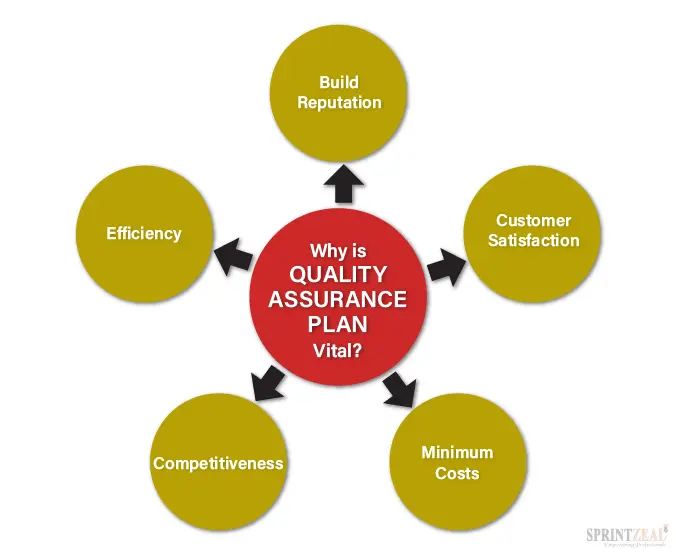
Quality assurance in project management is mainly to keep up a standard level of quality in a product or service for an organisation or business. A way to form goals, evaluate performance, implement steps to drive better results to prevent high costs, better delivery of products, and mitigate risks is through QA testing.
Typically, it performs as a medium that outlines how organisations or businesses guarantee their products or services.
This includes all the procedural measures, standards, and policies that a company must adhere to to achieve client and customer satisfaction.
For any project, implementing a quality assurance plan might be unsettling without a definitive guide. With the core quality assurance plan steps below, you can level up a perfect quality assurance plan to achieve your company's quality goals.
For any project, constructing a quality assurance plan for any company may be a hard task, but there is a way to steer clear of problems. Following these basic steps and developing an actual quality assurance plan that will help your company to accomplish its quality goals is less difficult.
Step 1: Determine Quality Standards for your product and customer's needs
Before rushing abruptly into a finished product, visualisation of the quality assurance project plan takes centre stage. Following it, understand the customer requirements to project scope, estimate outcomes, and define the steps to create the objectives.

Once the quality goals are set, ensure they align with customer needs as well as any relevant government regulations. After reviewing all factors, follow up with specific objectives and goals. The quality standards should follow the SMART (Specific, Measurable, Achievable, Relevant, Time-bound) approach.
This way, it will assist in initiating steps to certify that your deliverables, products, or services meet the required standards and serve customers better.
Step 2: Allocate Roles and Tasks
To take the quality assurance plan format to the next step, segregating team tasks is crucial. Factors such as resource availability and team size play a critical role in determining whether the product can be delivered within the set time frame. For example, organisations with limited staff may need to allocate additional tasks to existing employees while ensuring that their skills align with the tasks assigned.
Assist with and conduct training in scheduled meetings to make sure that the overall team pays equal focus on their roles and assigned activities. It prevents mistakes and resolves errors in the initial part of product development and boosts company goals to meet its customer expectations within the set deadlines.
Project managers can use this step to monitor ongoing activities and promptly address any errors that arise.
Step 3: Execute the Quality Assurance Plan
This will be a vital stage. Typically, the plan made up for the project must be ready to execute while sticking with the Quality Management and control policy.
All the staff associated with the project must equally be conscious of their role in the plan pattern. Moreover, organisations should have proper tools and employees to address or fix concerns with the QA programme. Anything that is missed out in the execution plan might cause changes in your product review. The best way to deal with such a situation is to have the managers in touch with every team member exposed to the changes, questions, and discussion on new plans.
The QA plan must also adhere to risk management protocols and product documentation guidelines. For example, in the case of fixing a defective product, team members should conduct peer reviews of deliverables and perform thorough software testing.
Step 4: Consistently Examine Results
On keeping the Quality Assurance plan active, take it as a live document that provides outcomes and changes until the project team certifies it for the final stage.
The primary goal of the QA plan should be to help the team meet its objectives, goals, and policies. Any changes or concerns raised by the team should be discussed to ensure alignment with real client expectations.
For examining any results, it’s always best to have meticulous practice with a quality assurance plan sample to understand the product necessity better.
Consider holding a working session with a sample model to review key changes, outline major plans, and initiate necessary steps to finalise the product. This approach also provides an opportunity to address any queries or concerns.
Step 5: Coping with New Requirements and Changes
This is a tricky part of the quality assurance plan document with the plan active. A few weeks or months later, on product display, collecting feedback would be a hectic process. But this works magic.
Such insights drawn from the project enable us to make the version better and make better decisions to brand, create, and market the product as per customer satisfaction.
In turn, your product can improve user experience by applying the changes and updates that suit your client's requirements and needs. Another positive outlook is that you make your customers feel valued and help support teams develop their skills.

Step 6: Build Team Engagement
Communication is essential for any project to complete a product. Lack of keeping in the loop with the team causes a gap in knowledge and late exposure to new changes or worse.
This approach is not effective but encourages teamwork across any department involved in product assurance. About 100% of the businesses that have achieved project quality stick to keeping the team in the loop.
Engaging and allocating the teams together towards a shared goal not only improves socialisation but also provides higher performance with the working schedules.
Having regular meetings and updates with peers helps set expectations by explaining how the project should be focused on and getting the right things done before set deadlines.
Unlike other factors in the quality assurance plan, communication is a must for planning, data collection, quality control, documentation, evaluation, and reporting activities.
Know more about Quality Control in Six Sigma
A quality assurance checklist helps ensure that every aspect of a project meets the required standards. Key elements to include in a quality assurance checklist are:
- Set up SQA (Software Quality Assurance) facilitation
- Product and Packaging Requirements
- Implement a quality management process
- Conduct a process review and process training
- Follow a routine calendar
- Create a project report
- Classification of Defects
- On-site checks and tests
- Staff Collaboration
- Review compliance processes
- Pinpoint process improvement areas
- Quality control post-shipment
- Proceeding to monitor quality
A few elements to include in a quality assurance checklist can be;
- Set up SQA facilitation
- Product and Packaging Requirements
- Implement a quality management process
- Conduct a process review and process training
- Follow a routine calendar
- Create a project report
- Classification of Defects
- On-site checks and tests
- Staff Collaboration
- Review compliance processes
- Pinpoint process improvement areas
- Quality control post-shipment
- Proceeding to monitor quality
Now that you understand how to create a quality assurance plan, it's time to apply these steps to your projects. Take control of your project’s quality today by implementing a well-structured QA plan. Quality Assurance gives you the strategic, tactical, and operational levels to meet customer satisfaction by providing product quality and services.
The escalation and prioritisation for quality assurance are even integral with the amount of digitalisation and trends following up with product versions better each year. This makes it even more apparent to the customers or clients as to what to expect of the best in the product.
Stepping into a product's final stage with a weak quality assurance plan would only encourage more defects and repeated versions of unwanted products. This puts it at even more risk in terms of finance and risk factors. Thus, the time taken to create a proper quality assurance plan focused on fulfilling requirements is a must in any product management cycle.
If you are looking to take up a career in quality management, explore more and get certified through Sprintzeal, trusted by millions and led by certified industry experts.
To know about the best courses, chat with our course expert to get instant help finding the options that fit your career requirements.

1. How to write a quality assurance plan?
Below are the brief methods to create a quality assurance plan;
- Define Quality Objectives
- Assign Roles and Responsibilities
- Execute the Quality Assurance Plan
- Examine Results
- Pinpoint improvement areas
- Team Collaboration and Reporting
2. What are the 8 principles of quality assurance?
The 8 principles of quality assurance include;
Principle 1: Customer focus
Principle 2: Leadership
Principle 3: People's Involvement
Principle 4: A process approach
Principle 5: Systematic approach to management
Principle 6: Continual improvement
Principle 7: Factual approach to decision-making
Principle 8: Mutually beneficial supplier relationship
3. What are the components of a quality assurance plan?
The components of a quality assurance plan comprise structure evaluation, process evaluation, and outcome evaluation.
4. What is the main goal of quality assurance?
Quality assurance is an approach to developing products with systematic evaluation of services to guide and prevent poor quality of products or services.
The goal is to identify weaknesses and pinpoint product development processes to prevent defects that may occur during the product development lifecycle.
5. How can a QA plan improve product quality?
The QA plan improves product quality with a clear objective, distribution of the task, and all the departments following quality standards. It also encompasses a never-ending assessment and area of development for maintaining high-quality products or services.
6. What are the differences between Quality Assurance and Quality Control?
Quality Control deals with the management of quality and focuses on detecting defects in the final product, while Quality Assurance provides assurance that the product quality requested will be achieved and prevents defects during the development process.

Nchumbeni Yanthan
Nchumbeni, a content specialist, creates easy-to-understand educational content, helping diverse clients and millions of learners achieve career goals with clarity and impact.
Tue, 15 October 2024
Fri, 06 December 2024

Wed, 16 October 2024


© 2024 Sprintzeal Americas Inc. - All Rights Reserved.

 USA : +1315-322-7821
 UK : +44 7700 174870
 IND : +919008230179
 AUS : +61 480 005 455
Leave a comment