Machine Learning Interview Questions and Answers 2026
Mon, 09 December 2024

Follow the stories of academics and their research expeditions
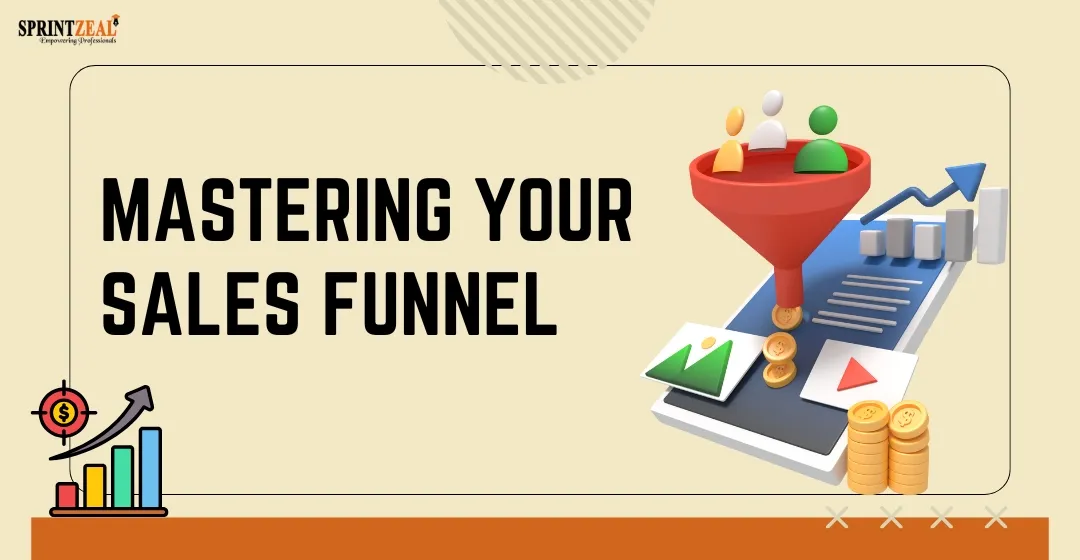
Struggling to turn your leads into customers? Many marketers pour their efforts into traffic generation, only to see that prospects drop off before converting. The core of the problem is that a lot of them still believe the customer journey is always linear, slow, and follows the same rules as in iconic Ogilvy‘s books from the 1980s.
Meanwhile, the modern customer journey is mostly nonlinear. To succeed in these circumstances, you need to bear in mind these specifics of clients’ behavior. In this article, we’ll break down each stage of the sales funnel and how you can shape it so that your sales funnel fits the needs of modern customers.
It’s a marketing term used to describe the journey that leads a customer from the moment they become aware of the brand's existence to the purchase. This lead distribution term is often referred to as a funnel, as it begins with a large number of curious users, from whom only a portion converts into clients. There are five stages of the sales funnel:
Awareness:
A user has just become aware of your product. Your main task here is to spark their interest in your brand.
Interest:
A prospect became curious and started exploring your products. They may subscribe to the newsletter, join your socials, download a lead magnet, etc.
Consideration:
A lead examines the market to decide which product suits them better.
Decision:
A lead decides whether they will purchase your product. They want to solidify their choice, so they typically double-check testimonials, compare prices, and buy the item.
Retention:
After a successful purchase, a lead is engaged and loyal. Your task here is to make them a brand advocate.
Typically, modern marketers group them into simpler categorizations: top, middle, and bottom of the sales funnel. Since the user journey is now omnichannel, this classification suits modern customers even better.
Proper sales funnel optimization is crucial for any business, but it is especially relevant for those with complex models, such as pay-per-call lead generation. Unlike web-form or e-commerce leads, which can be followed up on later, pay-per-call prospects have high purchase intent and often stick with those who respond to them as quickly as possible.
But as your business grows, manual assignment becomes too complex and slow. So, many companies are beginning to use automated lead distribution platforms to minimize response times and balance internal workload.
Even the best products can fail if your funnel leaks leads. That’s why you need to fine-tune every stage since it's the only way to ensure that you’ll receive the highest possible return on investment (ROI) for your specific situation. If you're exploring alternatives to squarespace, optimizing your funnel becomes even more critical to maximize results across different platforms.
It’s the most overlooked stage of any marketing sales funnel. If you choose to skip customer journey mapping, you have a high chance of failing even when trying your best.
The first step is to determine who you are actually talking to. Demographics won’t tell you much, as two 30-year-olds from Brooklyn may have totally different lives and buying triggers. Dig into what drives them, what frustrates them, and what makes them say “yes.”
After that, map out your potential funnels in detail. Some might check your blog three times before signing up, others might call right away. Mapping different paths helps you create tailored experiences for every lead. It reduces the chances of losing potential customers along the way. This approach becomes even more powerful when you buy business leads, as it allows you to immediately align those leads with the right funnel stage and nurture them with relevant messaging from the start.
The last step is to choose preferred communication channels and select tools that automate the whole lead distribution process. Look for comprehensive solutions that can be easily integrated with your internal services and platforms, ensuring that you’ll have a clear overview of the entire communication with the client in one place.
A typical user spends 2-3 hours on socials, so a social media sales funnel should be part of your marketing strategy to gently nurture leads towards the target action. Modern automation tools, such as chatbots, can react to users’ actions, providing them with personalized offers in direct messages.
For businesses running pay-per-call marketing campaigns, preparation becomes even more critical. If you don’t have great call tracking tools, lead distribution software, or CRM integrations, you may lose prospects that simply require a gentle nudge. So, it’s better to monitor even the tiniest aspects of customer interactions than play a guessing game, where your business is at stake.
At this point in the sales funnel, potential clients just discover your brand. They don’t know you or whether you are worthy of trust. So, establish your authority by creating educational content without any harsh promotion.
Many businesses combine organic content with paid ads to maintain visibility at all times. Good SEO helps people find you when they’re already searching, while ads give you a shortcut to new audiences. Paid retargeting ads may act as a gentle nudge to those who already know about you and just need a little reminder right before they convert.
We highly recommend that you invest in comprehensive sales funnel software. Since you already know what solutions suit you, at this stage, you should track which content, ads, and channels bring in the most engaged visitors. In most cases, free plans won’t give you a birds-eye overview and precise automation, so you should be prepared to make some investments in lead distribution software.
Now, a simple curiosity turns into serious consideration. Your main task is to nurture genuine trust and gently guide potential clients towards a decision.
Your leads don’t just want features. They want to see how your product helps them solve their specific problem. Thus, add some in-depth formats to your content marketing. You can host webinars or compare different options in your niche.
If you properly choose marketing automation tools, you already have a lot of information about your leads. It includes their browsing behavior on your website, preferences, locations where they typically browse your platform, etc. Use this data to provide tailored emails and SMS.
Businesses with numerous local branches can send notifications with local promotions if they detect that the user has changed their location. For instance, Sephora analyzes purchases of its clients even while they are travelling abroad.
Now, your potential clients evaluate the best options. To maintain high sales engagement and guide leads towards the purchase, try these four tips:
Offer live support from agents:
Sometimes, a manual just isn’t enough for users with complex situations. Live chats and hotlines are so popular since no algorithm can replace a genuine human consultation.
Reinforce your value:
Modern users have a built-in “mental adblock” so they may ignore stats that look like ads. However, when they see a success story or a case study showcasing how your product solved similar challenges, they’ll be more likely to pay attention.
Provide clear, compelling, and limited-time offers:
It can be bundle deals or personal discounts.
Follow up quickly:
If you don’t provide information quickly enough, some prospects may just switch to faster rivals.
Make the user journey as smooth as possible. The easier it is for a user to purchase a product, the higher the chances of conversion you have.
As we mentioned, the customer journey is far from linear. Account for all the differences to develop multiple lead distribution scenarios that reflect their needs and behavior. Shortening the sales cycle can stop them from drifting toward competitors.
Keep in mind that your publicly available online content should work on multiple levels, since you’ll never know at which stage readers are. It must engage those who are just becoming aware of your brand, while nudging hot leads towards the purchase.
Email gives you room to talk to people one-on-one, even when you’re sending at scale. Those businesses that combine general promotion with personalization of email, SMS, and calls accomplish the best results.
Struggling to turn your leads into customers? Many marketers pour their efforts into traffic generation, only to see that prospects drop off before converting. The core of the problem is that a lot of them still believe the customer journey is always linear, slow, and follows the same rules as in iconic Ogilvy‘s books from the 1980s.
Meanwhile, the modern customer journey is mostly nonlinear. To succeed in these circumstances, you need to bear in mind these specifics of clients’ behavior. In this article, we’ll break down each stage of the sales funnel and how you can shape it so that your sales funnel fits the needs of modern customers.
It’s a marketing term used to describe the journey that leads a customer from the moment they become aware of the brand's existence to the purchase. This lead distribution term is often referred to as a funnel, as it begins with a large number of curious users, from whom only a portion converts into clients. There are five stages of the sales funnel:
Typically, modern marketers group them into simpler categorizations: top, middle, and bottom of the sales funnel. Since the user journey is now omnichannel, this classification suits modern customers even better.
Proper sales funnel optimization is crucial for any business, but it is especially relevant for those with complex models, such as pay-per-call lead generation. Unlike web-form or e-commerce leads, which can be followed up on later, pay-per-call prospects have high purchase intent and often stick with those who respond to them as quickly as possible.
But as your business grows, manual assignment becomes too complex and slow. So, many companies are beginning to use automated lead distribution platforms to minimize response times and balance internal workload.
Even the best products can fail if your funnel leaks leads. That’s why you need to fine-tune every stage since it's the only way to ensure that you’ll receive the highest possible return on investment (ROI) for your specific situation. If you're exploring alternatives to squarespace, optimizing your funnel becomes even more critical to maximize results across different platforms.
It’s the most overlooked stage of any marketing sales funnel. If you choose to skip customer journey mapping, you have a high chance of failing even when trying your best.
The first step is to determine who you are actually talking to. Demographics won’t tell you much, as two 30-year-olds from Brooklyn may have totally different lives and buying triggers. Dig into what drives them, what frustrates them, and what makes them say “yes.”
After that, map out your potential funnels in detail. Some might check your blog three times before signing up, others might call right away. Mapping different paths helps you create tailored experiences for every lead. It reduces the chances of losing potential customers along the way. This approach becomes even more powerful when you buy business leads, as it allows you to immediately align those leads with the right funnel stage and nurture them with relevant messaging from the start.
The last step is to choose preferred communication channels and select tools that automate the whole lead distribution process. Look for comprehensive solutions that can be easily integrated with your internal services and platforms, ensuring that you’ll have a clear overview of the entire communication with the client in one place.
A typical user spends 2-3 hours on socials, so a social media sales funnel should be part of your marketing strategy to gently nurture leads towards the target action. Modern automation tools, such as chatbots, can react to users’ actions, providing them with personalized offers in direct messages.
For businesses running pay-per-call marketing campaigns, preparation becomes even more critical. If you don’t have great call tracking tools, lead distribution software, or CRM integrations, you may lose prospects that simply require a gentle nudge. So, it’s better to monitor even the tiniest aspects of customer interactions than play a guessing game, where your business is at stake.
At this point in the sales funnel, potential clients just discover your brand. They don’t know you or whether you are worthy of trust. So, establish your authority by creating educational content without any harsh promotion.
Many businesses combine organic content with paid ads to maintain visibility at all times. Good SEO helps people find you when they’re already searching, while ads give you a shortcut to new audiences. Paid retargeting ads may act as a gentle nudge to those who already know about you and just need a little reminder right before they convert.
We highly recommend that you invest in comprehensive sales funnel software. Since you already know what solutions suit you, at this stage, you should track which content, ads, and channels bring in the most engaged visitors. In most cases, free plans won’t give you a birds-eye overview and precise automation, so you should be prepared to make some investments in lead distribution software.
Now, a simple curiosity turns into serious consideration. Your main task is to nurture genuine trust and gently guide potential clients towards a decision.
Your leads don’t just want features. They want to see how your product helps them solve their specific problem. Thus, add some in-depth formats to your content marketing. You can host webinars or compare different options in your niche.
If you properly choose marketing automation tools, you already have a lot of information about your leads. It includes their browsing behavior on your website, preferences, locations where they typically browse your platform, etc. Use this data to provide tailored emails and SMS.
Businesses with numerous local branches can send notifications with local promotions if they detect that the user has changed their location. For instance, Sephora analyzes purchases of its clients even while they are travelling abroad.
Now, your potential clients evaluate the best options. To maintain high sales engagement and guide leads towards the purchase, try these four tips:
Make the user journey as smooth as possible. The easier it is for a user to purchase a product, the higher the chances of conversion you have.
As we mentioned, the customer journey is far from linear. Account for all the differences to develop multiple lead distribution scenarios that reflect their needs and behavior. Shortening the sales cycle can stop them from drifting toward competitors.
Keep in mind that your publicly available online content should work on multiple levels, since you’ll never know at which stage readers are. It must engage those who are just becoming aware of your brand, while nudging hot leads towards the purchase.
Email gives you room to talk to people one-on-one, even when you’re sending at scale. Those businesses that combine general promotion with personalization of email, SMS, and calls accomplish the best results.

Sprintzeal
Mon, 09 December 2024
Tue, 11 March 2025

Tue, 11 March 2025

© 2024 Sprintzeal Americas Inc. - All Rights Reserved.

 USA : +1315-322-7821
 UK : +44 7700 174870
 IND : +919008230179
 AUS : +61 480 005 455
Leave a comment