What Is Secure Access Service Edge (SASE)?
Tue, 15 October 2024

Follow the stories of academics and their research expeditions

How Does Spotify’s Cloud Infrastructure Powers Global Music Streaming?
Music streaming giants worldwide Spotify has completely changed how people listen to music. With 500 million active users across 180 countries, Spotify is much more than just a work of engineering. Its immense success can be attributed to its advanced cloud infrastructure, which assures users can stream music constantly from any location. The creative cloud technologies and processes that allow Spotify to deliver gazillions of tracks every day with ease are questioned in this blog.
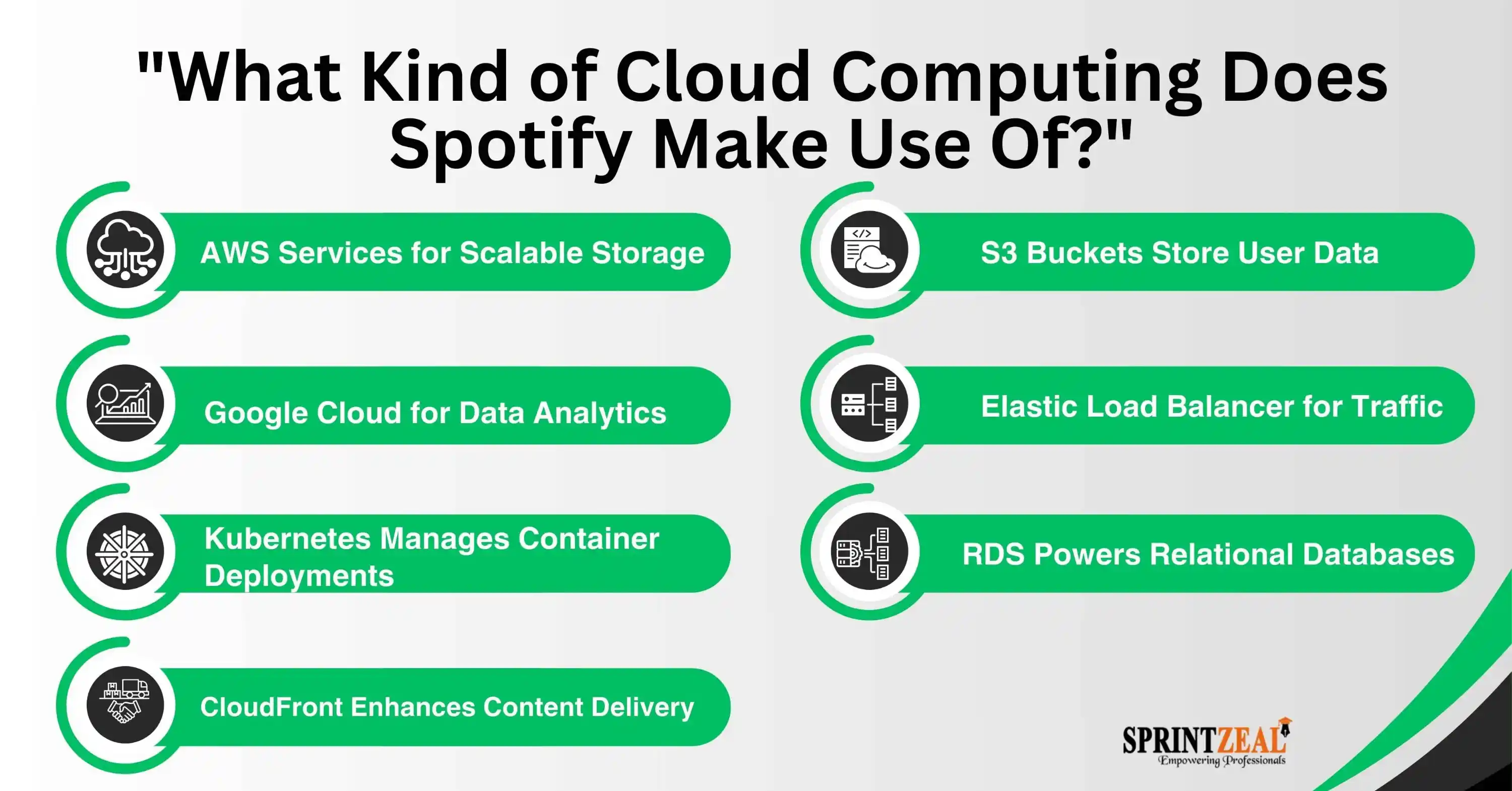
Spotify's global dominance is a result of its extensive reliance on regional cloud technology and its vast music library and user features. Since transferring to the Google Cloud Platform (GCP), Spotify has established a reliable and adaptable infrastructure by leveraging technologies like Kubernetes, BigQuery, and adaptive streaming. This article will explain the elements of Spotify's cloud platform, how it guarantees perfect streaming and the benefits of cloud computing for businesses.
A crucial part of Spotify's operations management system is Google Cloud Platform (GCP). In 2016, Spotify managed its data centers before moving to GCP. Nevertheless, Spotify decided to move to the cloud because of its user base's rapid expansion and data management's growing complexity.
Spotify chose GCP due to its:
Key Stats:
- Spotify processes over 1 billion events per day using GCP.
- The migration to GCP reduced Spotify's infrastructure costs by approximately 30%.
Spotify’s music streaming process combines cutting-edge technology and efficient architecture to deliver high-quality audio globally.
Key Stats:
- Spotify streams over 200 petabytes of data per month.
- Adaptive streaming saves Spotify an estimated 25% in bandwidth costs.
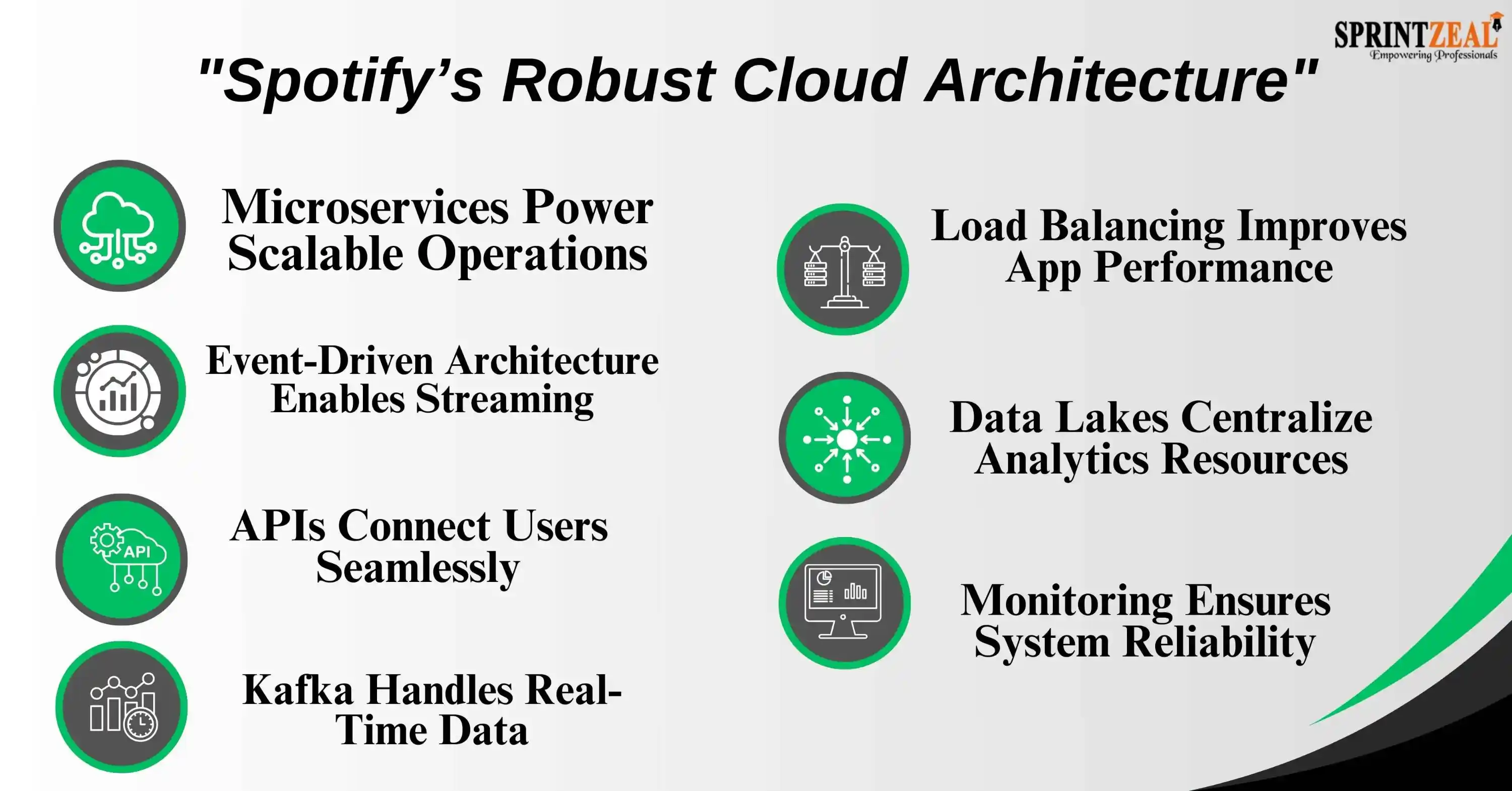
Spotify’s cloud architecture is built around microservices and Kubernetes, making it highly resilient and scalable.
Key Stats:
- Spotify’s Kubernetes clusters handle 10,000 deployments per day.
- BigQuery processes over 1 terabyte of data daily for analytics.

Spotify’s cloud infrastructure brings several benefits beyond seamless music streaming.
Key Stats:
- Personalized playlists account for 31% of Spotify’s total streams.
- Spotify’s downtime is less than 0.01%, thanks to its reliable cloud setup.
Spotify's advanced Google Cloud Platform infrastructure is the foundation of its widespread success in the music streaming market. Through Kubernetes for scalability and adaptive streaming for continuous playback, Spotify guarantees a seamless listening experience for its users everywhere. Real-time data analysis is made possible by its cloud-based architecture, helping in altering playlists and suggestions.
This innovative use of cloud technology supports rapid growth, high availability, and user satisfaction. Spotify's method serves as a template for companies looking to use cloud computing for innovation and scalability. It shows the importance of an effective cloud infrastructure to provide excellent services and keep an advantage in the intense online marketplace of today.
Interested in mastering cloud computing like Spotify? Sprintzeal offers comprehensive Cloud Computing Certification Training on cloud platforms like CompTIA Cloud+, AWS, and Azure. Gain hands-on expertise and certifications recognized globally. Start your cloud journey with Sprintzeal today!
What cloud infrastructure does Spotify use?
For global dependability, scalability, and data analytics, Spotify uses Google Cloud Platform (GCP).
How does Spotify stream music?
Spotify combines GCP, CDNs, adaptive bitrate streaming, and real-time playback technology to deliver seamless audio experiences.
What is the cloud architecture of Spotify?
Spotify employs a microservices architecture and Kubernetes for independent service management and efficient scaling.
What are other advantages that Spotify may realize by being in the cloud?
Spotify benefits from scalability, personalization, enhanced security, global availability, and the ability to innovate rapidly.

Sprintzeal
Tue, 15 October 2024
Fri, 06 December 2024

Wed, 16 October 2024


© 2024 Sprintzeal Americas Inc. - All Rights Reserved.

 USA : +1315-322-7821
 UK : +44 7700 174870
 IND : +919008230179
 AUS : +61 480 005 455
Leave a comment