What Is Secure Access Service Edge (SASE)?
Tue, 15 October 2024

Follow the stories of academics and their research expeditions

A concise statement of work (SOW), which acts as a road map for completing the project's goals, project deliverables, and deadlines, is the foundation of every successful project.
To finish the project objective within the project timeline, a strong SOW plays a vital role. It is relevant to ensure that every member knows what needs to be done, by whom, and by when. This creates a way to tackle misunderstandings, conflicts, and delays that could impact resource allocation, time, and budget.
But a statement of work occurs outside of being merely technical. It also shows how committed the project team is to achieving the project's goals and the quality assurance plan. Typically, it gives a figure of the work breakdown structure each project member had to comply with for successful project closure.
Therefore, handling an SOW requires knowledge of technicalities and emotional intelligence.
Project managers can use a well-crafted statement of work (SOW) to ensure that everyone involved in a project understands the goals and objectives. It outlines the deliverables, due dates, assigned tasks, resources, governance, and payment deadlines, making it a crucial document for effective project management.
The process of creating an SOW begins with a thorough understanding of the project requirements, goals, and deliverables. This information is typically gathered through discussions with the client or stakeholders and by conducting research or analysis.
Once the project requirements have been identified, the SOW can be drafted. The project scope, deliverables, deadlines, and any unique requirements or constraints should all be fully described in the SOW. The SOW has to precisely describe the project requirements and objectives and must be written in a clear and concise manner.
The SOW should be reviewed and approved by the client and the team in charge after it has been generated before work can start. This helps to avoid confusion or conflicts in the future by guaranteeing everybody is in agreement about the project scope and requirements.
Different types of SOWs exist, each designed to suit specific projects or situations. The following represent a few of the most common kinds of SOWs:

Design SOWs - can be used in projects including the layout of products, structures, or methods.
Software SOW - used for projects that involve developing or implementing software.
Construction SOW - used for projects that involve building or renovating a physical structure.
Consulting SOW - used for projects that involve providing professional advice or services.
Maintenance SOW - used for projects that involve maintaining or repairing existing systems or equipment.
The kind of SOW employed will depend on the nature of the project and the unique requirements of the client.
For the client and the project team, effective SOW management can offer a number of advantages. A few of the core advantages are:
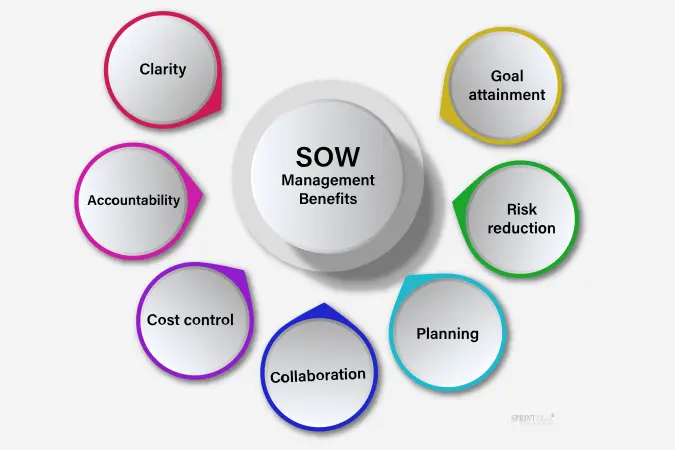
Clarity - SOWs help to make sure that everyone involved in the project is aware of the deliverables, deadlines, and scope of the work.
Accountability - SOWs provide a clear framework for measuring project progress and holding team members accountable for their work.
Cost control - SOWs help to prevent scope creep and ensure that the project stays within budget.
Risk management - SOWs can help in identifying and minimizing possible risks or issues before they turn into major problems. It is very useful in such conditions.

Improved communication - SOWs make it simpler for clients and project team members to communicate, which helps to make sure that everybody is on the same page.
Suggested read: Project Communication Plan
Yes, SOWs can be managed by a Managed Service Provider (MSP) or Vendor Management System (VMS). These platforms offer a centralized system for managing SOWs and can facilitate the creation and administration of SOWs.
Using a central technology platform that provides SOW management, such as an MSP, is critical to ensuring visibility, analysis, and reporting for strategic decision-making, competitive sourcing for cost savings, management of deliverables and payments, supplier performance management, organizational efficiencies, project management, processing rigor, consistent application of policies and procedures, and total talent management.
While SOWs and service procurement are related, they are not the same thing.
In simple terms, service procurement is the process of acquiring people-based services with an agreed-upon scope and deliverables. The scope and deliverables are defined in a statement of work, which is used to monitor and deliver Service Level Agreements (SLAs). Although some organizations use the terms interchangeably, the SOW is a governing document, and services procurement is the category of spend being managed within it. Multiple SOWs can be managed as part of a service procurement program.
It is important to note that an SOW can contain multiple service procurement categories, making it a complex yet essential document for managing the different aspects of a project. Therefore, while service procurement is a part of SOW, it is important to recognize the unique roles that each of these concepts plays in managing and delivering successful projects.
A Statement of Work (SOW), which describes the project's goals, deliverables, and plan, is a crucial document in project management. Clarity, accountability, cost control, risk management, and communication can all be improved with effective SOW management, among other advantages.
The statement of work (SOW) is the foundation for delivering services and products. To ensure project success, it's important to create a precise description of the work to be done with a detailed plan for project scope, cost, and schedule. This allows for monitoring and managing project progress against a baseline. As most projects fail during the planning phase, a well-crafted SOW is critical for laying the groundwork and determining project success.
Are you prepared to elevate your career in project management to the next level? Enroll in Sprintzeal's PMP Certification Training and become a certified expert with the PMI. Elevate your skills and gain the knowledge you need to succeed!
Looking for courses taught by professionals that are industry-leading in certifications? Don't look elsewhere—use Sprintzeal! For your interests and professional objectives, our accredited training organization offers a variety of courses. Find out more about our training and certifications, visit our web page listing all courses, and chat with our experts.
What is a statement of work in a project management example?
A statement of work (SOW) example could be a document outlining the objectives, deliverables, and schedule for a software development project.
What is a statement of work used for?
A statement of work (SOW) is used in project management to define the scope of work, tasks, and deliverables for a project, and to clarify expectations and responsibilities.
What should be included in the statement of work?
A statement of work (SOW) should include all deliverables, due dates, individual tasks and assignments, required resources, governance processes, and payment deadlines and costs.
What is the importance of a statement of work in project management?
An organization's procurement process must include a Statement of Work (SOW). It serves as a formal document that gives instructions to a vendor or contractor about how the work of a project is supposed to be carried out.
A concise statement of work (SOW), which acts as a road map for completing the project's goals, project deliverables, and deadlines, is the foundation of every successful project.
To finish the project objective within the project timeline, a strong SOW plays a vital role. It is relevant to ensure that every member knows what needs to be done, by whom, and by when. This creates a way to tackle misunderstandings, conflicts, and delays that could impact resource allocation, time, and budget.
But a statement of work occurs outside of being merely technical. It also shows how committed the project team is to achieving the project's goals and the quality assurance plan. Typically, it gives a figure of the work breakdown structure each project member had to comply with for successful project closure.
Therefore, handling an SOW requires knowledge of technicalities and emotional intelligence.
Project managers can use a well-crafted statement of work (SOW) to ensure that everyone involved in a project understands the goals and objectives. It outlines the deliverables, due dates, assigned tasks, resources, governance, and payment deadlines, making it a crucial document for effective project management.
The process of creating an SOW begins with a thorough understanding of the project requirements, goals, and deliverables. This information is typically gathered through discussions with the client or stakeholders and by conducting research or analysis.
Once the project requirements have been identified, the SOW can be drafted. The project scope, deliverables, deadlines, and any unique requirements or constraints should all be fully described in the SOW. The SOW has to precisely describe the project requirements and objectives and must be written in a clear and concise manner.
The SOW should be reviewed and approved by the client and the team in charge after it has been generated before work can start. This helps to avoid confusion or conflicts in the future by guaranteeing everybody is in agreement about the project scope and requirements.
Different types of SOWs exist, each designed to suit specific projects or situations. The following represent a few of the most common kinds of SOWs:
Design SOWs - can be used in projects including the layout of products, structures, or methods.
Software SOW - used for projects that involve developing or implementing software.
Construction SOW - used for projects that involve building or renovating a physical structure.
Consulting SOW - used for projects that involve providing professional advice or services.
Maintenance SOW - used for projects that involve maintaining or repairing existing systems or equipment.
The kind of SOW employed will depend on the nature of the project and the unique requirements of the client.
For the client and the project team, effective SOW management can offer a number of advantages. A few of the core advantages are:
Clarity - SOWs help to make sure that everyone involved in the project is aware of the deliverables, deadlines, and scope of the work.
Accountability - SOWs provide a clear framework for measuring project progress and holding team members accountable for their work.
Cost control - SOWs help to prevent scope creep and ensure that the project stays within budget.
Risk management - SOWs can help in identifying and minimizing possible risks or issues before they turn into major problems. It is very useful in such conditions.
Improved communication - SOWs make it simpler for clients and project team members to communicate, which helps to make sure that everybody is on the same page.
Suggested read: Project Communication Plan
Yes, SOWs can be managed by a Managed Service Provider (MSP) or Vendor Management System (VMS). These platforms offer a centralized system for managing SOWs and can facilitate the creation and administration of SOWs.
Using a central technology platform that provides SOW management, such as an MSP, is critical to ensuring visibility, analysis, and reporting for strategic decision-making, competitive sourcing for cost savings, management of deliverables and payments, supplier performance management, organizational efficiencies, project management, processing rigor, consistent application of policies and procedures, and total talent management.
While SOWs and service procurement are related, they are not the same thing.
In simple terms, service procurement is the process of acquiring people-based services with an agreed-upon scope and deliverables. The scope and deliverables are defined in a statement of work, which is used to monitor and deliver Service Level Agreements (SLAs).
Although some organizations use the terms interchangeably, the SOW is a governing document, and services procurement is the category of spend being managed within it. Multiple SOWs can be managed as part of a service procurement program.
It is important to note that an SOW can contain multiple service procurement categories, making it a complex yet essential document for managing the different aspects of a project. Therefore, while service procurement is a part of SOW, it is important to recognize the unique roles that each of these concepts plays in managing and delivering successful projects.
A Statement of Work (SOW), which describes the project's goals, deliverables, and plan, is a crucial document in project management. Clarity, accountability, cost control, risk management, and communication can all be improved with effective SOW management, among other advantages.
The statement of work (SOW) is the foundation for delivering services and products. To ensure project success, it's important to create a precise description of the work to be done with a detailed plan for project scope, cost, and schedule. This allows for monitoring and managing project progress against a baseline. As most projects fail during the planning phase, a well-crafted SOW is critical for laying the groundwork and determining project success.
Are you prepared to elevate your career in project management to the next level? Enroll in Sprintzeal's PMP Certification Training and become a certified expert with the PMI. Elevate your skills and gain the knowledge you need to succeed!
Looking for courses taught by professionals that are industry-leading in certifications? Don't look elsewhere—use Sprintzeal! For your interests and professional objectives, our accredited training organization offers a variety of courses. Find out more about our training and certifications, visit our web page listing all courses, and chat with our experts.
What is a statement of work in a project management example?
A statement of work (SOW) example could be a document outlining the objectives, deliverables, and schedule for a software development project.
What is a statement of work used for?
A statement of work (SOW) is used in project management to define the scope of work, tasks, and deliverables for a project, and to clarify expectations and responsibilities.
What should be included in the statement of work?
A statement of work (SOW) should include all deliverables, due dates, individual tasks and assignments, required resources, governance processes, and payment deadlines and costs.
What is the importance of a statement of work in project management?
An organization's procurement process must include a Statement of Work (SOW). It serves as a formal document that gives instructions to a vendor or contractor about how the work of a project is supposed to be carried out.

Nchumbeni Yanthan
Nchumbeni, a content specialist, creates easy-to-understand educational content, helping diverse clients and millions of learners achieve career goals with clarity and impact.
Tue, 15 October 2024
Fri, 06 December 2024

Wed, 16 October 2024


© 2024 Sprintzeal Americas Inc. - All Rights Reserved.

 USA : +1315-322-7821
 UK : +44 7700 174870
 IND : +919008230179
 AUS : +61 480 005 455
Leave a comment