Customer Experience (CX): Definition, Importance, and Strategies for Success
Tue, 25 February 2025

Severity: Warning
Message: file_get_contents(http://www.geoplugin.net/json.gp?ip=216.73.216.239): Failed to open stream: HTTP request failed! HTTP/1.1 403 Forbidden
Filename: helpers/location_helper.php
Line Number: 77
Backtrace:
File: /home/sprintzeal.org/public_html/application/helpers/location_helper.php
Line: 77
Function: file_get_contents
File: /home/sprintzeal.org/public_html/application/controllers/Blog.php
Line: 109
Function: location_details
File: /home/sprintzeal.org/public_html/index.php
Line: 289
Function: require_once
Follow the stories of academics and their research expeditions

Table of Content
Introduction to Cyberattacks
The Rise of Cyber Threats
Top 5 Types of Cyber Attacks
How to Strengthen Your Cyber Defense?
Sprintzeal's Cybersecurity Training Programs
Conclusion
Did you know that in 2024, what type of cyberattacks and data breaches peaked? Millions of people suffered as a result, and numerous organizations suffered huge monetary losses.
According to industry reports, 2024 witnessed a staggering surge in reported data breaches, with over 7 billion records exposed, marking a 93% increase from the previous year. The average cost of a data breach exceeded $4.24 million.
These data showed the essential need for people and organisations to be aware about and ready for changing cyber threats. Understanding the strategies used by cybercriminals can help us take preventative steps to safeguard our digital assets and ourselves.
In this guide, we unveil the top five types of cyber-attacks that dominated 2024. From phishing and ransomware to insider threats and IoT vulnerabilities, we will explore why cyber-attacks are rising, understanding of cybersecurity fundamentals and details of each attack. Also, how you can strengthen cyber defense.
Cyber threats have reached alarming levels, posing significant risks worldwide. Since there is rapid advancement in technology, it enables an easy gateway for sophisticated cybercriminals to exploit vulnerabilities for financial gain, data breaches, and disruption.
Key factors contributing to the rise of cyber threats include:
-Proliferation of connected devices, IoT, and cloud computing expands the attack surface, offering more opportunities for cybercriminals.
-Emerging technologies like AI and machine learning are exploited by threat actors to develop sophisticated attack techniques.
-Widespread internet adoption interconnects individuals and organizations, providing more targets for cybercriminals.
-Rise of remote work and digital transformation amplifies risk as people access corporate networks from different devices and locations.
-Through activities like ransomware and identity theft, cybercrime is highly beneficial and gives financial gains to the attackers.
-Cryptocurrencies facilitate anonymous transactions, making it easier for cybercriminals to monetize their activities.
-Humans remain the weakest link in cybersecurity, vulnerable to social engineering techniques like phishing.
-Addressing these factors and implementing robust cybersecurity measures is crucial in mitigating cyber threats.
Here are the top 5 types of cyber attacks which put organizations and systems at risk. Its essential to understand there threats and implement robust security measures to mitigate these threats.
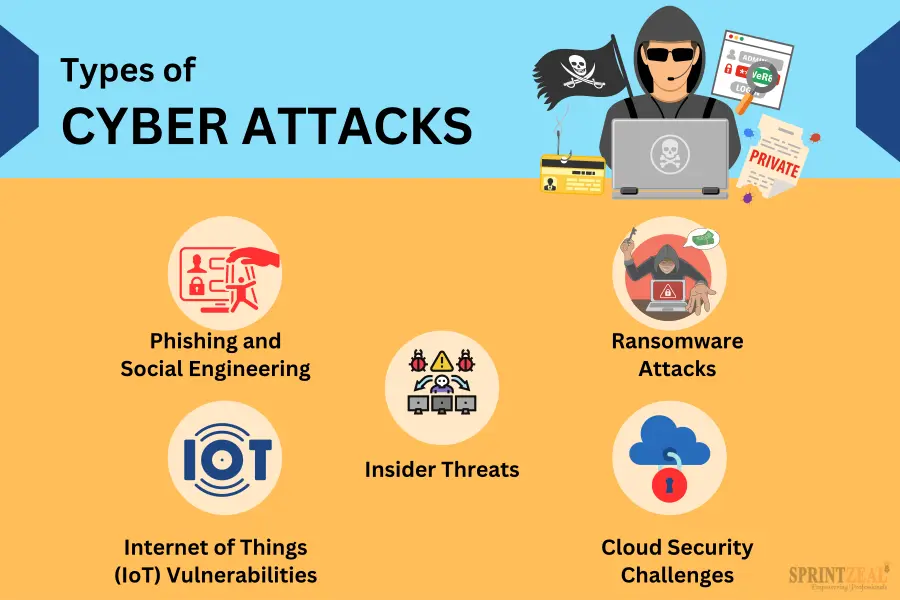
Phishing and Social Engineering: Hook, Line, and Sinker
Phishing and social engineering remain popular and effective tactics employed by cybercriminals to deceive and gain unauthorized access to sensitive information. In 2024, over 80% of reported cyber incidents involved phishing attacks, demonstrating their widespread use and success.
Phishing attacks often take the form of deceptive emails, texts, or instant messages that mimic trusted sources. These cunning messages trick recipients into sharing confidential data like passwords, credit card details, or login credentials. Social engineering techniques exploit human psychology, manipulating individuals into compromising their security.
Cybercriminals constantly refine their phishing methods, making it increasingly difficult to differentiate between genuine and malicious communication. To defend against phishing attacks, it's vital to remain vigilant, verify requests, avoid clicking suspicious links or downloading attachments, and keep security software up to date.
Ransomware Attacks: Holding Your Digital World Hostage
Ransomware attacks pose a grave cybersecurity threat, causing massive damage and financial losses. In 2024, reported incidents surged by over 50%, underscoring the growing danger. Attackers employ phishing emails, exploit kits, and vulnerable protocols to distribute malware that encrypts files, demanding a ransom for their release.
Victims face dire consequences, impacting individuals, businesses, and critical infrastructure. Ransom demands can reach millions. To mitigate risk, regularly back up data, implement robust cybersecurity measures, educate employees on phishing, segment networks, and develop an incident response plan.
Insider Threats: The Enemy Within
While external threats receive significant attention, organizations also face risks from within their own ranks. Insider threats, whether intentional or accidental, can result in significant data breaches and financial losses. In fact, studies show that insider incidents account for nearly 30% of data breaches.
Insiders with authorized access to sensitive information can abuse their privileges, intentionally leak data, or engage in malicious activities. Additionally, accidental insider incidents can occur due to human error or negligence, such as employees mishandling data or falling victim to social engineering.
Preventing insider threats requires a comprehensive approach that includes implementing strict access controls, monitoring employee behavior, conducting thorough background checks, and providing regular cybersecurity training. Organization can effectively mitigate the risks posed by insider threats and protect their valuable assets by adopting a culture of security and promoting employee awareness.
Internet of Things (IoT) Vulnerabilities: Bridging the Gap
The increased use of Internet of things brings new challenges for cybersecurity. Interconnected devices like smart home appliances or industrial control systems often lack sufficient security protections, making them vulnerable to cyberattacks.
Exploiting IoT flaws can result in serious repercussions, such as unauthorized access to private information, the disruption of vital infrastructure, and even physical injury. To take over IoT devices, hackers use obsolete software, unsecured connections, and weak passwords.
To bridge the gap and bolster IoT security, it is crucial for manufacturers to prioritize security during the design and development phase. This involves implementing strong encryption, regular software updates, and robust authentication mechanisms.
Users also play a vital role by practicing good IoT hygiene, such as changing default passwords, securing Wi-Fi networks, and staying vigilant against suspicious activities.
Cloud Security Challenges: Navigating the Skies
Business operations have changed as a result of the use of cloud computing, which provides scalability, flexibility, and cost-efficiency. It also presents certain security difficulties, though. The huge amount of sensitive data kept in cloud settings makes them ideal targets for attacks.
Organisations face a variety of cloud security challenges, including risks for data loss, unauthorised access, and setup errors. Strong access controls, encryption, regular vulnerability assessments, and checking for unusual activity are all necessary for ensuring reliable cloud security.
Businesses may use the cloud's capabilities while protecting their data by being aware of these problems and implementing strong security procedures. To keep a safe and robust digital infrastructure, organisations should place a high focus on cloud security.
When it comes to defending against cyber threats, there are several key areas to focus on. Let's explore some effective strategies to bolster your cyber defense:

Network Security
To protect your digital assets, it's essential to build a strong network security infrastructure. Firewalls, intrusion detection systems, and virtual private networks (VPNs) must all be put into place in order to do this. You can identify and stop unauthorised actions by establishing a secure network architecture, putting access rules in place, and keeping an eye on network activity.
Security Awareness and Training
Human error remains one of the weakest links in cybersecurity. We'll emphasize the importance of security awareness and training programs in creating a cyber-resilient culture. From educating employees about common threats to conducting simulated phishing exercises, you'll discover strategies for fostering a security-conscious workforce.
Endpoint Security
Endpoints, including laptops, smartphones, and IoT devices, are often the first line of defense against cyber threats. Strengthening endpoint security is crucial. Implementing strong passwords, using encryption, and keeping software up to date are essential practices for securing your devices. By fortifying your endpoints, you can significantly reduce the risk of compromise
Data Encryption
Encryption plays a vital role in protecting sensitive data, whether it's at rest or in transit. Understanding how encryption works and implementing it effectively is critical. Learn about different encryption algorithms, ensure proper key management, and follow best practices for encryption implementation within your organization.
Gear up for an exciting cybersecurity journey with Sprintzeal! Discover our range of industry-leading cybersecurity courses and certifications designed to equip you with the skills and knowledge needed to thrive in the cybersecurity landscape. From Certified Information Systems Security Professional (CISSP) to Certified Cloud Security Professional (CCSP), we've got you covered.
Why Choose Sprintzeal?
Explore the benefits of learning with Sprintzeal, including expert instructors, hands-on learning experiences, flexible learning options, and globally recognized certifications. Don't miss the chance to boost your cybersecurity career with our comprehensive training programs.

Cyber dangers are an increasing worry for people and businesses in today's digital world. In order to safeguard ourselves and our digital assets, it is crucial to be aware of the top cyber risks in 2024 and take preventative action. By embracing cybersecurity practices, staying vigilant against social engineering, and prioritizing awareness, we can effectively combat these threats.
Sprintzeal is here to support your cybersecurity journey. With comprehensive training courses and expert instructors, we equip you with the knowledge and skills to navigate the ever-changing cybersecurity landscape. Enroll with Sprintzeal today and become a cyber warrior making a difference in the fight against cybercrime.
Let's stay ahead of hackers and safeguard our digital world.
Did you know that in 2024, what type of cyberattacks and data breaches peaked? Millions of people suffered as a result, and numerous organizations suffered huge monetary losses.
According to industry reports, 2024 witnessed a staggering surge in reported data breaches, with over 7 billion records exposed, marking a 93% increase from the previous year. The average cost of a data breach exceeded $4.24 million.
These data showed the essential need for people and organisations to be aware about and ready for changing cyber threats. Understanding the strategies used by cybercriminals can help us take preventative steps to safeguard our digital assets and ourselves.
In this guide, we unveil the top five types of cyber-attacks that dominated 2024. From phishing and ransomware to insider threats and IoT vulnerabilities, we will explore why cyber-attacks are rising, understanding of cybersecurity fundamentals and details of each attack. Also, how you can strengthen cyber defense.
Cyber threats have reached alarming levels, posing significant risks worldwide. Since there is rapid advancement in technology, it enables an easy gateway for sophisticated cybercriminals to exploit vulnerabilities for financial gain, data breaches, and disruption.
Key factors contributing to the rise of cyber threats include:
-Proliferation of connected devices, IoT, and cloud computing expands the attack surface, offering more opportunities for cybercriminals.
-Emerging technologies like AI and machine learning are exploited by threat actors to develop sophisticated attack techniques.
-Widespread internet adoption interconnects individuals and organizations, providing more targets for cybercriminals.
-Rise of remote work and digital transformation amplifies risk as people access corporate networks from different devices and locations.
-Through activities like ransomware and identity theft, cybercrime is highly beneficial and gives financial gains to the attackers.
-Cryptocurrencies facilitate anonymous transactions, making it easier for cybercriminals to monetize their activities.
-Humans remain the weakest link in cybersecurity, vulnerable to social engineering techniques like phishing.
-Addressing these factors and implementing robust cybersecurity measures is crucial in mitigating cyber threats.
Here are the top 5 types of cyber attacks which put organizations and systems at risk. Its essential to understand there threats and implement robust security measures to mitigate these threats.
Phishing and Social Engineering: Hook, Line, and Sinker
Phishing and social engineering remain popular and effective tactics employed by cybercriminals to deceive and gain unauthorized access to sensitive information. In 2024, over 80% of reported cyber incidents involved phishing attacks, demonstrating their widespread use and success.
Phishing attacks often take the form of deceptive emails, texts, or instant messages that mimic trusted sources. These cunning messages trick recipients into sharing confidential data like passwords, credit card details, or login credentials. Social engineering techniques exploit human psychology, manipulating individuals into compromising their security.
Cybercriminals constantly refine their phishing methods, making it increasingly difficult to differentiate between genuine and malicious communication. To defend against phishing attacks, it's vital to remain vigilant, verify requests, avoid clicking suspicious links or downloading attachments, and keep security software up to date.
Ransomware Attacks: Holding Your Digital World Hostage
Ransomware attacks pose a grave cybersecurity threat, causing massive damage and financial losses. In 2024, reported incidents surged by over 50%, underscoring the growing danger. Attackers employ phishing emails, exploit kits, and vulnerable protocols to distribute malware that encrypts files, demanding a ransom for their release.
Victims face dire consequences, impacting individuals, businesses, and critical infrastructure. Ransom demands can reach millions. To mitigate risk, regularly back up data, implement robust cybersecurity measures, educate employees on phishing, segment networks, and develop an incident response plan.
Insider Threats: The Enemy Within
While external threats receive significant attention, organizations also face risks from within their own ranks. Insider threats, whether intentional or accidental, can result in significant data breaches and financial losses. In fact, studies show that insider incidents account for nearly 30% of data breaches.
Insiders with authorized access to sensitive information can abuse their privileges, intentionally leak data, or engage in malicious activities. Additionally, accidental insider incidents can occur due to human error or negligence, such as employees mishandling data or falling victim to social engineering.
Preventing insider threats requires a comprehensive approach that includes implementing strict access controls, monitoring employee behavior, conducting thorough background checks, and providing regular cybersecurity training. Organization can effectively mitigate the risks posed by insider threats and protect their valuable assets by adopting a culture of security and promoting employee awareness.
Internet of Things (IoT) Vulnerabilities: Bridging the Gap
The increased use of Internet of things brings new challenges for cybersecurity. Interconnected devices like smart home appliances or industrial control systems often lack sufficient security protections, making them vulnerable to cyberattacks.
Exploiting IoT flaws can result in serious repercussions, such as unauthorized access to private information, the disruption of vital infrastructure, and even physical injury. To take over IoT devices, hackers use obsolete software, unsecured connections, and weak passwords.
To bridge the gap and bolster IoT security, it is crucial for manufacturers to prioritize security during the design and development phase. This involves implementing strong encryption, regular software updates, and robust authentication mechanisms.
Users also play a vital role by practicing good IoT hygiene, such as changing default passwords, securing Wi-Fi networks, and staying vigilant against suspicious activities.
Cloud Security Challenges: Navigating the Skies
Business operations have changed as a result of the use of cloud computing, which provides scalability, flexibility, and cost-efficiency. It also presents certain security difficulties, though. The huge amount of sensitive data kept in cloud settings makes them ideal targets for attacks.
Organisations face a variety of cloud security challenges, including risks for data loss, unauthorised access, and setup errors. Strong access controls, encryption, regular vulnerability assessments, and checking for unusual activity are all necessary for ensuring reliable cloud security.
Businesses may use the cloud's capabilities while protecting their data by being aware of these problems and implementing strong security procedures. To keep a safe and robust digital infrastructure, organisations should place a high focus on cloud security.
When it comes to defending against cyber threats, there are several key areas to focus on. Let's explore some effective strategies to bolster your cyber defense:
Network Security
To protect your digital assets, it's essential to build a strong network security infrastructure. Firewalls, intrusion detection systems, and virtual private networks (VPNs) must all be put into place in order to do this. You can identify and stop unauthorised actions by establishing a secure network architecture, putting access rules in place, and keeping an eye on network activity.
Security Awareness and Training
Human error remains one of the weakest links in cybersecurity. We'll emphasize the importance of security awareness and training programs in creating a cyber-resilient culture. From educating employees about common threats to conducting simulated phishing exercises, you'll discover strategies for fostering a security-conscious workforce.
Endpoint Security
Endpoints, including laptops, smartphones, and IoT devices, are often the first line of defense against cyber threats. Strengthening endpoint security is crucial. Implementing strong passwords, using encryption, and keeping software up to date are essential practices for securing your devices. By fortifying your endpoints, you can significantly reduce the risk of compromise
Data Encryption
Encryption plays a vital role in protecting sensitive data, whether it's at rest or in transit. Understanding how encryption works and implementing it effectively is critical. Learn about different encryption algorithms, ensure proper key management, and follow best practices for encryption implementation within your organization.
Gear up for an exciting cybersecurity journey with Sprintzeal! Discover our range of industry-leading cybersecurity courses and certifications designed to equip you with the skills and knowledge needed to thrive in the cybersecurity landscape. From Certified Information Systems Security Professional (CISSP) to Certified Cloud Security Professional (CCSP), we've got you covered.
Why Choose Sprintzeal?
Explore the benefits of learning with Sprintzeal, including expert instructors, hands-on learning experiences, flexible learning options, and globally recognized certifications. Don't miss the chance to boost your cybersecurity career with our comprehensive training programs.
Cyber dangers are an increasing worry for people and businesses in today's digital world. In order to safeguard ourselves and our digital assets, it is crucial to be aware of the top cyber risks in 2024 and take preventative action. By embracing cybersecurity practices, staying vigilant against social engineering, and prioritizing awareness, we can effectively combat these threats.
Sprintzeal is here to support your cybersecurity journey. With comprehensive training courses and expert instructors, we equip you with the knowledge and skills to navigate the ever-changing cybersecurity landscape. Enroll with Sprintzeal today and become a cyber warrior making a difference in the fight against cybercrime.
Let's stay ahead of hackers and safeguard our digital world.

Sprintzeal
Tue, 25 February 2025
Mon, 31 March 2025

Tue, 25 February 2025


© 2024 Sprintzeal Americas Inc. - All Rights Reserved.

 USA : +1315-322-7821
 UK : +44 7700 174870
 IND : +919008230179
 AUS : +61 480 005 455
Leave a comment